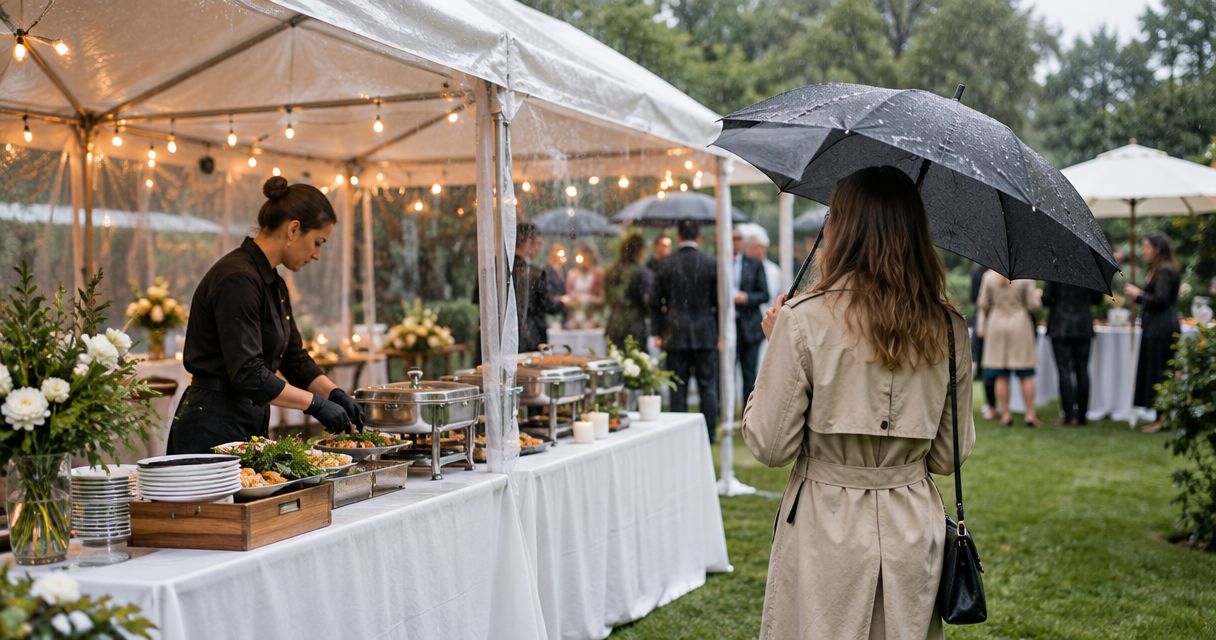
If it rains during an outdoor catering event, move food service and guests to the agreed backup space; pause outdoor activity if lightning, wind, or flooding makes the site unsafe. Rain alone does not automatically cancel the meal, but shelter, safe food temperatures, and the caterer’s agreement determine whether service continues, moves, or stops.
- What happens if it rains during an outdoor catering event? Service moves, pauses, or stops according to conditions.
- A catering tent protects against rain, not lightning; identify substantial indoor shelter before guests arrive.
- Keep BBQ and soul food protected, temperature-controlled, and away from runoff during any move.
- DG&G Gravy Train Catering serves Salisbury and Charlotte-area gatherings; confirm rain arrangements directly before booking.
What happens if it rains during an outdoor catering event?
The event follows its rain plan—not an automatic cancellation rule. Your venue, caterer, and event lead need an agreed destination for guests, a protected food-service location, and authority to stop service when conditions become unsafe.
Build that decision into your catering quote request and event-day planning, rather than waiting for rain on the morning of the gathering.
| Response | Best for | Main benefit | Main limitation |
|---|---|---|---|
| Continue beneath suitable rain cover | Rain without thunder, dangerous wind, or flooding | Keeps the meal near the original setup | Cover must protect food, equipment, and access routes; it is not lightning shelter |
| Move service indoors | Events with an approved indoor backup | Separates guests and food service from outdoor conditions | Requires enough usable space, permission, and a workable delivery route |
| Pause service | Conditions requiring a safety assessment | Stops guests and staff from entering an unsafe area | Food still needs temperature control during the interruption |
| Postpone or cancel | Events without a safe operating location | Avoids continuing under unsafe conditions | Contract terms determine the financial and scheduling consequences |
No option replaces a site-specific safety decision. A covered buffet does not solve a flooded walkway, and an indoor dining room does not help if staff cannot safely reach it.
Why this matters
A rainy-day catering problem is rarely just wet chairs. It also changes where people queue, where staff carry hot trays, and how long food waits before serving.
For a 2026 outdoor gathering, settle those questions while the venue and catering arrangements are still flexible. Y’all should be enjoying the meal—not deciding which doorway can accommodate a buffet while guests stand in the rain.
Keep the responsibilities separate: the venue confirms usable space, the caterer confirms food-service requirements, and the host communicates the decision. Write down who handles each task so nobody mistakes an assumption for an agreement.
How do you put an outdoor catering rain plan into action?
1. Name the decision-maker
Choose an event lead and identify the venue and catering contacts who must approve a change. Give those people the same written plan and a reliable way to reach one another.
The event lead coordinates the decision; that role does not override a venue closure, emergency instruction, or a caterer’s food-safety decision. Make that distinction clear before event day.
2. Approve the backup location
Walk through the alternative space with the venue’s permission. Check guest access, exits, restroom access, usable dining space, and the route from unloading to food service.
Do not count a locked room, an unreserved hall, or somebody’s suggestion as a backup. The backup must be approved and accessible when you need it. If the location changes, confirm the complete address and entrance with the catering contact.
3. Map the meal’s route
Trace the path from the delivery vehicle to the holding area, buffet, and guest seating. Look for exposed stretches, slippery surfaces, steps, standing water, and doorways that create bottlenecks.
Keep the guest line separate from staff carrying hot food wherever the layout allows. A dry buffet at the end of an unsafe delivery route is not a workable plan.
4. Agree on the trigger
Discuss what causes a move, a pause, or a cancellation. Use official weather alerts and the venue’s safety requirements; do not rely on a percentage chance of rain alone.
Set the decision deadline around the actual setup and relocation work. There is no universal catering cutoff that fits every site, so have the people doing that work confirm when they need the decision.
5. Send one clear update
Tell guests where to go, which entrance to use, and whether the meal time has changed. Send staff and suppliers the operational details separately, including unloading access and the revised food-service location.
For your 2026 event file, save the final instructions in one place. Avoid circulating several versions with different locations or meal times.
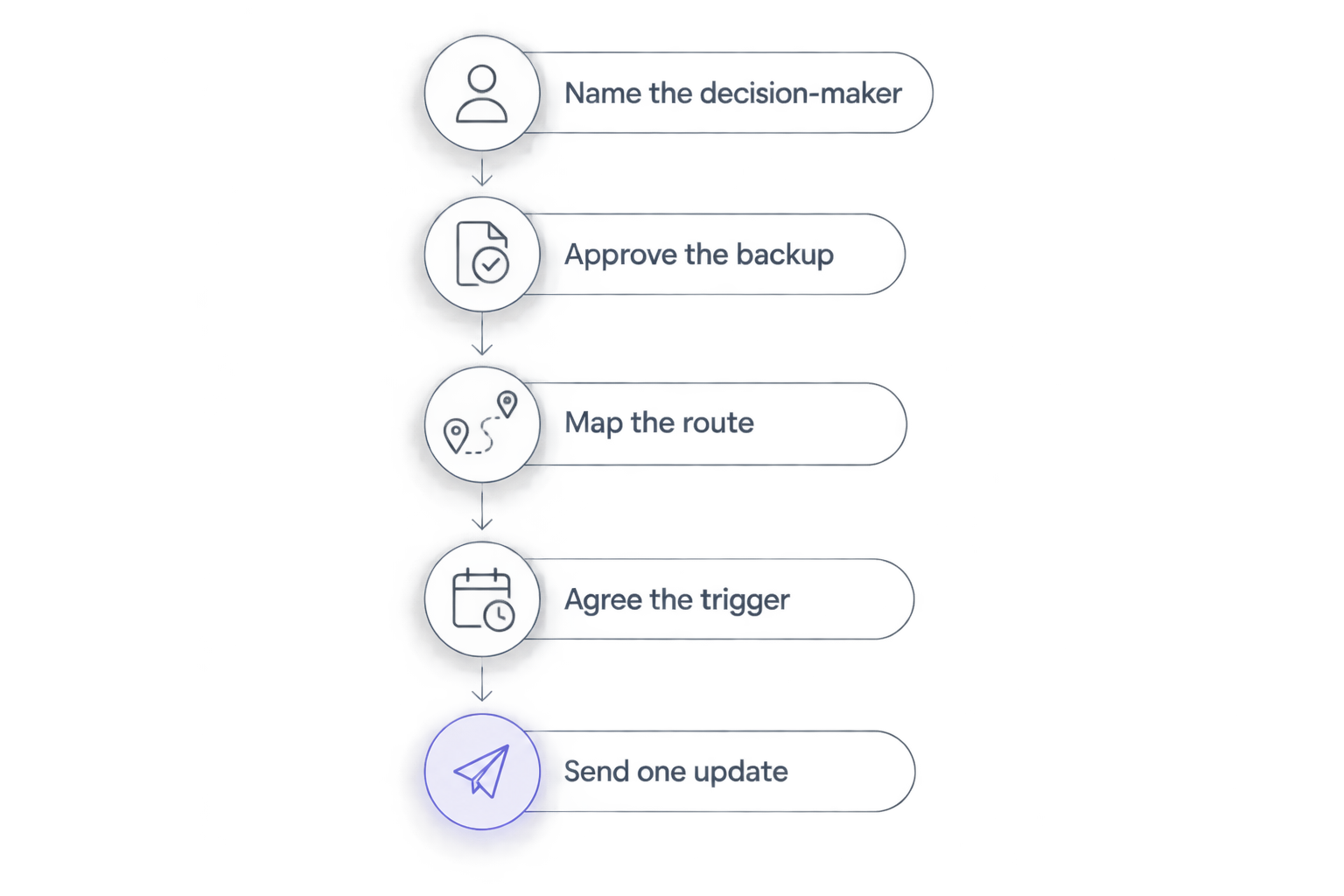
An agreed process helps only if the people on site know it exists. Before guests arrive, ask the event lead to confirm that the venue contact and catering contact have received the final version.
Why the response to rain varies
The right response depends on the event’s actual setup, not whether it is a wedding, church dinner, or backyard party.
- Weather hazards: Rain, lightning, strong wind, and flooding require different responses. A rain canopy is not a solution to every hazard.
- Approved shelter: An available indoor room gives you a different plan from an open field with no substantial building nearby.
- Food protection: Food needs protection from rain, dirty splash water, and contamination throughout unloading, holding, and serving.
- Access: Firm walkways, safe entrances, and a usable unloading point determine whether relocation is practical.
- Equipment and utilities: The backup layout must support the equipment actually being used. Confirm electrical and cooking arrangements with the venue and caterer.
- Written agreements: Relocation, postponement, cancellation, staffing, and rental responsibilities belong in the relevant agreements.
Do not assume that shelter, tables, replacement equipment, or a second service location comes with catering. Ask what is included and who arranges anything else.
How do you keep catered food safe during a rain delay?
Keep temperature control in place while people and tables move. Covering a tray protects its surface, but a lid alone does not maintain a safe holding temperature.
For hosts handling food at a 2026 gathering, USDA consumer food-safety guidance uses 140°F or above for hot holding and 40°F or below for cold holding. A professional caterer must follow the food code and procedures applicable to its operation; ask the catering lead to manage that side of the move.
USDA consumer guidance also limits perishable food without temperature control to 2 hours, reduced to 1 hour when the surrounding temperature is above 90°F. These are food-safety limits, not a suggested length for a rain delay. Time spent setting up and serving counts too.
Use those limits to plan, not to judge food by appearance. Rain does not reset the clock, and food that smells fine is not automatically safe.
During a move:
- Keep serving utensils and clean plates protected from dirty splash water.
- Keep food containers off wet ground and away from runoff.
- Ask the food-service lead to assess exposed or potentially contaminated food before serving it.
- Do not move grills or generators indoors to escape rain; their exhaust creates a carbon monoxide hazard.
- Keep guests away from wet electrical equipment and let the responsible operator handle it.
If nobody can confirm how perishable food was held, do not put it back on the buffet based on guesswork. Assign food monitoring before the event starts, including who takes over if the original setup changes.
Can an outdoor catering event continue under a tent?
A tent can provide rain cover, but it is not safe lightning shelter. Whether meal service continues also depends on wind conditions, installation requirements, drainage, food protection, and the venue’s instructions.
Ask the tent provider and venue about operating limits and evacuation procedures. Do not add sidewalls, move anchors, or alter the structure yourself because rain starts blowing sideways.
For a 2026 rain plan, identify the substantial building or enclosed hard-topped vehicle guests will use if thunder occurs. National Weather Service lightning guidance calls for waiting at least 30 minutes after the last thunder before resuming outdoor activities; follow emergency instructions and venue restrictions as well.
A covered patio also needs a separate lightning assessment. Being out of the rain does not establish that a space is safe during a thunderstorm.
Does rain mean the caterer automatically cancels?
Rain does not establish an automatic cancellation policy. Your signed agreement and the safety conditions determine the next steps, so ask about weather terms before you commit.
Have the discussion cover more than the word cancellation. Ask what happens if the venue closes, the meal moves to another building, service starts later, or the original access road becomes unusable.
Request written confirmation of any agreed change. A forecast screenshot does not amend a catering agreement, and a guest’s assurance that another room is available does not reserve that room.
If cancellation or postponement becomes necessary, contact the venue and caterer directly. Do not promise guests a replacement date until the suppliers involved have confirmed it.
What should you confirm with your BBQ caterer?
For a 2026 event, send the caterer the venue address, guest count, intended service location, backup location, and proposed meal time. Include the practical details: entrances, stairs, parking restrictions, and who can approve a last-minute move.
DG&G Gravy Train Catering is best for Salisbury and Charlotte-area hosts seeking BBQ and soul food catering for weddings, corporate events, church gatherings, and private parties. Its stated service area and event types fit those plans; rain coverage, relocation arrangements, equipment, and cancellation terms still need direct confirmation.
Before booking DG&G Gravy Train Catering for an outdoor event, ask:
- Where should food service move if the original setup becomes unusable?
- Who supplies and approves any weather cover?
- Who communicates a relocation decision to the catering team?
- How does the agreement handle a delay, changed location, or cancellation?
Use the contact page to discuss your actual venue and backup plan. Keep the request specific enough for the catering team to assess rather than asking only whether rain is a problem.
Talk through your outdoor event
Share your venue, guest count, and backup location when discussing BBQ and soul food catering.
FAQ
What happens if it starts raining while everyone is eating?
Move guests and food service according to the agreed rain plan, and pause outdoor activity if conditions become unsafe. Keep food protected and temperature-controlled during the change.
Is a catering tent safe during lightning?
A catering tent is not safe lightning shelter. Move to a substantial building or an enclosed hard-topped vehicle and follow National Weather Service guidance to wait at least 30 minutes after the last thunder before resuming outdoor activities.
Can BBQ stay outside during a rain delay?
BBQ needs protection from contamination and safe temperature control during a rain delay. USDA consumer guidance uses 140°F or above for hot holding; professional caterers must follow their applicable food-safety requirements.
Will I get a refund if rain cancels my catered event?
Your catering agreement determines the refund and cancellation terms. Ask how the agreement treats weather, venue closure, postponement, and food preparation before signing.
Should I book an indoor backup for an outdoor wedding meal?
Arrange an approved indoor backup if you want a relocation option for the wedding meal. Confirm access, capacity, food-service permission, and the route the catering team will use.
Does DG&G Gravy Train Catering supply rain tents?
Confirm tent arrangements directly with DG&G Gravy Train Catering before booking. Ask who supplies, installs, and approves any shelter and what happens when conditions make it unsafe.
Can we wait out the rain and serve the same food later?
Serve food later only when the food-service lead confirms it remained protected and safely held. USDA consumer guidance limits uncontrolled perishable food to 2 hours, or 1 hour above 90°F; setup and earlier serving time count toward that limit.
One last thing
Walk the backup route carrying an empty serving tray before event day. You will see whether a door, step, or narrow passage makes the move awkward without risking a hot meal.
Then ask one final question: Can guests reach shelter without walking through the space where staff are moving food? Fix that crossing before you need the rain plan. A backup works better when the meal and the people have clear routes of their own.