Traditional soul food catering has no fixed default heat level: a dish can be deeply seasoned without being chili-hot. The recipe, pepper blend, and sauce determine how spicy your plate tastes—not the words soul food. For your 2026 event, confirm the heat in each dish and ask whether hot sauce can stay separate; removing a sauce does not remove pepper already cooked into the food.
- How spicy is traditional soul food catering? There is no standard heat level; confirm each recipe before ordering.
- Cayenne adds chili heat; smoke, garlic, and herbs can add strong flavor without the same burning sensation.
- For mixed preferences, request a mild base and separate hot sauce, subject to the caterer’s confirmation.
- Gravy Train Catering serves Salisbury and Charlotte-area hosts seeking BBQ and soul food catering.
How spicy is traditional soul food catering by default?
Traditional soul food is not automatically hot, and “well-seasoned” does not mean “full of hot peppers.” Soul food encompasses different dishes and family cooking traditions, not a single seasoning formula. Ask about the actual preparation rather than treating the cuisine’s name as a heat rating.
Start your catering inquiry with specific heat preferences, not just a request for “nothing too spicy.” That phrase leaves too much room for interpretation.
The following comparison describes preparation choices, not a particular caterer’s menu or a guaranteed spice level.
| Preparation choice | What creates the flavor or heat | Best for | Benefit | Limitation |
|---|---|---|---|---|
| No added hot pepper | Herbs, aromatics, smoke, and other recipe ingredients | Guests avoiding chili heat | Separates seasoning from chili burn | Black pepper and other pungent ingredients still need discussion |
| Pepper-forward seasoning | Black pepper, cayenne, or another pepper blend | Guests who enjoy a peppery bite | Builds pepper flavor into the dish | “Peppery” alone does not identify the ingredient or intensity |
| Hot pepper cooked in | Chili peppers or hot sauce incorporated during cooking | Guests who specifically want chili heat | Makes heat part of the finished recipe | Guests cannot remove it at the buffet |
| Hot sauce served separately | Sauce added after serving | Groups with different heat preferences | Gives guests control over added sauce | Does not change seasoning already in the food |
Why this matters
For a wedding, church dinner, office gathering, or family party, your menu needs to work for people with different preferences. One guest’s comfortable peppery bite is another guest’s reason to leave a serving untouched. Choosing by dish name alone does not resolve that difference.
Your 2026 catering plan should distinguish flavor, chili heat, and dietary requirements. A mild dish is not automatically suitable for someone with an allergy, and a smoky dish is not automatically spicy. Put those requests in separate lines when you discuss the menu.
You do not have to choose between soulful flavor and a meal that welcomes heat-sensitive guests. You do need an accurate description of the recipe before making that decision.
No added hot pepper: best for guests avoiding chili heat
Requesting no added hot pepper gives the caterer a clearer starting point than “make it mild.” Ask whether the recipe contains cayenne, crushed red pepper, fresh chilies, hot sauce, or a seasoning blend containing chili peppers. Then ask separately about black pepper.
Best for: guests who want to avoid chili heat while still enjoying a seasoned meal. The advantage is clarity: you are naming the ingredients you want discussed, rather than asking the cook to guess your tolerance.
The limitation is that “no added hot pepper” is not the same as “unseasoned,” “pepper-free,” or “allergen-free.” It also does not establish whether an existing marinade or prepared sauce contains those ingredients. Get the answer for the finished recipe, not only the final seasoning added before serving.
Pepper-forward seasoning: best for guests who enjoy a bite
Black pepper and chili peppers create different kinds of pungency. Black pepper’s characteristic bite comes primarily from piperine; chili peppers get their characteristic heat from capsaicinoids, including capsaicin. That distinction explains why “peppery” is an incomplete description.
Best for: guests who enjoy pepper flavor and are comfortable discussing which pepper is involved. Ask whether the cook means black pepper, cayenne, or a blend, and whether that seasoning goes into every portion.
The benefit is an intentionally peppery dish. The drawback is less control for guests once the seasoning is incorporated. Do not translate a caterer’s “a little kick” into a promise that every guest will find it comfortable.
Hot pepper cooked in: best for guests requesting heat
When chili peppers or hot sauce go into a marinade, cooking liquid, breading, or finished mixture, the heat is part of the dish. Serving an additional sauce separately does not make that underlying preparation mild.
Best for: guests who actively want chili heat and know which preparation they are choosing. Cooking the pepper into the food makes heat part of the recipe rather than an optional topping.
The limitation is straightforward: guests cannot take it back out. If you request a separate hot preparation for your 2026 gathering, confirm that the caterer can prepare, identify, and serve it separately. Do not assume a second version is included or possible.
Hot sauce on the side: best for mixed preferences
For a group with different heat preferences, request a confirmed mild base with hot sauce served separately. This gives heat-loving guests an addition without requiring everyone else to eat it. It is a serving request, not a guarantee that a caterer can change every recipe.
The benefit is individual control over added sauce. The limitation is that the base still needs checking: a dish already seasoned with cayenne remains chili-seasoned even when its finishing sauce sits beside the tray.
If separate sauce is agreed upon, request a clear label and its own serving utensil. Keep the sauce from dripping into the shared mild dish. A thoughtful setup helps preserve the choice you discussed during planning.
Why soul food catering heat varies
Heat varies because recipes and preparation methods vary. These are the details to check with your caterer:
- Pepper type: Black pepper, cayenne, fresh chilies, and pepper blends are not interchangeable descriptions. Ask which ingredients appear in the recipe.
- Pepper amount: The quantity used affects the finished dish. “Contains cayenne” identifies an ingredient, not a universal heat rating.
- Cooking stage: Pepper mixed into a marinade or cooking liquid cannot be separated like a tableside condiment.
- Sauce placement: A finishing sauce, a sauce mixed throughout, and sauce served separately give guests different levels of control.
- Individual tolerance: Guests experience heat differently. Use ingredient descriptions alongside words such as mild or hot.
Smokiness, tang, sweetness, and chili heat are also different flavor characteristics. A smoky preparation does not tell you whether it contains hot peppers. Likewise, a sweet sauce can still contain chili ingredients.
How do I confirm the heat before ordering?
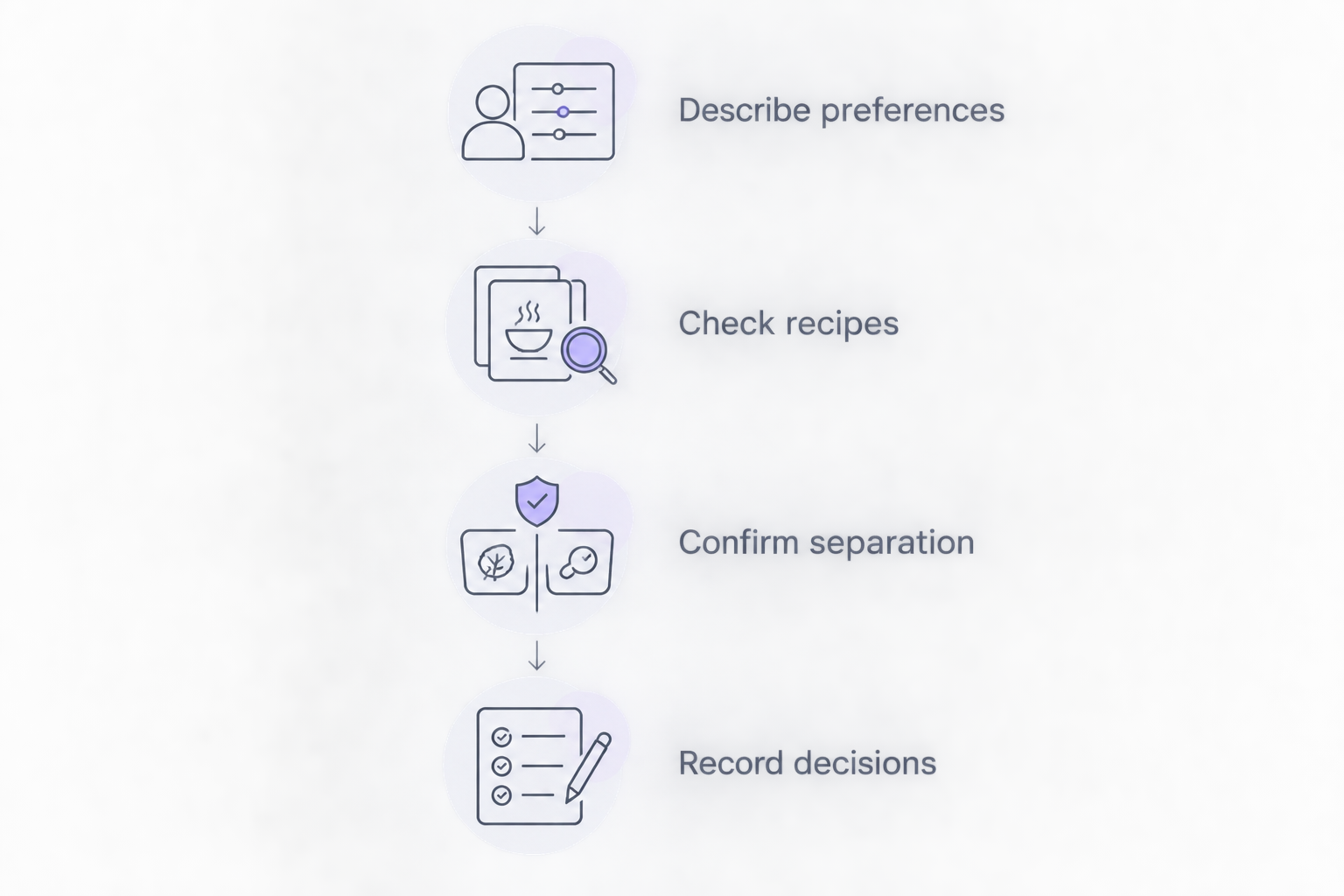
Use these 4 steps to turn a general preference into a clear menu discussion. For your 2026 event notes, record the answer against each selected dish rather than attaching one “mild” label to the whole meal.
1. Describe preferences
Tell the caterer what your guests need in plain language: no added chili peppers, limited black pepper, or optional hot sauce. If someone has an allergy or a medically directed restriction, identify that separately instead of describing it as a dislike of spicy food.
Do not infer tolerance from age or event type. Ask the people involved when possible. A family reunion, retirement party, or children’s gathering does not tell you what every guest enjoys.
2. Check recipes
Ask about the main dish, sides, sauces, gravies, and garnishes separately. Heat can appear in more than the most obvious sauce. A seasoning blend or cooking liquid deserves the same attention as a bottle placed on the table.
Use these 3 questions for each dish: Does it contain hot peppers? Is the pepper cooked in? Can the requested preparation be confirmed? Those answers are more useful than a cuisine-wide promise.
3. Confirm separation
If you want optional heat, ask what can actually stay separate. Distinguish a separate condiment from a separately prepared batch; they are different requests. Confirm any preparation limits before treating the menu as settled.
For buffet service, you can request 2 serving zones: the shared dishes and the optional hot condiments. This is a layout suggestion, not a requirement or a statement about the caterer’s standard setup.
4. Record decisions
Write down the agreed preparation and labeling in your event notes. Ask the caterer to confirm the wording so that “mild” does not change meaning between your first conversation and the final order.
Keep the instruction short enough to use: dish name, agreed seasoning, sauce placement, and any separate dietary concern. A clear record beats a long paragraph describing what your family usually likes.
Your final check is whether the written menu reflects those decisions. If the wording still says only “traditional seasoning,” ask for clarification before approving it.
Who should consider local BBQ and soul food catering?
Gravy Train Catering is best for Salisbury and Charlotte-area hosts seeking BBQ and soul food catering. The company serves weddings, corporate events, church gatherings, and private parties. Its cuisine and service area establish that fit; your preferred heat level still needs a recipe-specific conversation.
When contacting Gravy Train Catering about soul food catering, explain whether you want to avoid chili heat, black pepper, or both. Ask which preparations meet that request rather than assuming every dish can be adjusted. Y’all can keep the conversation friendly and still get precise about the food.
Discuss Your Catering Menu
Share your event details and ask about dish-by-dish heat levels and separate sauces.
Can soul food taste rich without being hot?
Yes—rich flavor does not require chili heat. Browning, smoke, aromatics, herbs, and cooking technique can contribute flavor without adding hot peppers. Which of those appears in your meal depends on the recipe.
Ask what provides the seasoning rather than asking the caterer to remove all flavor. “No added chili heat, with the recipe’s other seasonings explained” is a more useful request than “plain everything.”
Does ordering BBQ with soul food make the meal spicier?
No—combining BBQ and soul food does not establish a heat level. The rub, marinade, sauce, and side-dish recipes determine the result. Assess each component rather than treating the combination as automatically mild or hot.
Your main dish and sides can have different heat profiles. Ask about both before deciding where optional hot sauce belongs.
FAQ
Is traditional soul food catering always spicy?
No, traditional soul food catering is not always spicy, and the cuisine has no fixed default heat level. Confirm the peppers, seasoning blends, and sauces in each selected dish.
Does well-seasoned mean hot?
No, well-seasoned does not necessarily mean chili-hot. Herbs, aromatics, smoke, and other ingredients can create strong flavor without hot peppers.
Can I request mild soul food catering?
You can request mild preparation, but the caterer must confirm what is possible for each recipe. Explain whether you mean no chili peppers, limited black pepper, or both.
Will hot sauce on the side make the whole meal mild?
No, separate hot sauce does not remove heat already cooked into the food. Check the base seasoning before relying on sauce placement.
Are black pepper and cayenne the same kind of spicy?
No, black pepper and cayenne create pungency through different compounds. Black pepper’s characteristic bite comes primarily from piperine, while cayenne contains capsaicinoids.
Does mild mean a dish is safe for food allergies?
No, mild describes perceived heat, not allergen safety. Discuss the specific allergy, ingredients, and preparation requirements directly with the caterer.
What should I ask Gravy Train Catering about spice levels?
Ask Gravy Train Catering which selected dishes contain hot peppers, whether that heat is cooked in, and whether sauces can stay separate. Confirm the agreed preparation before finalizing your menu.
One last thing
The most useful spice question is “Where does the heat enter this dish?” If it enters during cooking, a separate sauce cannot undo it. If the base meets your guests’ preferences and heat is added only at the table, guests have more control.
Before approving your 2026 menu, read it as your most heat-sensitive guest would. Replace vague words with confirmed preparation details. That is how you keep the welcome warm without making every plate hot.