Yes, you can mix BBQ and soul food dishes on one catering menu; build the meal around a main dish, then choose sides that balance richness, texture, and seasoning. For your 2026 gathering, the key is confirming the actual dishes and service arrangements with your caterer—not assuming every combination comes in a standard package.
- Can you mix BBQ and soul food dishes on one catering menu? Yes—choose complementary dishes rather than competing spreads.
- Gravytraincatering serves BBQ and soul food catering for weddings, corporate events, church gatherings, and private parties.
- Balance smoky or saucy mains with contrasting sides, and confirm ingredients before assigning dietary labels.
- Treat every sample menu as a planning idea until your caterer confirms the dishes and service details.
Can you mix BBQ and soul food dishes on one catering menu?
Yes. BBQ and soul food can share one menu without becoming separate meals. Start with what you want guests to enjoy most, then give each supporting dish a purpose: something creamy, something crisp or tangy, or a vegetable preparation that complements the main.
The combinations below are menu-planning examples, not a statement of any caterer’s current offerings. Ask which preparations your caterer makes before choosing your final spread.
| Menu direction | Example combination to discuss | Best for | Strength | Trade-off |
|---|---|---|---|---|
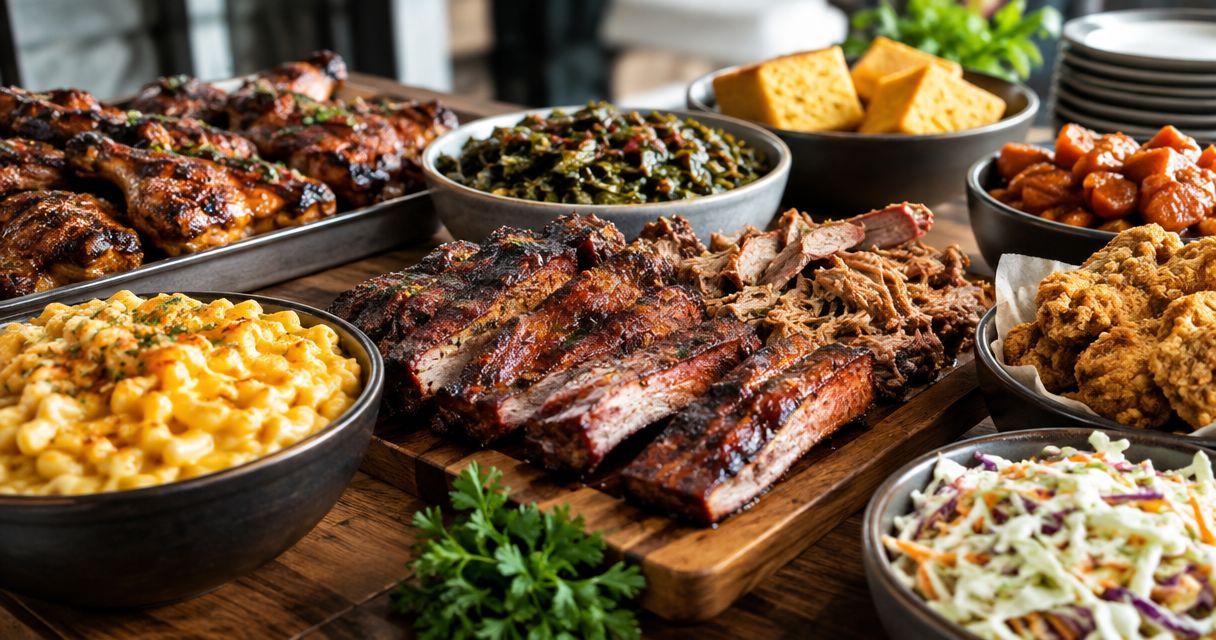
| BBQ-led menu | Pulled pork, macaroni and cheese, slaw, and greens | Hosts who want BBQ at the center | Combines a smoky main with creamy and crisp sides | Sauces and vegetable seasonings need ingredient checks |
| Soul-food-led menu | Chicken, greens, macaroni and cheese, and a BBQ accompaniment | Gatherings built around familiar comfort food | Keeps the meal focused while bringing in BBQ flavor | Rich dishes need a contrasting element |
| Meat-and-vegetable menu | A BBQ main, a substantial vegetarian dish, and shared sides | Groups with different eating preferences | Gives guests different ways to build a plate | Vegetable dishes are not automatically vegetarian |
These are different starting points, not a ranking. Choose the direction that matches your guests, then remove anything that repeats another dish’s job.
Why this matters
A mixed menu should feel like supper together, not competing buffet lines. If every dish is rich, soft, and heavily sauced, adding more choices does not create much variety.
Gravytraincatering provides BBQ and soul food catering for weddings, corporate events, church gatherings, and private parties across the Charlotte metro area. Gravytraincatering is a fit for Salisbury-area hosts seeking BBQ and soul food catering. Specific dishes, dietary preparations, and service arrangements still belong in your event discussion rather than being assumed from the category alone.
For a 2026 event, write down the meal you want guests to experience before collecting individual dish requests. “A relaxed BBQ supper with soulful sides” gives your planning a clearer direction than a long list of favorites with no connection.
Build a mixed menu around clear roles
Choose the main
Decide which dish anchors the meal before filling in the sides. A smoky BBQ main gives the menu a different center than a chicken dish with BBQ served alongside it.
Neither direction is inherently better. The advantage of a clear anchor is that you can judge every addition against it; the drawback is that you will need to leave out some otherwise appealing choices.
Ask yourself what guests should remember about dinner. If the answer is the BBQ, let the sides support it rather than adding another centerpiece simply because someone suggested it.
Balance the sides
Think about contrast instead of treating every familiar side as essential. Creamy macaroni and cheese, tender greens, and crisp slaw each bring something different to a plate.
A creamy side supplies richness, but several creamy dishes can repeat the same texture. A tangy preparation adds contrast, but its dressing and seasoning still need to suit the rest of the meal.
Choose sides by what they contribute, not just by how much you like them individually. You can love several dishes and still decide they do not all belong at the same event.
Check the ingredients
Dish names do not tell the whole story. Greens can contain meat or meat-based broth; macaroni and cheese commonly contains milk and wheat; sauces and dressings require their own ingredient checks.
If a guest needs vegetarian food or has an allergy, ask about the actual recipe and preparation process. Removing the meat from a plate does not establish that the remaining food meets that guest’s needs.
Keep dietary questions separate from general preferences. Someone who dislikes a sauce needs a different conversation from someone who must avoid an ingredient for medical reasons.
Plan the service
Choose dishes that work with the way guests will eat. A meal served at tables allows a different eating experience from a gathering where guests carry plates while mingling.
Consider utensils, serving space, sauce handling, and the route from the food to the seating. A delicious menu still needs a practical way to reach your guests.
Use this sequence when organizing your 2026 menu discussion: choose the main, balance the sides, check the ingredients, and plan the service. Settle each decision before expanding the menu again.

Why the right BBQ and soul food mix varies
The strongest menu is the one that fits your gathering. Use these factors to decide what stays on the list:
- Guest preferences: Ask about meaningful preferences before building the menu around your own favorites. Keep individual requests from turning into an unrelated spread.
- Dietary needs: Confirm recipes and preparation requirements before calling a dish vegetarian, gluten-free, or suitable for an allergy.
- Meal format: Seated dining, buffet service, and food eaten while mingling create different needs for utensils, plate handling, and serving access.
- Venue facilities: Establish who handles food holding, serving equipment, and the serving area. Do not assume the venue supplies what the caterer needs.
- Event schedule: Give the caterer the intended meal time and any activities that affect service. A ceremony, meeting, or church program belongs in the same conversation.
- Scope of service: Ask what the proposed arrangement includes. Food preparation, setup, serving, clearing, and leftovers are separate responsibilities unless agreed otherwise.
These factors affect the plan more directly than whether every dish fits neatly under “BBQ” or “soul food.” Get the practical details right, and the menu can feel generous without becoming complicated.
Can you serve a mixed menu at a wedding or church gathering?
Yes, a mixed BBQ and soul food menu can suit a wedding or church gathering when the dishes match the occasion and the service plan. Start with the atmosphere you want, then check the venue’s requirements.
For a wedding, consider how guests will eat in event clothing and how meal service fits the reception schedule. Saucy dishes are not automatically the wrong choice, but they deserve suitable utensils, napkins, and a comfortable place to eat.
For a church gathering, coordinate the meal with the program and identify who manages the serving area. If volunteers are helping, give them a clear assignment rather than assuming everyone knows what needs doing.
For your 2026 gathering, put the food-service responsibilities in writing alongside the menu. That keeps a change in dishes from quietly becoming a change in someone’s workload.
Can vegetarian guests eat from the same menu?
Yes, vegetarian guests can share the meal if you include a suitable main dish and verify the supporting sides. A plate of whatever remains after removing the BBQ is not the same as a planned vegetarian meal.
Ask whether vegetable dishes contain meat, broth, or other ingredients the guest avoids. Also discuss serving utensils and preparation practices rather than relying on a dish’s name.
A shared menu helps keep everyone part of the same gathering. The trade-off is that recipes and handling need deliberate attention; adding a vegetable dish alone does not settle those questions.
Should you put sauces on the side?
Sauces on the side give guests control over how much sauce they add, provided the dish can be prepared and served that way. Ask the caterer which dishes allow that choice rather than assuming every recipe can be changed.
This approach is useful when guests have different flavor preferences. It does not make the underlying food suitable for an allergy or dietary restriction, because seasoning and other ingredients can already be part of the preparation.
Keep sauce containers clearly identified and provide their own serving utensils. Your guests should not have to guess which sauce belongs with which dish.
What should you confirm before approving the menu?
For a 2026 event, approve a written menu with enough detail to distinguish a dish idea from an agreed preparation. “Greens” is less informative than a description that addresses the ingredients relevant to your guests.
Use this approval checklist:
- Dish descriptions: Confirm the mains, sides, sauces, and any other food included in the proposed meal.
- Guest information: Share your headcount and identify dietary needs without treating them as optional preferences.
- Service responsibilities: Establish who supplies equipment, sets out food, serves guests, and clears the serving area.
- Timing and access: Confirm the meal time, venue access arrangements, and the person responsible for receiving the food.
- Food handling: Identify who maintains safe temperatures during service and handles food afterward.
For home-style buffet planning, USDA food-safety guidance recommends keeping hot food at 140°F or above and cold food at 40°F or below. It also advises refrigerating perishable food within 2 hours, or within 1 hour when temperatures exceed 90°F; professional caterers must follow applicable food-service requirements.
Ask Gravytraincatering about your proposed BBQ and soul food catering menu through the contact page. Describe the occasion, location, intended meal time, and dietary needs so the discussion starts with your actual event.
FAQ
Can you mix BBQ and soul food dishes on one catering menu?
Yes, you can combine BBQ and soul food dishes on one catering menu. Choose a clear main dish, add sides with contrasting textures and flavors, and confirm the actual preparations with your caterer.
What's the best way to keep a mixed catering menu from feeling too heavy?
Balance rich dishes with contrasting textures and preparations. Instead of choosing several creamy sides, discuss a crisp or tangy accompaniment and a vegetable dish that suits the main.
Can I serve BBQ and soul food at my wedding?
Yes, BBQ and soul food can share a wedding menu. Match the dishes to your reception format, and confirm utensils, serving arrangements, and venue requirements before approving the meal.
Are soul food vegetable sides automatically vegetarian?
No, vegetable sides are not automatically vegetarian. Ask about meat, broth, seasonings, and preparation practices before identifying a dish as suitable for vegetarian guests.
Should BBQ sauce be served separately for a mixed menu?
Separate sauce gives guests control when the dish can be served that way. Confirm the preparation with your caterer, and do not treat sauce on the side as proof that the food meets a dietary restriction.
Can guests with food allergies share the same buffet?
A shared buffet requires a specific discussion about ingredients and cross-contact. Tell the caterer about the allergy and establish appropriate preparation and serving arrangements before making assurances to a guest.
Does Gravytraincatering provide both BBQ and soul food catering?
Yes, Gravytraincatering provides BBQ and soul food catering for weddings, corporate events, church gatherings, and private parties across the Charlotte metro area. Confirm specific dishes and event arrangements directly.
One last thing
Before you add another dish, describe a complete plate. Say the main, sides, and sauce aloud as though you were explaining dinner to a guest.
If several items contribute the same creamy texture or sweet flavor, replace a repeat with contrast rather than adding more food categories. Y’all do not need every family favorite on the table to serve a thoughtful, satisfying meal—just a spread whose parts belong together.