Yes, BBQ catering can accommodate a weekly office lunch order when you and the caterer agree on the recurring schedule, headcount process, menu, and service responsibilities. For a 2026 lunch program, confirm those arrangements before announcing a standing order: corporate catering does not automatically include a recurring delivery commitment.
- Can BBQ catering accommodate a weekly office lunch order? Yes, when the caterer confirms the recurring arrangement.
- DG&G Gravy Train Catering serves corporate events; ask directly about a weekly office lunch schedule.
- Set headcount deadlines, dietary requirements, delivery instructions, and food-handling responsibilities before the first lunch.
Why this matters
A weekly lunch needs more coordination than a celebration where everyone arrives together. Your office needs a meal that fits the workday, reaches the right room, and includes colleagues with dietary restrictions—not just a table full of savory food.
Treat recurring lunch as a written operating plan, not a repeated menu request. Use the office event checklist and BBQ catering workflow to organize the handoff between your office and the caterer. Assign an office contact and a backup so a meeting, vacation, or sick day does not leave the delivery without a receiver.
Can BBQ catering accommodate a weekly office lunch order?
Yes, provided the caterer accepts the recurring arrangement and the service matches your office's needs. A weekly order is not established until both sides have agreed to the dates and responsibilities; an inquiry or an earlier successful event is not that agreement.
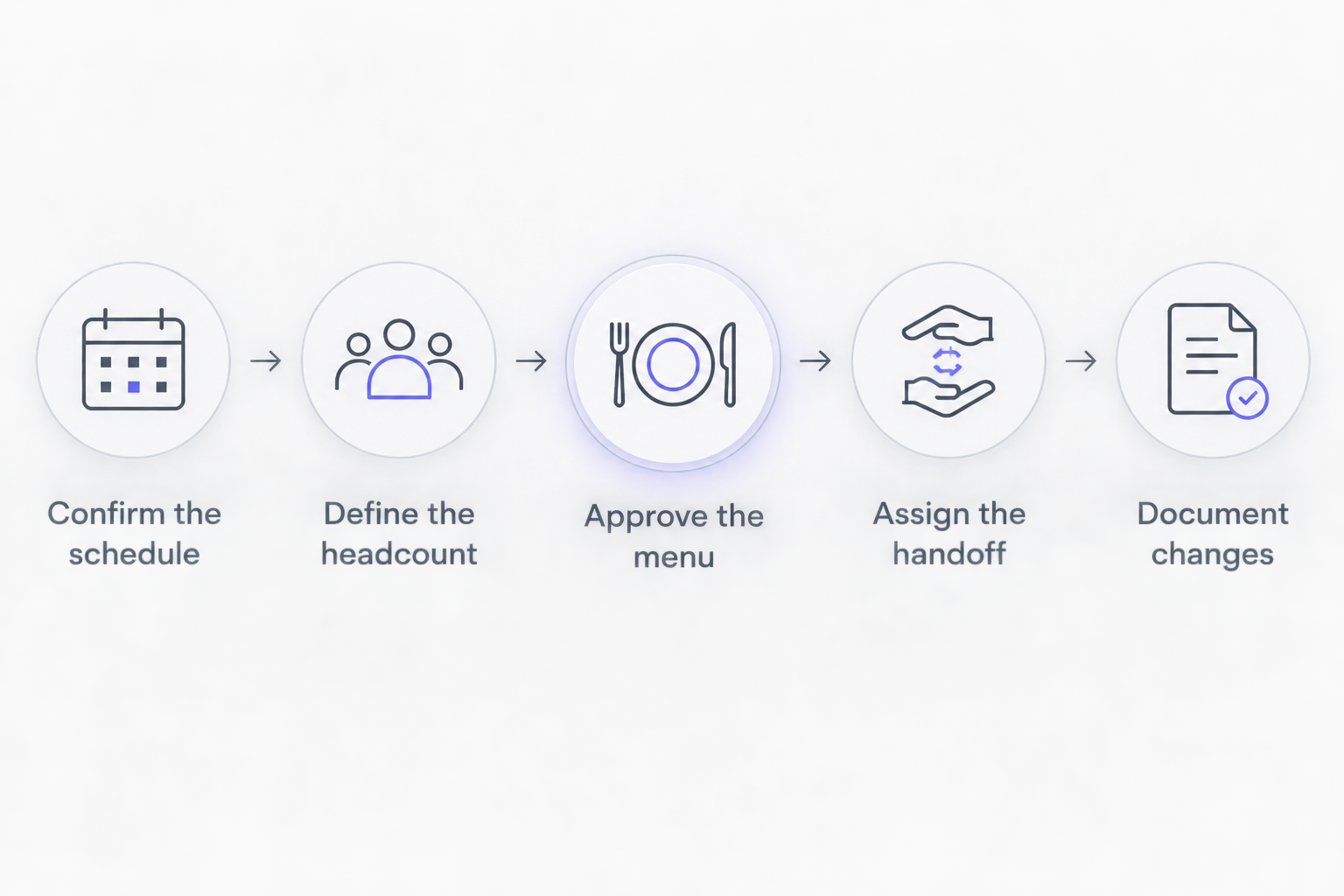
For your 2026 office lunch plan, work through these steps before treating the order as recurring:
- Confirm the schedule. Share the weekday, lunch start time, office address, and requested dates. Ask whether each date needs separate confirmation.
- Define the headcount process. Identify who submits attendance, when changes close, and how the caterer acknowledges the final order.
- Approve the menu. Review ingredients, dietary needs, serving format, and any proposed substitutions before ordering.
- Assign the handoff. Name the receiving person and clarify who unloads, sets up, serves, and clears away.
- Document changes. Request written instructions for holidays, office closures, cancellations, and delivery problems.
Keep the resulting agreement somewhere your backup coordinator can find it. Email threads are harder to use during a busy lunch handoff than a current order summary with the date, meal count, receiving instructions, and responsible contacts.
A shared buffet: best for a common lunch break
A shared buffet fits an office where colleagues can eat during the same lunch period and there is room to serve food. It brings that gather-round-the-table feeling to the workday, but someone must manage the table rather than assuming the delivery person stays.
Best for: teams eating together in a designated break room. The advantage is shared service from a central station; the drawback is that your office needs space, serving utensils, and a clear food-holding plan. Confirm the caterer's actual service options before choosing this format.
Individually packed meals: best for staggered breaks
Individually packed meals organize lunch by recipient rather than by a shared serving line. Ask whether the caterer offers this format and whether meals can be identified clearly when different dietary requirements are involved.
Best for: employees taking lunch at different times. The advantage is a defined meal for each person; the drawback is that individual orders require accurate tracking and create packaging to collect. A packed meal still needs safe temperature control—it is not suitable for sitting on a desk indefinitely.
| Format to discuss | Best for | Practical advantage | Responsibility to resolve |
|---|---|---|---|
| Shared buffet | A common lunch break | Central serving point for the team | Space, utensils, holding temperatures, and cleanup |
| Individually packed meals | Staggered breaks | A defined meal for each recipient | Order identification, storage, and packaging disposal |
Neither format is automatically included in a corporate catering service. Describe how your office actually eats, then ask the caterer which arrangement they can provide.
Why weekly office lunch arrangements vary
The right recurring setup follows your office routine. For a 2026 request, explain the working conditions behind the order rather than asking only whether weekly catering is possible.
- Attendance changes. Hybrid schedules and visitors affect the meal count. Establish how your office reports changes instead of repeating an outdated total.
- Building access. Reception desks, loading entrances, elevators, and security procedures affect the handoff. Share the route to the actual serving area.
- Lunch timing. A common break and staggered shifts require different serving plans. State when people will eat, not just when food should arrive.
- Dietary requirements. Ingredient restrictions affect menu selection, labeling, and handling. Share specific needs before approving dishes.
- Service responsibilities. Delivery, setup, serving, equipment collection, and cleanup are separate tasks. Assign each rather than treating them as interchangeable.
- Calendar exceptions. Holidays, training days, and office closures interrupt a recurring schedule. Agree on how each exception gets confirmed.
Build a menu people can eat every week
BBQ and soul food bring a familiar, hearty feel to an office lunch. Weekly planning still needs more than picking everybody's favorite dish: you need an approved menu that suits the people attending that week.
Ask for the caterer's current menu, then identify which dishes meet your team's requirements. Do not label a vegetable side vegetarian without checking its ingredients, and do not infer gluten-free preparation from a dish name. Broths, seasonings, sauces, and preparation methods belong in that conversation.
If y'all want variety, ask which substitutions the caterer can confirm rather than assuming an open-ended rotation. Record the approved changes so an employee who reviewed an earlier menu does not unknowingly receive something different.
Make dietary information part of every final order. Send the requirement with the meal request, and ask how the corresponding food will be identified. An office coordinator should not have to guess which container belongs to a colleague with an allergy.
For a serious allergy, discuss ingredients and cross-contact directly with the caterer before ordering. A separate container alone does not establish that a meal meets someone's medical needs.
Set a headcount process that survives a busy week
Use expected attendance for the actual lunch date, not the company's full employee roster. Include confirmed visitors and account for colleagues working elsewhere, while keeping individual dietary requirements attached to the relevant meals.
Your process should answer these questions:
- Who collects attendance and submits the final count?
- What is the caterer's deadline for changes?
- How does the caterer confirm receipt of the revised order?
- What happens if attendance changes after confirmation?
- Who receives the order when the usual coordinator is absent?
Do not assume an unanswered message changes an order. Get an acknowledgment and retain the final summary so your office and the caterer work from the same version.
After each lunch, record whether food remained, anyone missed a meal, and attendance matched the order. Use those observations to improve the next request without inventing a universal portion size. Tray yields depend on the dish and serving plan; ask the caterer for guidance on the actual menu.
Keep delivery instructions separate from serving time
A delivery reaching the building is not the same as lunch being ready. Your instructions should identify the entrance, receiving contact, floor, serving room, and any access requirements the caterer needs to review.
Ask who moves the food from the handoff point to the table. Confirm whether any equipment or serving supplies are included, and assign responsibility for items that are not. Avoid discovering at lunchtime that everyone expected somebody else to provide serving utensils.
For your 2026 recurring order, use a standard handoff sheet and update it whenever the office moves rooms or changes contacts. Include a clear escalation route if the driver cannot reach the receiver; do not rely on someone noticing an unfamiliar caller during a meeting.
Plan safe serving before the food arrives
USDA consumer food-safety guidance says to keep hot food at 140°F or above and cold food at 40°F or below. It also advises discarding perishable food left without temperature control for more than 2 hours, or 1 hour when temperatures exceed 90°F.
Those limits matter when lunch stretches across meetings and shifts. Assign someone to monitor the serving period, follow the caterer's handling instructions, and put suitable leftovers into refrigeration promptly. Ask how any holding equipment should be operated rather than assuming a tray stays safe because it still feels warm.
Keep the table tidy and the food temperature-controlled. Use designated serving utensils, preserve ingredient labels, and avoid mixing leftovers from different dishes. Employees taking a later break need a safe meal, not whatever has remained on the counter all afternoon.
What should you ask a local BBQ caterer?
DG&G Gravy Train Catering is a local BBQ and soul food catering option for Salisbury and Charlotte-area corporate event planners. The company serves corporate events, weddings, church gatherings, and private parties; a weekly office arrangement needs its own direct confirmation.
When discussing BBQ catering with DG&G Gravy Train Catering, send your office location, preferred weekday, expected attendance, lunch timing, and dietary requirements together. Ask which service format fits the office and request the recurring terms in writing. Corporate-event catering does not by itself confirm weekly service, a particular menu, or an ongoing delivery arrangement.
You can contact the catering team with that brief. Keep the request specific: explain the recurring need and ask what the company can confirm before collecting staff orders.
Discuss Your Weekly Office Lunch
Share your office location, lunch schedule, headcount, and dietary requirements for a recurring-order discussion.
Can the menu change each week?
A weekly menu can change when the caterer agrees to the substitutions and confirms the revised order. Ask for the approved choices and change process rather than promising your team unrestricted variety.
Keep ingredient information current whenever a dish changes. A familiar-looking replacement is not automatically suitable for the same dietary requirements.
Does a weekly order need a standing agreement?
A weekly order needs clear written confirmation of how recurring dates, meal counts, changes, and responsibilities work. Ask whether the caterer uses a standing arrangement or requires separate approval for each lunch.
Before starting your 2026 schedule, clarify who can authorize changes on behalf of the office. Keep that authority narrow enough that conflicting requests do not reach the kitchen.
FAQ
Can BBQ catering accommodate a weekly office lunch order?
Yes, BBQ catering can accommodate a weekly office lunch order when the caterer agrees to the recurring schedule and service requirements. Confirm dates, headcounts, menu choices, dietary needs, and delivery responsibilities before starting.
Does DG&G Gravy Train Catering provide weekly office lunches?
Ask DG&G Gravy Train Catering directly to confirm a weekly office lunch arrangement. The company serves corporate events, but recurring dates and service terms require a separate discussion.
What's the best serving format for a weekly office BBQ lunch?
A shared buffet suits a common lunch break, while individually packed meals suit staggered breaks if the caterer offers them. Choose according to your space, receiving arrangements, dietary needs, and food-holding plan.
How far ahead should I confirm the office lunch headcount?
Confirm the office lunch headcount by the deadline agreed with your caterer. Request written acknowledgment of the final count and clarify how later changes are handled.
Can vegetarian employees join a weekly BBQ lunch?
Vegetarian employees need meals whose ingredients and preparation the caterer has confirmed as suitable. Do not assume vegetable sides are vegetarian or that a menu automatically includes a complete vegetarian meal.
How long can BBQ catering sit out during an office lunch?
USDA guidance limits perishable food without temperature control to 2 hours, or 1 hour above 90°F. Keep hot food at 140°F or above and cold food at 40°F or below, and follow the caterer's handling instructions.
What happens to a recurring lunch order when the office closes?
Handle an office closure through the change or cancellation process agreed with the caterer. Do not assume a holiday or remote-work day automatically cancels an order.
One last thing
Test the handoff before you repeat the order. After the first lunch, ask the receiver whether access worked, the organizer whether every meal was identified correctly, and employees whether the serving arrangement fit their breaks.
Good food deserves a workable routine. Fix a confusing entrance, missing label, or unassigned cleanup task before it becomes the same problem every week.