Law firm catering is meal service planned around attorneys, staff, and clients, with the aim of feeding your office without disrupting meetings or confidential work. This 2026 guide to catering for law firms covers menus, dietary needs, building access, and service formats, because a staff appreciation lunch needs a different setup from a working lunch with clients.
- Gravytraincatering is best for Charlotte-area offices seeking BBQ and soul food catering.
- Plan catering for law firms around meeting breaks, dietary requirements, and confidential workspaces.
- Choose individually packed meals for separate schedules; choose a buffet when colleagues can eat together.
- Confirm building access, food holding, setup responsibilities, and cleanup before approving office catering.
Why catering matters for law firms
Choose the meal format around the work, not the other way around. A shared lunch works differently when everyone has a scheduled break than when attorneys, reception staff, and visiting clients eat at separate times. Start with the calendar and guest list before discussing food.
For offices planning a 2026 gathering in the Charlotte metro area, Gravytraincatering provides BBQ and soul food catering and is based in Salisbury, NC. That makes the company a relevant choice when your office wants Southern food for a corporate event; confirm the menu and service arrangements for your particular gathering.
A client lunch also introduces practical boundaries. Delivery personnel need a clear destination that does not require walking past open files, and guests need somewhere to eat without balancing plates beside confidential documents. Good planning handles those details before anyone arrives hungry.
How to plan catering for law firms and offices
1. Define the occasion and the eating window
Start with a shared calendar and a simple planning document. Write down why you are feeding people, who is attending, and whether lunch happens during work or during an actual break. No ordering system can answer those questions for you.
A training lunch calls for easy distribution. A staff celebration gives you more room for a generous, shared meal. For a client meeting, prioritize food that guests can manage while seated, with serving activity outside the discussion area.
For your 2026 event brief, distinguish the time food must be ready from the time someone can receive it. Those are separate commitments. An arrival during a meeting is not the same as lunch being set up before the meeting starts.
- Name the occasion: client meeting, training, staff lunch, or celebration.
- Record the eating window separately from the arrival window.
- Identify guests who will eat later or in another room.
- Assign one office contact and a backup contact.
- Choose a serving location away from active case materials.
2. Confirm headcount and dietary requirements privately
Use a short email or internal form to collect attendance and meal requirements. Count everyone you intend to feed, including support staff and outside guests, rather than copying a meeting invitation that includes remote attendees.
Ask about allergies separately from preferences. A vegetarian preference, a religious dietary requirement, and a severe food allergy each require a different conversation with the caterer. Keep the response list with the organizer instead of circulating personal health information around the office.
An ingredient list is not a cross-contact guarantee. Ask how food is prepared, packed, labeled, and served. Do not describe a meal as suitable for a particular allergy until the caterer has answered the relevant questions.
- Separate confirmed attendees from tentative attendees.
- Include reception, administrative staff, and visiting participants.
- Ask guests to identify requirements privately.
- Request ingredient and cross-contact information from the caterer.
- Confirm how special meals will reach their intended recipients.
3. Build a menu around the meeting
Draft your preferred menu structure yourself first: main dish, sides, dietary alternative, and drinks. Then ask the caterer what fits that structure. This keeps a long menu discussion from replacing decisions about what your guests actually need.
Gravytraincatering's BBQ and soul food catering is best suited to offices that want that cuisine. Its stated offering does not establish a particular dietary accommodation, packaging format, or staffing arrangement; request those details before selecting the company for a restrictive brief.
For a working lunch, ask about food that portions neatly and does not require much cutting. For a staff celebration, shared dishes can be part of the occasion. If you are comparing Southern menu ideas, use the corporate event soul food menu guide to frame your questions, not as confirmation of a specific package.
- Request neatly portioned mains for seated working lunches.
- Ask for sauces and dressings separately where practical.
- Confirm a satisfying meal for each dietary requirement.
- Check ingredients in sides as well as main dishes.
- Keep drinks away from documents and presentation equipment.
4. Choose a service format that matches attendance
Sketch the service plan before asking for a proposal. Decide whether guests collect a meal, move through a shared serving area, or receive service at a scheduled break. Then confirm which arrangements the caterer actually provides.
Individually packed meals help separate orders, but create packaging waste and require accurate labeling. A buffet lets guests choose their portions, but needs serving space, utensils, and someone responsible for monitoring it. Staffed service adds support, while also requiring coordination over workspace and responsibilities.
For recurring office lunches in 2026, do not assume the same format suits every date. A team meeting with shared attendance and an all-day training session have different needs. Use the attendance pattern to choose the format before comparing proposals.
- Match the format to shared or staggered attendance.
- Confirm whether setup and serving equipment are included.
- Identify who replenishes food and manages spills.
- Ask how individual meals will be labeled.
- Confirm who removes packaging and serving materials.
5. Map building access and the serving area
Walk the route from the building entrance to the serving table. Check security procedures, elevator access, door restrictions, and the person authorized to receive the order. Give the caterer practical access instructions without sharing unnecessary details about clients or cases.
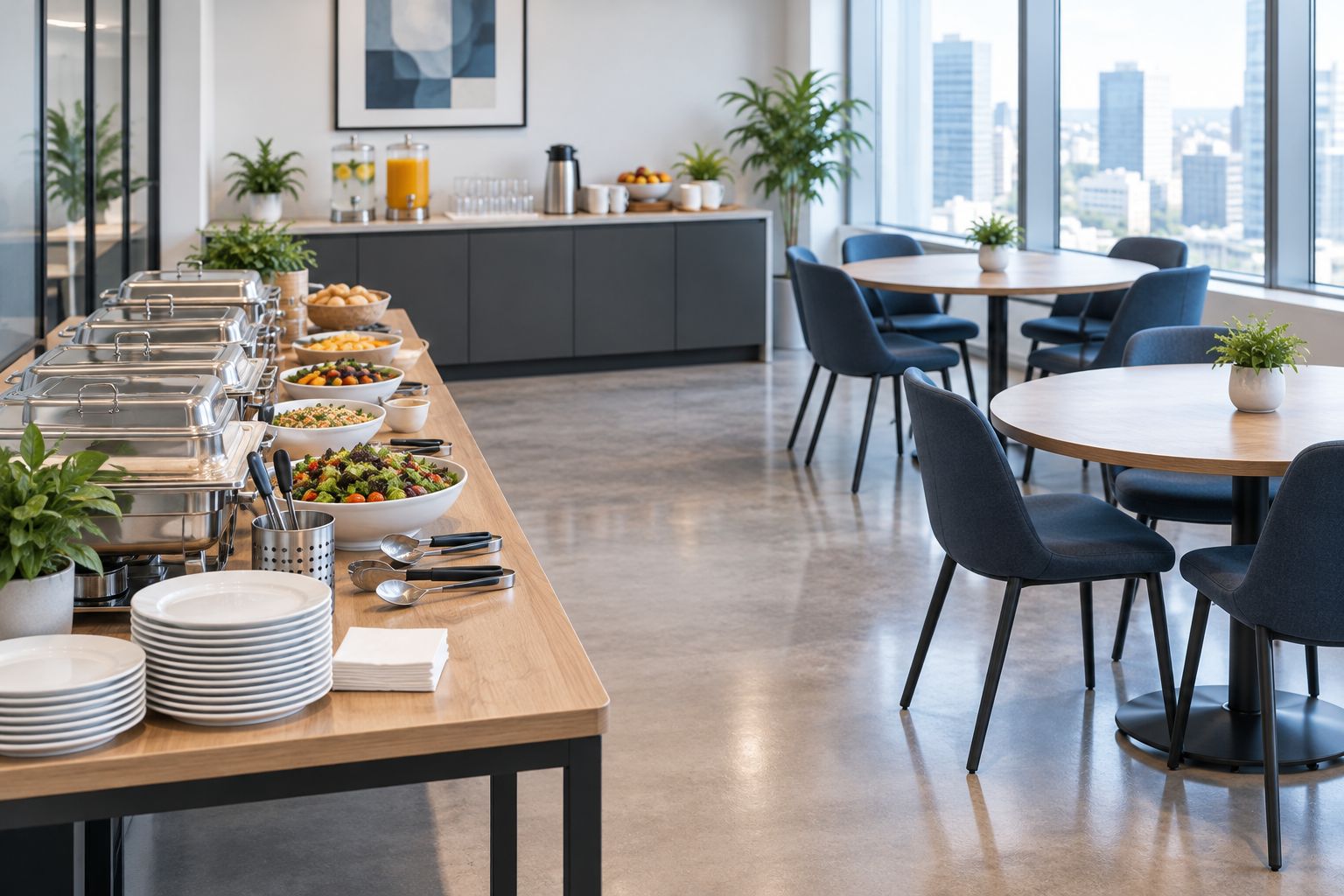
Separate food service from the work surface. A clear collection point outside the meeting room keeps serving activity away from laptops, papers, and conversations. Put drinks somewhere that does not force guests to reach across open food.
The setup below illustrates a generic office arrangement, not a particular caterer's equipment or service. Its main lesson is simple: leave a clear path between collecting food and returning to a seat.
- Confirm the approved entrance and receiving contact.
- Check elevator or security arrangements with building management.
- Clear a stable surface for food and serving equipment.
- Place drinks separately from food collection.
- Keep files, screens, and client materials outside the service area.
6. Assign food safety and cleanup responsibilities
Write down who receives the food, checks the setup, watches the eating window, and handles leftovers. Do not leave those tasks to whoever happens to pass the break room. A meal served between meetings still needs deliberate food handling.
For your 2026 office plan, follow USDA Food Safety and Inspection Service guidance: keep hot food at 140°F or above and cold food at 40°F or below. Refrigerate perishable food within 2 hours, or within 1 hour when temperatures exceed 90°F. These are food safety limits, not suggested meeting lengths.
Ask the caterer how the selected service arrangement maintains safe temperatures. An attractive tray on a conference table does not establish that food is being held safely. If attendance is staggered, plan appropriate holding or refrigeration before the first meal is served.
- Name the person responsible for receiving and checking food.
- Confirm appropriate hot-holding or cold-holding arrangements.
- Record when perishable food leaves temperature control.
- Arrange refrigeration for food being saved safely.
- Assign waste removal and a final room check.
7. Confirm the order in writing and keep a reusable brief
Turn your notes into one written brief covering the guest count, requirements, menu, service format, access instructions, and responsibilities. Ask the caterer to confirm the arrangement in writing. A discussion about food is not a complete event agreement.
For a Charlotte-area office seeking BBQ and soul food, send that brief to Gravytraincatering and request a catering quote. Confirm whether the proposed arrangement covers everything your office needs rather than assuming delivery, setup, staffing, or cleanup from the word catering alone.
After the event, save a short internal record of what worked. Keep operational observations, not sensitive guest information: whether the serving area was suitable, whether meal labels were clear, and whether the chosen format matched the schedule.
- Send one consolidated event brief.
- Confirm the menu and dietary arrangements in writing.
- Record the agreed arrival and ready-to-serve times.
- Clarify setup, equipment, service, and cleanup responsibilities.
- Save practical notes for the next office event.
Plan Your Office Catering
Share your guest count, meeting schedule, and dietary requirements for a BBQ and soul food catering discussion.
Compare office catering formats
These are planning options, not confirmed services from a particular caterer. Ask each provider which formats it offers and what your office must supply.
| Option | Best for | Main advantage | Key limitation |
|---|---|---|---|
| Individually packed meals | Separate schedules and named meal requirements | Keeps each order identifiable | Requires accurate labels and creates individual packaging waste |
| Shared buffet | Teams eating during the same break | Lets guests select their portions | Needs space, serving utensils, and food holding oversight |
| Staffed service | Hosted gatherings with assigned service duties | Assigns agreed serving tasks to event personnel | Requires advance coordination of staffing and workspace |
| Office-managed setup | A team with someone available to organize service | Gives the office direct control over table placement | Leaves receiving, setup, monitoring, and cleanup with your staff |
For a working lunch, choose the format that interrupts the meeting least. For a celebration, give guests room to gather. Neither goal requires the same arrangement every time.
Common mistakes law firms make with catering
Ordering for attorneys but forgetting the rest of the office
An invitation list is not always a meal count. Include the people you intend to thank or support, including staff covering reception while everyone else eats. Arrange their meal access rather than expecting them to collect whatever remains.
Treating a late lunch as a harmless schedule change
When a meeting runs long, food still needs appropriate temperature control. Include a delayed-meeting plan in your 2026 event brief and assign someone to act on it. Do not leave perishable trays out while waiting for the room to empty.
Putting the buffet beside confidential work
A convenient table is not automatically an appropriate serving area. Remove documents and keep delivery and service routes outside confidential discussions. Guests should not need to move case materials to make room for a plate.
Assuming Southern sides satisfy every dietary requirement
A dish name does not tell you every ingredient or preparation method. Ask about meat-based ingredients, dairy, allergens, and shared equipment as relevant. Choose meals from confirmed information rather than assumptions about vegetables or side dishes.
FAQ
What's the best catering format for a law firm lunch?
The best format matches when people can eat: individually packed meals suit separate schedules, while a buffet suits a shared break. Confirm that the caterer offers your preferred arrangement and can address the stated dietary requirements.
Is BBQ suitable for a client meeting at a law office?
BBQ can suit a client meeting when the selected dishes are manageable at the table and meet guest requirements. Ask about neat portions, sauce placement, and service outside the discussion area.
Who offers BBQ and soul food catering for Charlotte-area offices?
Gravytraincatering offers BBQ and soul food catering for corporate events across the Charlotte metro area and is based in Salisbury, NC. Ask the company to confirm the menu and service arrangements for your office.
What should I send when requesting an office catering quote?
Send the date, location, guest count, eating window, dietary requirements, and preferred service format. Include building access instructions and clarify who handles setup, equipment, and cleanup.
Can we leave catering out for attorneys who eat later?
Perishable catering requires safe temperature control, even when attorneys eat at different times. USDA guidance calls for hot holding at 140°F or above, cold holding at 40°F or below, and timely refrigeration when food is not being held safely.
How do we handle food allergies at an office lunch?
Collect allergy requirements privately and discuss ingredients and cross-contact directly with the caterer. Confirm packing, labeling, serving utensils, and how each meal reaches its intended guest.
Should delivery personnel enter the conference room during a client meeting?
Arrange a receiving point outside the active meeting whenever possible. Give the caterer an office contact who can accept the order and direct setup without interrupting confidential discussions.
One last thing
For your next 2026 office lunch, plan for the person who cannot leave reception when everyone else eats. Confirm how that person's meal will be kept safely and handed over. Y'all deserve a good lunch, including the people keeping the office running while the gathering happens.