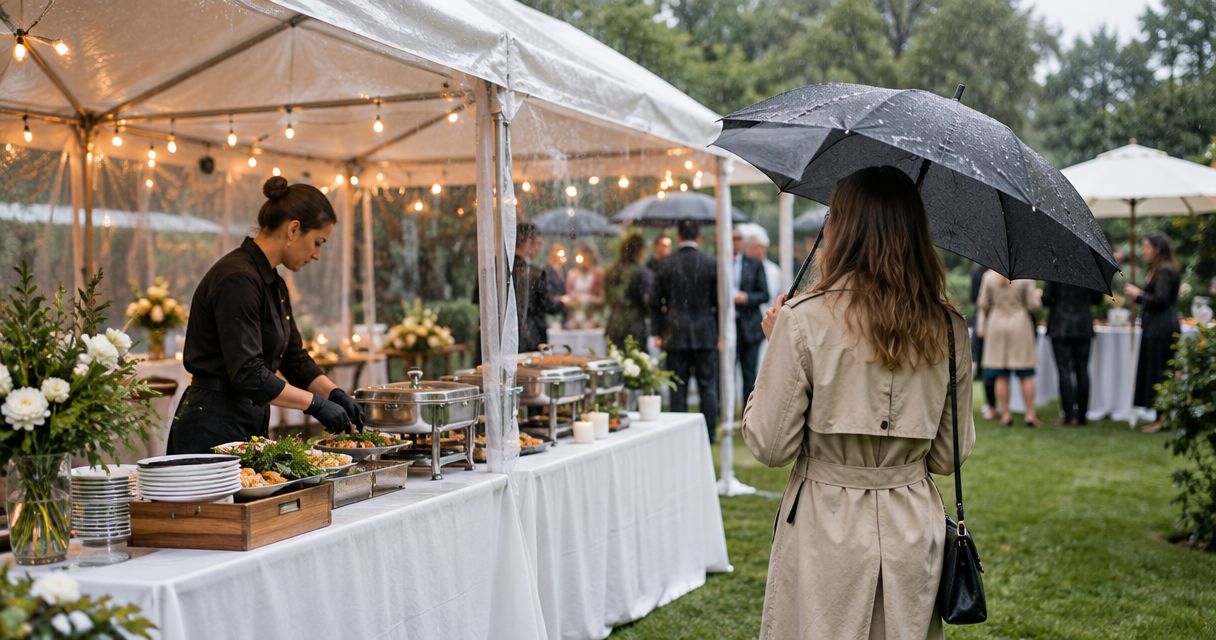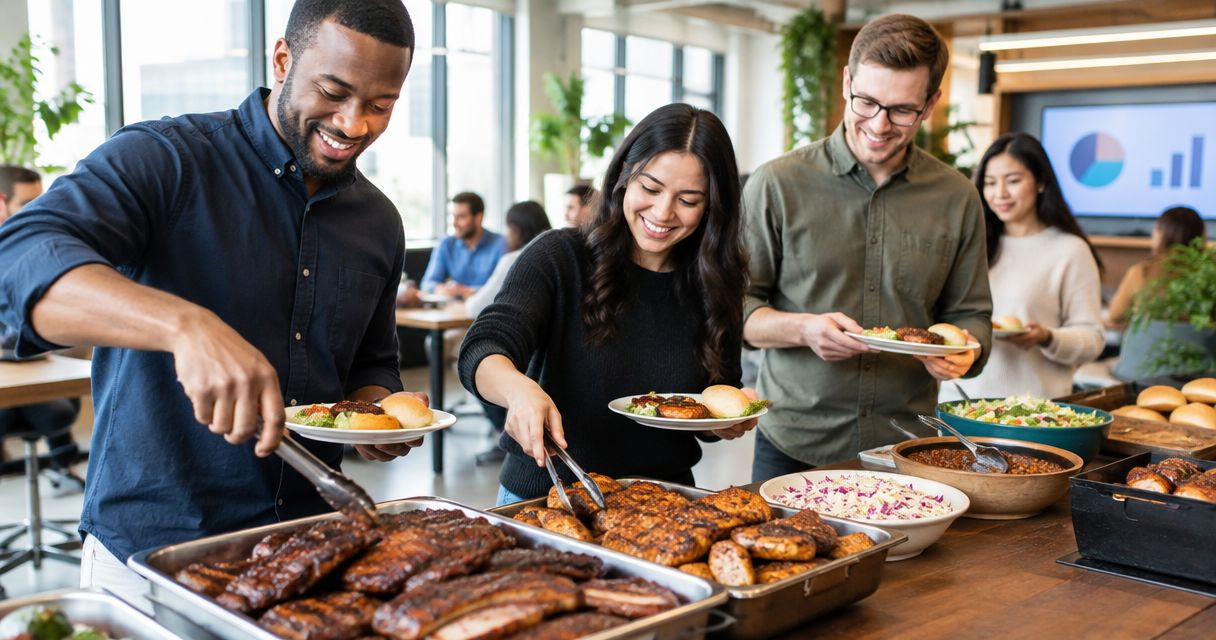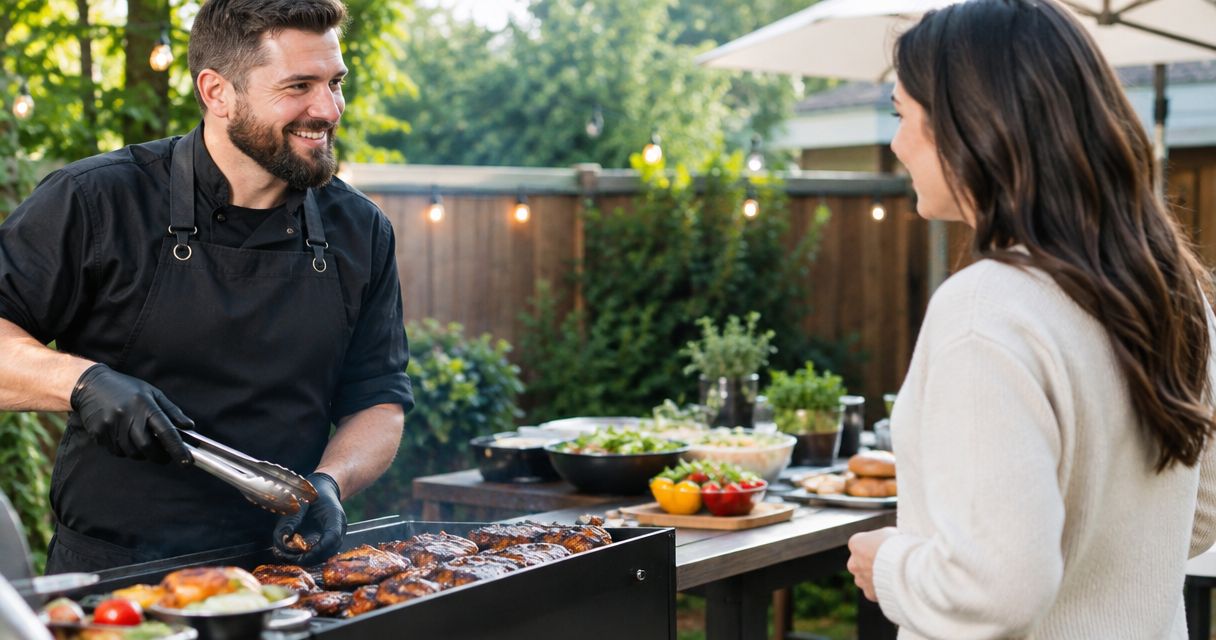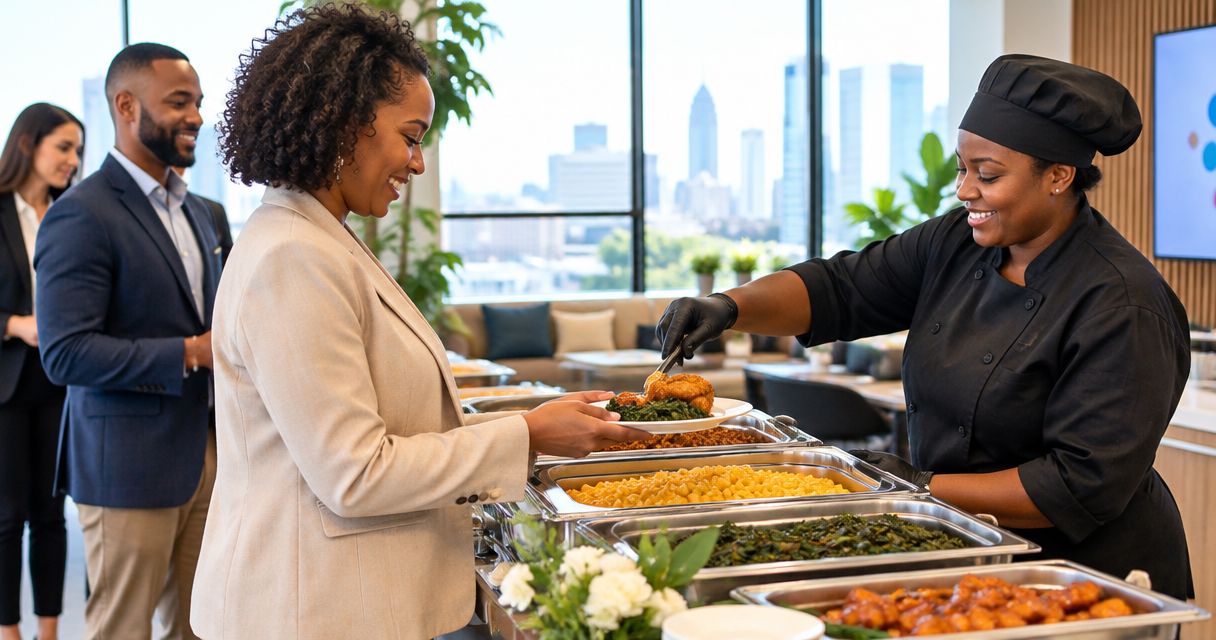
Best overall: a classic soul food buffet. Best for a casual team celebration: a BBQ-and-sides spread. Best budget-control format: a focused lunch menu with fewer selections. For Charlotte corporate events in 2026, choose the menu around your meeting schedule, dietary needs, and serving space—not just the dishes that sound good.
- The best soul food catering menu for corporate events Charlotte teams plan starts with a classic buffet.
- DG&G Gravy Train Catering serves Charlotte-area corporate events with BBQ and soul food catering.
- Choose boxed meals for working lunches and a plant-forward menu when meat-free dining is the priority.
- Treat these menus as planning concepts; confirm dishes, ingredients, staffing, and service details before booking.
Why this matters
A corporate lunch needs to feed people without taking over the workday. A buffet suits a gathering where coworkers can mingle; individual meals fit a room where presentations continue through lunch. Good food and the right serving format belong in the same decision.
DG&G Gravy Train Catering is a Salisbury-based BBQ and soul food catering company serving corporate events across the Charlotte metro area. DG&G Gravy Train Catering is a fit for Charlotte corporate planners seeking BBQ and soul food catering. The menu concepts below are requests to discuss with your caterer, not a published list of the company's dishes or service packages.
What makes the best corporate soul food menu
For a 2026 Charlotte corporate event, rank the menu against these practical criteria before choosing entrees:
- Schedule fit: Choose food and service that work with the actual lunch break, presentation, or reception.
- Dietary clarity: Ask about ingredients, allergens, and preparation—not just whether a dish sounds vegetarian.
- Serving practicality: Match buffet space, seating, utensils, and cleanup responsibilities to the venue.
- Meal completeness: Give guests a satisfying meal rather than a collection of sides that leaves some people without an entree.
- Scope control: Compare the entire catering arrangement, including service responsibilities, rather than judging a menu by its dish count.
A useful starting brief is 2 main dishes, 3 sides, and 1 dessert, adjusted to your guests and event. Those are planning choices, not portion standards or a catering package. Ask the caterer to recommend quantities after you provide the attendance count and serving format.
Best corporate soul food menus at a glance
These five menu concepts have distinct jobs. None assumes that a particular dish, preparation, or serving format is offered by the caterer you select.
| Rank and menu concept | Best for | Standout feature | Key limitation |
|---|---|---|---|
| 1. Classic soul food buffet | Mixed-group employee appreciation lunches | Guests choose among mains and Southern sides | Needs serving space and ingredient identification |
| 2. BBQ-and-sides spread | Casual team celebrations | BBQ anchors a relaxed shared meal | Sauces, bones, and serving utensils need attention |
| 3. Focused lunch menu | Organizers prioritizing scope control | Fewer selections make the brief easier to compare | Less variety for guests |
| 4. Individual soul food meals | Working lunches and scheduled training | Each attendee receives a complete meal | Dietary choices need to be assigned in advance |
| 5. Plant-forward Southern menu | Events centered on meat-free dining | Builds the meal around a substantial meat-free main | Side dishes still require ingredient checks |
1. Classic soul food buffet: best for employee appreciation
A classic soul food buffet brings the gathering around a shared spread of mains and Southern sides. Ask about a poultry entree, another main suited to your group, a vegetable dish, and a starch. Add dessert if it belongs in your event brief.
Think savory comfort food and a plate that feels like a proper lunch. Familiar options such as chicken, greens, macaroni and cheese, or sweet potatoes are discussion examples—not confirmed offerings from DG&G Gravy Train Catering.
Classic soul food buffet pros:
- Guests can choose the dishes they want.
- Different mains give a mixed group more flexibility.
- Shared service suits an appreciation event with time to socialize.
- You can identify a complete meal for each dietary group before approving the menu.
Classic soul food buffet cons:
- A buffet requires room for food service and guest movement.
- Shared utensils need a clear handling plan where allergen cross-contact matters.
- Guests with restricted diets need more information than dish names alone.
Best for: Employee appreciation lunches where you have a dedicated eating area and a break that allows guests to serve themselves.
For your 2026 brief, describe the desired balance of mains and sides instead of sending a long wish list. Ask which dishes work together and which need separate service.
Verdict: Buy this format for a general team gathering; hold until the venue and dietary arrangements are confirmed.
2. BBQ-and-sides spread: best for casual team celebrations
A BBQ-and-sides spread puts barbecue at the center of the meal, with Southern accompaniments doing the supporting work. Discuss the meat preparation, sauces, vegetable sides, and serving method together. Don't assume that every BBQ dish works equally well at an office table.
DG&G Gravy Train Catering's stated BBQ and soul food focus makes this a relevant corporate catering conversation. Ask for the current menu rather than treating suggested meats or sides as an established package.
BBQ-and-sides spread pros:
- Gives a casual celebration a clear food theme.
- Allows you to discuss complementary Southern sides alongside the main.
- Suits a gathering where food is part of the occasion, not squeezed between presentations.
- Can be planned around seated dining or a buffet, subject to the caterer's service options.
BBQ-and-sides spread cons:
- Bone-in selections need suitable plates, utensils, and waste handling.
- Sauces require ingredient checks and a practical serving arrangement.
- A meat-centered menu needs a separate, complete option for meat-free guests.
Best for: Team milestones, informal recognition events, and company gatherings with a relaxed meal period.
For a 2026 celebration, ask whether the proposed main can be eaten comfortably in your seating arrangement. A dish that needs cutting deserves a table, not a balancing act in somebody's lap.
Verdict: Buy for a relaxed celebration; skip complicated bone-in choices when guests lack proper dining tables.
3. Focused lunch menu: best for controlling the catering brief
A focused lunch menu limits the number of selections without treating lunch as an afterthought. Start with a main, complementary sides, and a separate dietary alternative where needed. Then decide whether dessert belongs in the event.
This is the budget-control pick because it keeps the scope explicit—not because fewer dishes guarantee a lower bill. Ask the caterer to quote the same service arrangement for each proposal so you can compare like with like.
Focused lunch menu pros:
- Gives the organizer a short, clear menu to approve.
- Reduces the number of dish-by-dish ingredient questions.
- Makes it easier to identify optional additions.
- Keeps the conversation centered on a complete lunch rather than maximum variety.
Focused lunch menu cons:
- Guests have fewer choices if the main doesn't suit them.
- Dietary alternatives still need deliberate planning.
- A short menu does not establish the total catering cost.
Best for: Routine office lunches and internal meetings where a clear scope matters more than a large spread.
Keep the dietary alternative inside the initial request. Adding it after approving the main menu changes the brief and makes proposal comparisons less useful.
Verdict: Buy for a straightforward lunch; hold if employee preferences or dietary needs remain unknown.
4. Individual soul food meals: best for working lunches
Individual meals place a complete lunch in each attendee's hands instead of asking everyone to move through a buffet. Discuss a main, sides, packaging, utensils, and identification of special meals. Confirm whether your chosen caterer offers this format before designing the meeting around it.
For a 2026 training day or presentation, individual meals keep distribution separate from food selection. They still need a handoff plan: someone must know where meals go and how attendees receive the right option.
Individual soul food meals pros:
- Each attendee receives a defined meal.
- Dietary selections can be matched to named requests.
- The room doesn't need a full buffet setup.
- Distribution can be planned around a scheduled break.
Individual soul food meals cons:
- Guests can't freely change selections as they can at a buffet.
- Packaging creates a cleanup responsibility.
- Late attendance changes need an agreed response.
Best for: Working lunches, scheduled training sessions, and meetings where room layout limits shared food service.
Ask how meals will be labeled and who will distribute them. A separate dietary meal is useful only when the intended guest can identify and receive it.
Verdict: Buy when the meeting schedule drives the meal; wait until packaging, labeling, and distribution are confirmed.
5. Plant-forward Southern menu: best for meat-free dining
A plant-forward Southern menu makes the meat-free meal the starting point, not an improvised plate of leftover sides. Discuss a substantial main based on beans, legumes, or another suitable ingredient, then build the accompaniments around it. Confirm the actual recipes with the caterer.
Dish names aren't ingredient lists. Greens can contain meat; beans can use animal-based stock; breads and creamy sides can contain dairy or eggs. Vegetarian and vegan requests need different checks.
Plant-forward Southern menu pros:
- Gives meat-free guests a deliberate, complete meal.
- Supports a menu brief built around vegetables and legumes.
- Encourages ingredient questions before approval.
- Can preserve a Southern comfort-food direction without requiring a meat main.
Plant-forward Southern menu cons:
- Traditional-sounding vegetable dishes aren't automatically vegetarian or vegan.
- Dietary suitability depends on recipes and preparation practices.
- Shared service requires attention to utensils and cross-contact.
Best for: Corporate groups that prioritize meat-free dining or need a substantial alternative alongside the main spread.
Don't describe this option as universally allergy-safe. Vegan suitability, gluten avoidance, and food allergies are separate requirements that deserve separate answers.
Verdict: Buy for a meat-free brief only after ingredient and preparation checks; skip assumptions based on dish names.
How these menus are ranked
The classic buffet ranks first for a mixed-group appreciation lunch because it gives guests choices within a shared meal. The remaining picks answer different problems: a celebration theme, scope control, meeting logistics, or meat-free dining.
These are format recommendations, not taste-test results or a ranking of Charlotte caterers. The comparison uses schedule fit, dietary clarity, serving practicality, meal completeness, and scope control. The best menu is the one your guests can eat and your event can serve.
Turn your menu choice into a useful catering request
Before requesting a 2026 proposal, settle these steps in order. A clear brief gives the caterer something concrete to answer.
- Event brief: Provide the date, location, attendance count, and purpose of the gathering.
- Dietary needs: Collect relevant restrictions privately and ask what information the caterer needs.
- Menu format: Choose buffet, individual meals, or another arrangement the caterer confirms.
- Service details: Identify delivery access, serving space, food handling responsibilities, and cleanup.
- Final approval: Confirm dishes, ingredients, quantities, substitutions, and responsibilities in writing.
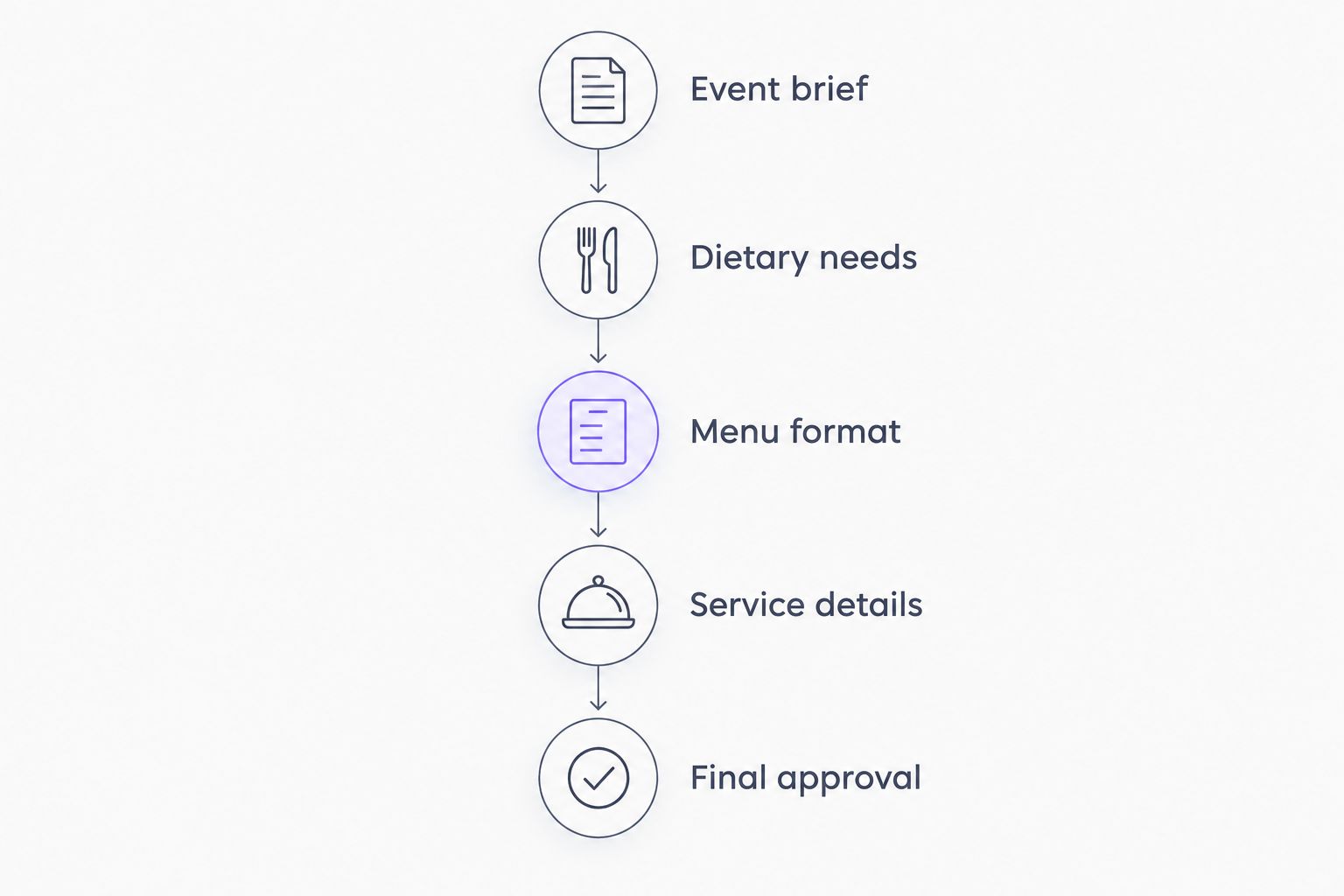
Give the venue a role in the conversation, too. Ask about food-service access, available tables, and any restrictions on equipment. Then have the caterer confirm what the arrangement requires instead of assigning responsibilities by assumption.
Plan your corporate soul food menu
Discuss your Charlotte-area event, dietary needs, and preferred menu format.
Which corporate soul food menu should you choose?
Choose the classic soul food buffet unless your schedule, venue, or dietary brief points elsewhere. It is the default recommendation for a mixed-group gathering with space to serve and time to enjoy lunch.
Choose BBQ-and-sides for a relaxed celebration, a focused menu for scope control, individual meals for a working lunch, and a plant-forward menu when meat-free dining leads the brief. Discuss that format with DG&G Gravy Train Catering, then approve the actual dishes and service details—not just the concept.
FAQ
What's the best soul food catering menu for a Charlotte corporate event?
A classic soul food buffet is the default recommendation for a mixed-group corporate gathering. Choose complementary mains and sides, then confirm dietary options and whether the venue supports buffet service.
Is BBQ better than a soul food buffet for an office celebration?
A BBQ-and-sides spread fits a casual celebration, while a classic soul food buffet is the broader default for an employee appreciation lunch. Choose based on the occasion, seating, and dietary needs rather than treating either format as universally better.
What should I ask a caterer about vegetarian soul food?
Ask for a complete vegetarian meal and confirm the ingredients in every dish. Greens, beans, breads, and sides need recipe checks because their names do not establish vegetarian or vegan suitability.
Are individual meals better than a buffet for a working lunch?
Individual meals are the stronger format when attendees need a defined meal without a buffet setup. Confirm that the caterer offers the format and agree on labeling, distribution, and cleanup.
How do I compare corporate catering proposals?
Compare proposals against the same attendance count, menu scope, and service responsibilities. Confirm what each arrangement includes, how dietary meals are handled, and who manages setup and cleanup.
Does DG&G Gravy Train Catering serve corporate events in Charlotte?
DG&G Gravy Train Catering serves corporate events across the Charlotte metro area and is based in Salisbury, North Carolina. The company provides BBQ and soul food catering; discuss the current dishes and service arrangements directly.
One last thing
Ask for the dietary meal description before you approve the main menu. A guest who doesn't eat meat needs a complete lunch, not a promise to pick around the buffet. Y'all can keep the meal warm, welcoming, and soulful while still getting the practical details right.