
You can taste-test a BBQ catering menu before booking if the caterer offers pre-booking tastings; confirm that policy before arranging a visit. Ask whether the tasting requires a separate payment or a booking commitment, and which dishes you will actually sample. A tasting helps you judge the food, but it does not confirm the event menu, service arrangements, or reservation terms.
- Can you taste test the menu before booking BBQ catering? Ask the caterer; pre-booking tastings are not guaranteed.
- Judge BBQ and soul food by flavor, texture, menu balance, and the service planned for your event.
- DG&G Gravy Train Catering serves BBQ and soul food for gatherings across the Charlotte metro area.
- Get the selected menu and booking terms in writing before committing.
Can you taste-test the menu before booking BBQ catering?
Ask for a pre-booking tasting, not just a menu consultation. Those are different requests: one involves sampling food, while the other involves discussing your event. For a 2026 gathering, confirm the tasting arrangements directly rather than relying on an older post or someone else's experience.
Use the contact page to ask whether a tasting is offered before booking. Include your event date, location, estimated attendance, and the dishes you want to discuss.
Follow this sequence before making a commitment:
- Confirm the policy. Ask whether you can sample food before signing an agreement or making a booking payment.
- Choose the dishes. Request the dishes you are considering for the event, rather than an unrelated selection.
- Explain the service. Tell the caterer whether you are discussing delivery, a staffed meal, or another arrangement.
- Record your feedback. Separate flavor preferences from questions about ingredients, portions, and service.
- Confirm the menu. Ask for a written description of what the event agreement includes.
A verbal yes to a tasting is only the start. You still need to know what that appointment covers and what happens afterward.
Why this matters
A bite of savory BBQ tells you something useful about flavor. It does not tell you who sets up the meal, how guests will be served, or whether a particular side suits someone's dietary needs. Treat the tasting as a food decision, not approval of the whole catering plan.
DG&G Gravy Train Catering provides BBQ and soul food catering for weddings, corporate events, church gatherings, and private parties. For any of those occasions, the useful question is not simply whether you like the food; it is whether the agreed menu and service fit your gathering.
Keep your tasting notes with your other 2026 event plans. That way, the person approving the menu can see the same information as the person handling the venue and guest list.
Which kind of tasting should you ask about?
Ask the caterer which sampling arrangements, if any, they offer. The options below describe ways to evaluate food, not services promised by any particular company.
| Sampling approach | Best for | What it helps you judge | Limitation |
|---|---|---|---|
| Requested-menu tasting | Hosts choosing between specific event dishes | How your intended dishes taste together | Only useful for dishes actually included in the appointment |
| General tasting selection | Hosts getting familiar with a caterer's cooking | Seasoning, texture, and overall cooking style | The selection might differ from your event menu |
| Separately purchased meal | Hosts exploring food they can order independently | Your response to the dishes you purchase | Does not establish catering portions, service, or booking terms |
| Menu consultation without samples | Hosts clarifying needs before choosing food | Ingredients, proposed dishes, and event requirements | Cannot answer how the food tastes |
Choose a requested-menu tasting when your main decision is between specific dishes. A general selection can help you understand a cooking style, but do not treat an untasted dish as approved merely because you enjoyed something else.
If you purchase a meal separately, keep that experience in context. Ask whether the preparation and presentation relate to the catered meal you are discussing; do not assume they are identical.
How should you prepare for a BBQ catering tasting?
Arrive with a short brief, not a long wish list. Your goal is to help the caterer understand the gathering and give yourself a fair basis for choosing the food.
Set 3 menu priorities
Write down 3 menu priorities before the appointment. These are planning prompts, not a required number of dishes: the main flavor you want, the kind of sides your guests enjoy, and any dietary requirement that needs a separate conversation.
Be specific about what you mean. For example, distinguish a preference for gentler seasoning from a medical need to avoid an ingredient. Those requests require different answers.
Choose 2 decision-makers
If your planning group allows it, nominate 2 decision-makers to collect feedback and approve the selection. This is a practical recommendation, not a rule about how many people a caterer permits at a tasting.
Ask who can attend before inviting anyone. For a church committee or workplace event, collect other people's requirements beforehand so the appointment does not become a debate about everyone's favorite supper.
Bring the event details
Share the location, proposed meal time, estimated attendance, and any venue restrictions you already know. Explain whether guests will eat together or arrive throughout the gathering.
Keep the same details in your catering quote-to-event planning workflow. The tasting decision should feed into the event plan rather than sit in a separate message thread.
Leave with 1 written menu
Aim to leave the decision process with 1 written menu that identifies the agreed dishes. If changes remain unresolved, mark them as questions rather than treating them as settled.
Record the service arrangements separately. A dish name does not explain setup, serving responsibilities, or cleanup.
What should you judge while tasting BBQ and soul food?
Taste the food as a meal, not just as a collection of favorite bites. A rich main dish and several rich sides might suit your plans perfectly, but make that a deliberate choice.
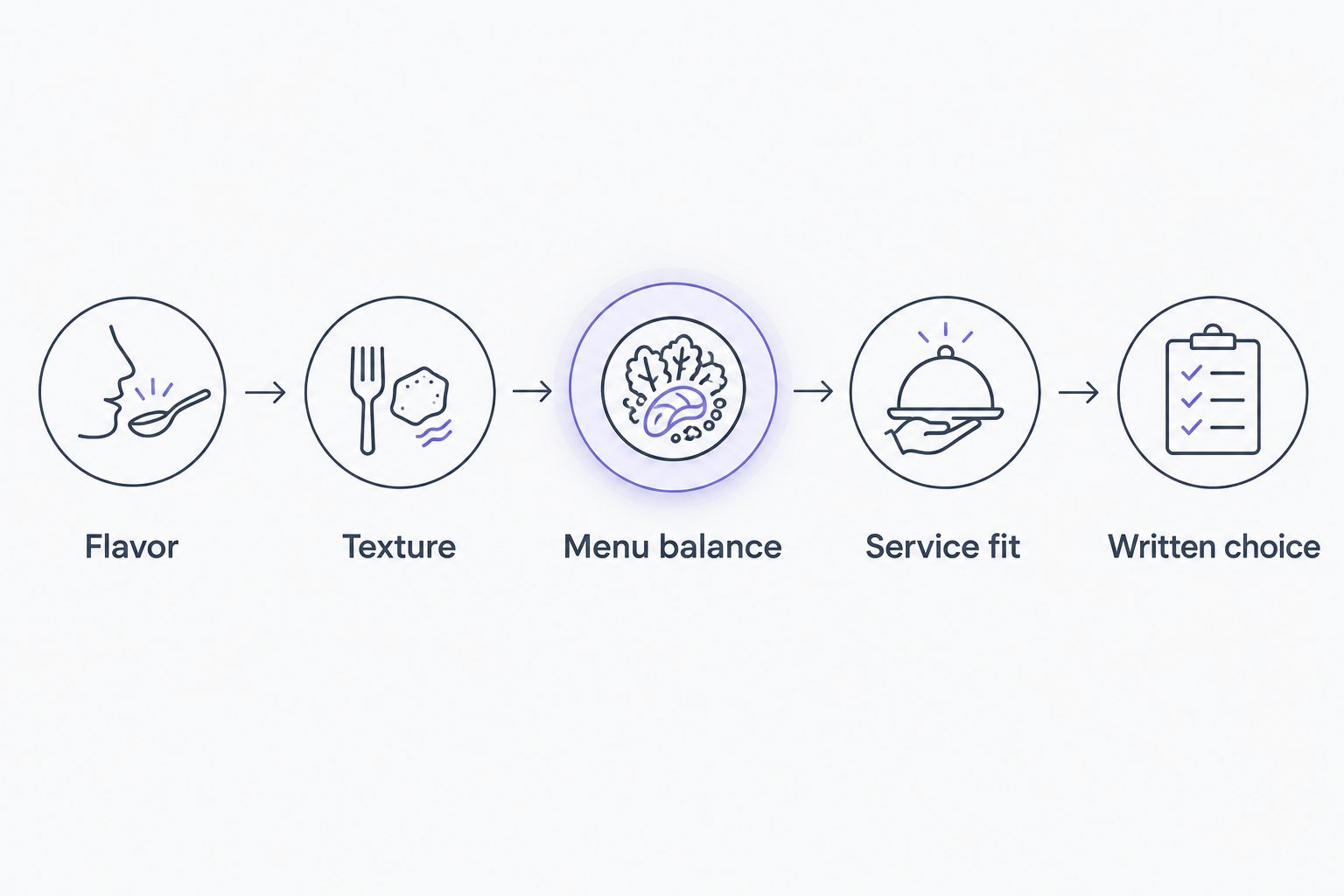
Use these checks in order. They keep your notes clear enough to discuss afterward without turning a warm, homespun meal into homework.
- Flavor: Describe what you taste—smoky, sweet, tangy, peppery, or salty—rather than writing only that something is good.
- Texture: Note whether the texture suits the dish and your guests' needs. Ask questions instead of guessing how it was prepared.
- Menu balance: Taste the proposed main and sides together. Decide whether you want contrast or a richer, more uniform meal.
- Service fit: Ask how the dishes would be presented and served at your particular event.
- Written choice: Record the dish names and any requested changes that still need confirmation.
The sequence matters: taste first, consider the whole plate, then discuss service and document the decision. Do not let a favorite sauce distract you from an unanswered ingredient question.
After sampling, write a short reason for each decision. Notes such as tangier sauce preferred or ask about ingredients give the caterer something concrete to answer; loved it does not explain what should stay the same.
Why tasting arrangements vary
A tasting request needs more detail than an event date. These factors explain what you should clarify, without assuming any caterer's policy:
- Booking stage: Ask whether sampling happens before a commitment or only after an agreement.
- Requested dishes: Establish whether the appointment covers your proposed menu or a separate selection.
- Attendees: Confirm who can join and whether everyone needs advance approval.
- Dietary requirements: Explain restrictions early and ask which questions require ingredient or preparation checks.
- Event service: Describe the meal format so you can discuss more than how a fresh sample tastes.
- Decision deadline: Tell the caterer when you need to approve the menu, and ask whether the proposed process fits that deadline.
For a 2026 wedding, company gathering, or family party, resolve these points before treating the tasting as a confirmed appointment. An invitation to discuss catering is not automatically an invitation to sample the menu.
Can I book BBQ catering without a tasting?
Yes, you can choose to book without tasting, provided the caterer's booking process permits it. You are then deciding without firsthand evidence of the food's flavor and texture, so be clear about that trade-off.
Request written dish descriptions, discuss ingredient questions, and confirm the service scope. A clear conversation improves your understanding, but it does not replace the experience of eating the food.
If a tasting is essential to your decision, say so before progressing with an agreement. Do not assume you can add it afterward.
Does a tasting confirm allergy-safe catering?
No—a tasting does not establish that a dish is safe for someone with a food allergy. Flavor cannot tell you whether an allergen is present or whether cross-contact controls meet a guest's needs.
Discuss ingredients and preparation directly with the caterer before anyone with an allergy samples food. Keep that conversation separate from preferences about sweetness, spice, or texture, and do not invite a guest to taste something as a safety test.
For your 2026 event notes, record what the caterer actually confirms. Avoid replacing a specific answer with a broad label such as everyone can eat this.
What should I ask after the tasting?
Ask whether the selected dishes, requested changes, and service arrangements can be included in the written agreement. Your tasting notes are a preference record; the agreement defines what you are booking.
Send one consolidated response rather than scattered comments from several people. Identify what you selected, what you rejected, and what still needs an answer.
If the event menu changes later, ask whether the earlier tasting still represents the revised meal. Do not silently carry approval from an old selection to a different dish.
How to ask about a local catering tasting
For DG&G Gravy Train Catering, ask directly whether a pre-booking tasting is offered for your proposed event. Describe the occasion, Salisbury or Charlotte-area location, estimated attendance, and the BBQ or soul food dishes you want to discuss.
DG&G Gravy Train Catering is best suited to hosts seeking BBQ and soul food catering for gatherings in Salisbury and the Charlotte metro area. Its stated event scope includes weddings, corporate events, church gatherings, and private parties; tasting arrangements still require direct confirmation.
Keep your request plain: explain that you want to evaluate the intended menu before committing, then ask what the next step involves. Y'all do not need a polished proposal—just clear details and honest questions.
FAQ
Can you taste test the menu before booking BBQ catering?
You can taste-test before booking if the caterer offers a pre-booking tasting. Confirm the policy, included dishes, attendance rules, and any commitment required before arranging it.
Should I taste every dish on my catering menu?
Prioritize the dishes that will determine your booking decision. Ask which proposed dishes the tasting includes, and keep untasted selections marked as untested rather than assuming they match your expectations.
Can I bring family members to a catering tasting?
Bring family members only after the caterer confirms who can attend. Choose people who can make the menu decision and gather everyone else's dietary requirements beforehand.
Is a takeaway meal the same as a catering tasting?
A takeaway meal is not confirmation of a catered event menu or service. It lets you evaluate the food you purchased, but catering preparation, portions, and arrangements need their own discussion.
Will a tasting tell me whether the food suits guests with allergies?
A tasting cannot establish allergy safety. Ask about ingredients and preparation practices directly, and never use sampling as a test for whether an allergen is present.
Does agreeing to a tasting mean my event is booked?
Do not treat a tasting appointment as confirmation that your event is booked. Ask what agreement and payment steps establish the reservation, and keep the written confirmation.
What should I do if I like the main dish but not the sides?
Tell the caterer exactly which sides did not suit your preferences and why. Ask about alternatives without assuming substitutions or another tasting are included.
What should I confirm before booking catering for 2026?
Before booking catering for 2026, confirm the written menu, event details, service responsibilities, and agreement terms. If you tasted the food, check that the selected dishes match the menu you are approving.
One last thing
The most useful tasting note is often a question. Ask what, if anything, will differ between the sample you just ate and the meal served at your event.
That question moves the conversation beyond delicious into the details you need to approve. Enjoy the food, then make sure the written plan describes the meal you chose.