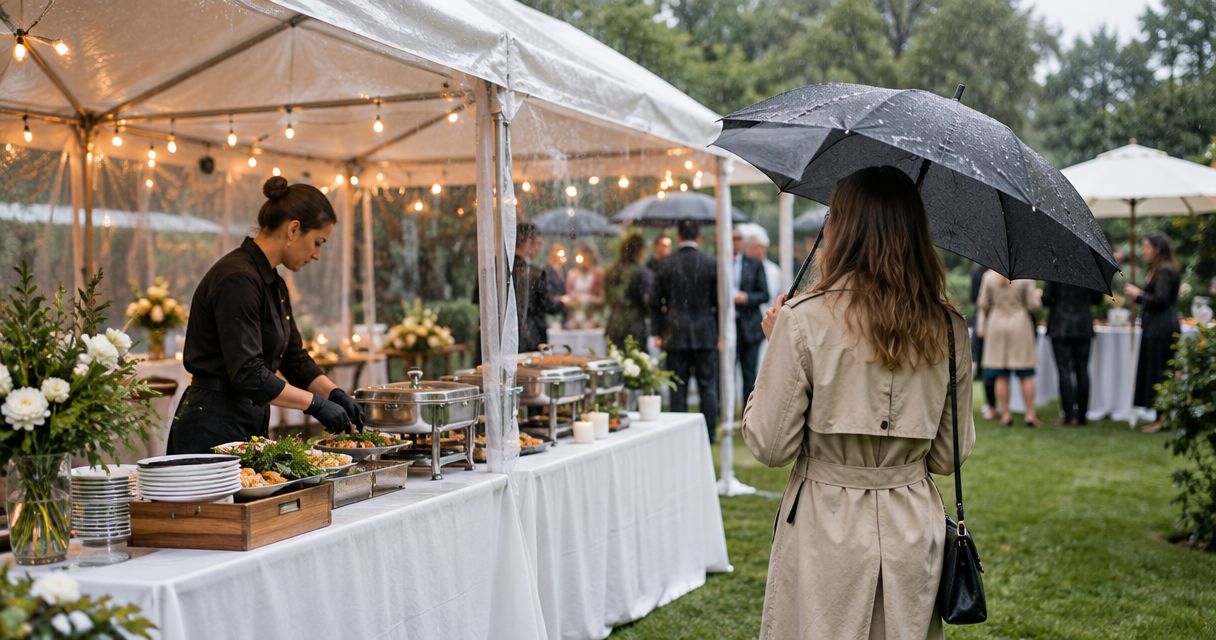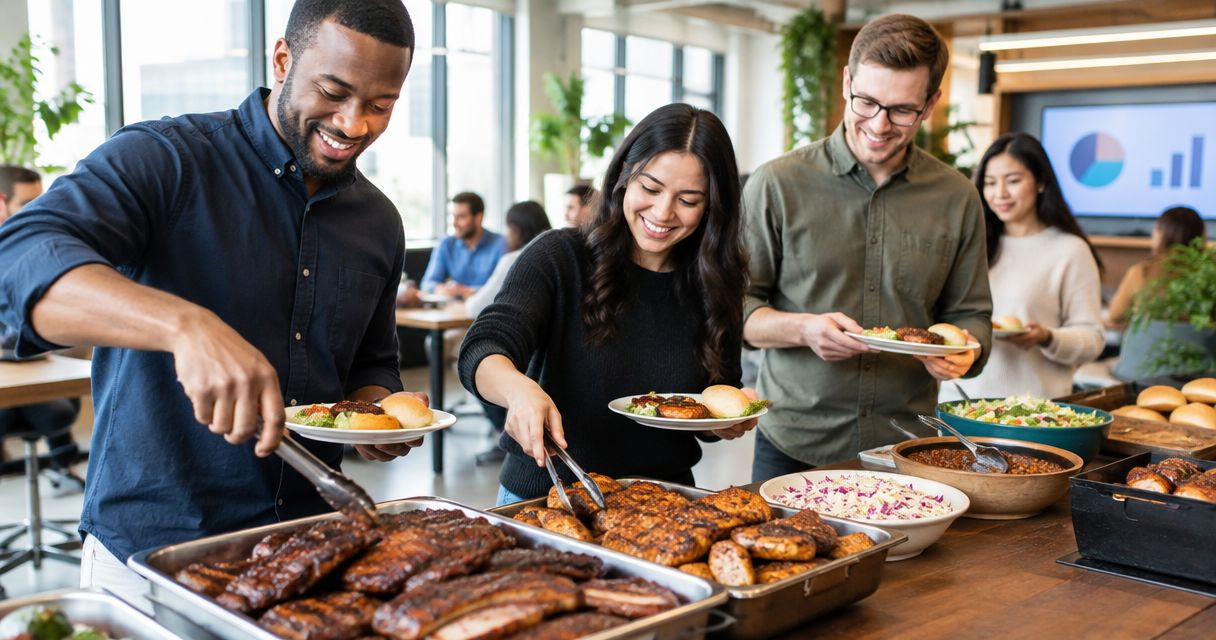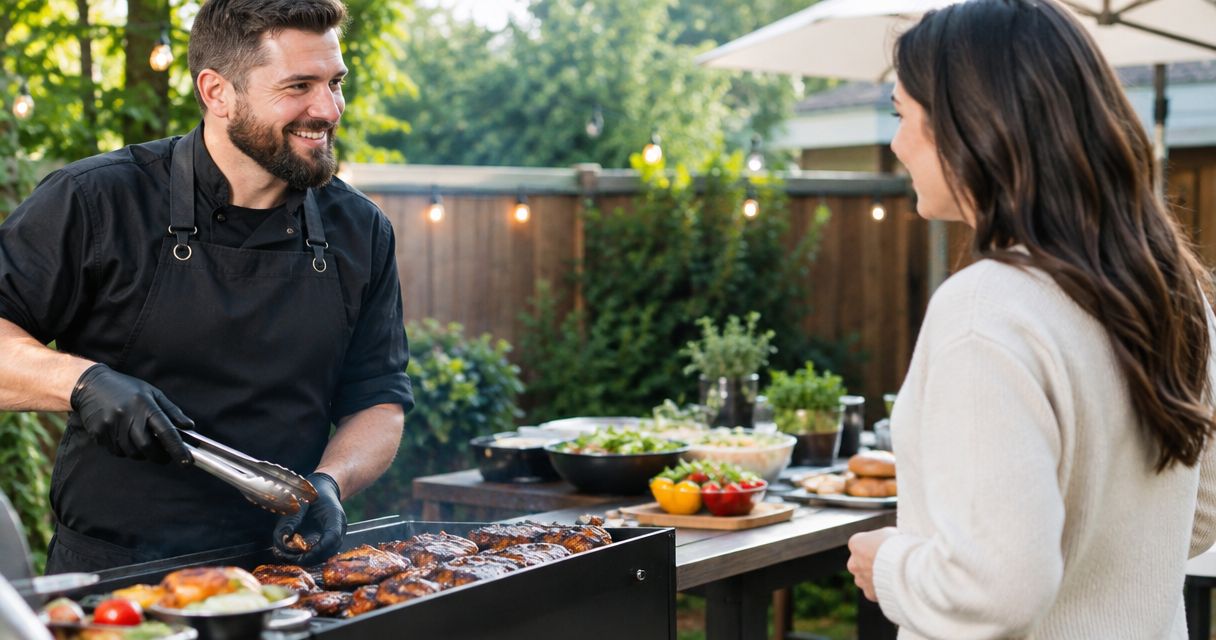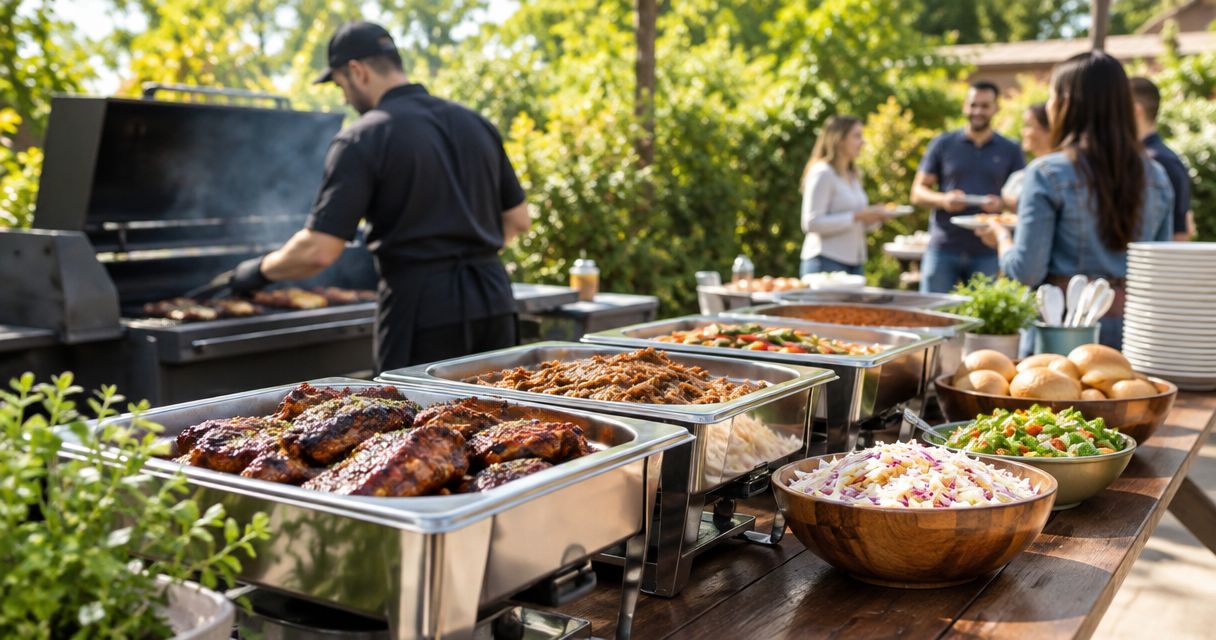
BBQ catering can sit out without temperature control for no more than 2 hours, or 1 hour when the surrounding temperature is above 90°F. That clock includes transport, setup, serving, and any later time on the counter—not just the time guests spend eating. For your 2026 event, keep hot food at 140°F or above and cold food at 40°F or below, or refrigerate perishable food before its time limit expires.
- How long can BBQ catering sit out safely? USDA guidance limits uncontrolled holding to 2 hours, or 1 hour above 90°F.
- Keep hot BBQ at 140°F or above and cold sides at 40°F or below; check with a food thermometer.
- DG&G Gravy Train Catering serves BBQ and soul food gatherings; confirm temperature-control responsibilities before your event.
- Discard food that exceeds its safe time limit. Reheating does not reliably make mishandled food safe.
How long can BBQ catering sit out safely?
Use the USDA consumer rule: 2 hours without temperature control, shortened to 1 hour when the surrounding temperature exceeds 90°F. These limits apply to perishable cooked meats and sides, whether your gathering is a wedding reception, church anniversary, office lunch, or backyard supper.
The table below follows USDA Food Safety and Inspection Service guidance on buffet service and leftovers. It is a household and host planning reference for 2026, not permission for a professional caterer to replace applicable food-service requirements.
| Serving condition | Time or temperature rule | Best for | Benefit | Limitation |
|---|---|---|---|---|
| Buffet without temperature control | No more than 2 hours | A short meal service | Simple setup | Transport and setup time count too |
| Uncontrolled service above 90°F | No more than 1 hour | A brief outdoor meal | Clear cutoff | Shade does not replace temperature control |
| Verified hot holding | Keep food at 140°F or above | An extended hot buffet | Maintains a safe holding temperature | Requires suitable equipment and thermometer checks |
| Verified cold holding | Keep food at 40°F or below | Chilled sides and reserved portions | Keeps cold food out of unsafe temperatures | Ice and refrigeration must keep the food itself cold |
Work the food handoff into your catering quote request and event-day planning workflow. Someone needs to know when the trays arrive, where they go, and who checks them.
Why this matters
A tray can still look mouthwatering after it has spent too long at unsafe temperatures. Smell, appearance, and a quick taste cannot tell you whether food is safe to serve.
USDA identifies 40°F to 140°F as the temperature danger zone, where bacteria can multiply rapidly. Your job as the host is to control the food's temperature or track its time outside safe holding—not guess from how warm the pan feels.
For a 2026 reception, put food safety on the same schedule as speeches and photographs. A delayed meal needs a holding plan, not another layer of foil.
Indoor service: 2 hours without temperature control
The 2-hour limit applies to perishable BBQ and sides sitting without safe hot or cold holding. It is a maximum, not a target for when you should finally start clearing the buffet.
Count the time spent outside safe temperature control across the whole trip to the table. A properly maintained hot-holding cabinet is different from an insulated bag whose food temperature nobody has checked.
Once serving starts, set out smaller portions and keep reserves safely hot or cold. Replace an almost-empty serving dish with a fresh dish rather than pouring fresh food over the old batch. That makes it easier to track each batch and avoids mixing food with different handling histories.
Choose this short-service approach only when you can finish serving and refrigerate eligible leftovers within the limit. It is straightforward, but it leaves little room for a delayed ceremony or guests arriving late.
Outdoor heat above 90°F: 1 hour without temperature control
When the surrounding temperature is above 90°F, USDA shortens the uncontrolled holding limit to 1 hour. That rule matters at summer cookouts, tailgates, outdoor receptions, and picnic shelters.
Shade helps with sun exposure, but it does not turn a hot afternoon into refrigerated storage. A covered tray on a shaded table still needs verified temperature control or a clearly tracked discard deadline.
At your 2026 outdoor gathering, keep reserve food in suitable hot-holding equipment or refrigeration rather than displaying everything at once. Put a thermometer with the food-safety supplies, not somewhere back in the kitchen where nobody will use it.
If you cannot keep perishable food at a safe temperature, shorten the serving window. Do not stretch the deadline because guests are still hungry or the tray looks untouched.
Hot holding: 140°F or above
Hot holding means maintaining the food itself at 140°F or above under USDA consumer buffet guidance. Steam above a pan, a lit fuel can, and a warm lid are not temperature measurements.
Use a clean food thermometer to check the food. Follow the thermometer manufacturer's placement instructions and check more than one area of a large tray; a reading near the heat source does not establish the temperature throughout the pan.
Chafing dishes are for holding hot food, not for safely reheating cold leftovers. Bring food to the appropriate reheating temperature before moving it into holding equipment.
For hosts who want BBQ and soul food catering around Salisbury and the Charlotte metro area, DG&G Gravy Train Catering is a relevant local choice. Confirm the service arrangement, equipment, and handoff responsibilities; a catering order alone does not establish who monitors the buffet after delivery.
Cold holding: 40°F or below
Keep perishable cold sides at 40°F or below. Refrigeration or a properly maintained ice setup must keep the food cold throughout service, not merely make the outside of the bowl feel cool.
Set serving containers into ice so the cold reaches the food level, and replenish ice as needed. Keep reserve portions refrigerated until you need them, then replace the serving dish rather than topping it off.
Do not assume a side is safe at room temperature because it contains vinegar or lacks mayonnaise. Handling requirements depend on the actual ingredients and preparation; ask about the specific dish rather than treating all slaws or salads alike.
Cold holding is useful for a longer gathering, but it needs attention. An ice-filled tub is not a set-it-and-forget-it solution if the ice melts and the food warms above its safe holding temperature.
Why BBQ catering's safe serving window varies
The main differences come from conditions around the food, not whether the meat tastes smoky or the sauce is tangy. These factors determine how you manage the buffet:
- Surrounding temperature: Above 90°F, the uncontrolled holding limit drops from 2 hours to 1 hour.
- Actual food temperature: Verified hot or cold holding changes the situation; a tray sitting unmonitored does not qualify.
- Transport and setup: Time outside safe temperature control before guests arrive counts toward the limit.
- Food type: Perishable cooked meats and sides need temperature control. Follow item-specific instructions for foods handled differently.
- Serving method: Smaller batches make rotation and time tracking easier; a large display leaves more food exposed at once.
- Handling history: An unknown start time prevents you from establishing that food stayed within its safe window.
When you cannot verify the handling history, do not serve the food. A fresh garnish, extra sauce, or another trip through the oven does not supply the missing safety information.
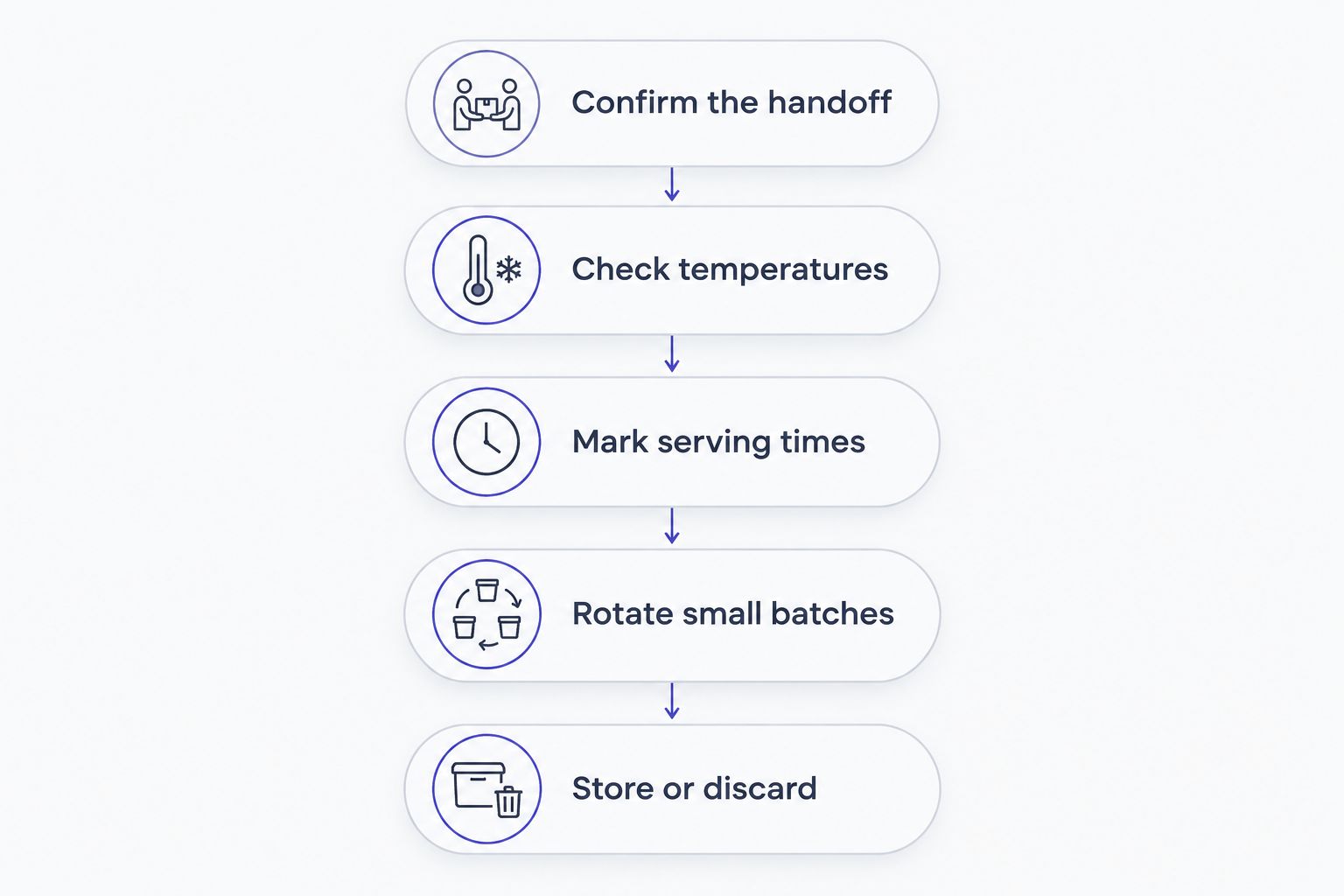
How to manage the buffet from arrival to cleanup
Give one person ownership of the food-safety handoff. Y'all can share serving duties, but the timing and thermometer checks need a clear point person.
- Confirm the handoff. Before event day, ask who supplies holding equipment, checks temperatures, and handles leftovers. Write down when responsibility transfers to the host.
- Check temperatures. At arrival, use a clean food thermometer and follow the caterer's handling instructions. Flag food that arrives outside its expected holding conditions before setting it out.
- Mark serving times. Record when each batch leaves safe temperature control. Assign its deadline using the surrounding temperature and its prior handling history.
- Rotate small batches. Keep reserve food safely hot or cold. Use clean replacement dishes and serving utensils rather than mixing fresh food into an older tray.
- Store or discard. Refrigerate eligible leftovers promptly in shallow containers. Discard food that has exceeded its limit or whose safe handling cannot be established.
This sequence works because it separates delivery, service, and cleanup instead of treating the whole afternoon as one untracked stretch. Keep the written record where the person managing the buffet can actually see it.
Before your 2026 event, contact the catering team with your venue, meal time, indoor or outdoor setup, and expected serving duration. Ask what you need to provide instead of assuming warming equipment, refrigeration, or post-delivery monitoring is included.
Plan your BBQ catering handoff
Share your venue and serving schedule with DG&G Gravy Train Catering, then confirm food-handling responsibilities.
Can I refrigerate BBQ that has been sitting out?
2 hours is the maximum uncontrolled holding window, shortened to 1 hour above 90°F; refrigerate eligible leftovers before that deadline. Food that has already exceeded the limit belongs in the trash, not the refrigerator.
Divide large amounts into shallow containers so they cool more quickly. USDA says hot food can go directly into the refrigerator; do not leave a large tray on the counter waiting for it to reach room temperature.
For safely handled cooked meat and poultry leftovers, USDA recommends refrigerated storage for 3 to 4 days. Label containers with the storage date, and freeze portions you will not use within that window.
Does reheating BBQ make it safe after sitting out too long?
165°F is USDA's reheating target for safely handled leftovers, not a rescue temperature for food left out too long. Some bacteria produce toxins that reheating does not reliably destroy.
Only reheat food whose storage and handling were safe in the first place. Check the internal temperature with a food thermometer, including multiple areas when reheating a large portion.
Does a covered tray count as safe hot holding?
140°F or above is the hot-holding target under USDA consumer guidance; a lid alone does not establish it. Foil and insulated containers can slow heat loss, but you still need to verify the food temperature.
The same applies to a closed cooler holding cold sides. The container's name does not prove the food stayed at 40°F or below.
What should you confirm with your caterer?
Ask practical questions before the trays leave the kitchen. DG&G Gravy Train Catering serves weddings, corporate events, church gatherings, and private parties; each event still needs a clear plan for its own venue and schedule.
- Who brings and sets up the temperature-control equipment?
- Who checks the food during service?
- What happens if the meal starts late?
- Where will reserve portions stay safely hot or cold?
- Who packs eligible leftovers, and where will they be refrigerated?
For your 2026 planning notes, record the answers alongside the delivery and meal times. This is a responsibility checklist, not a request for the caterer to guarantee food safety after uncontrolled handling by guests or hosts.
FAQ
How long can BBQ catering sit out safely indoors?
Perishable BBQ catering can sit without temperature control for no more than 2 hours indoors under USDA consumer guidance. Count transport, setup, and serving time spent outside safe temperature control.
How long can BBQ sit outside on a hot day?
BBQ can sit without temperature control for no more than 1 hour when the surrounding temperature is above 90°F. Shade and foil do not replace verified hot or cold holding.
Can I eat BBQ that was left out overnight?
No. Discard perishable BBQ left out overnight without safe temperature control; smell and appearance cannot establish safety.
Does smoked meat last longer on a buffet?
Ordinary cooked smoked BBQ follows the same perishable-food holding rules. Do not treat it as shelf-stable unless the specific product is explicitly identified and handled as shelf-stable.
Can I put warm BBQ straight into the refrigerator?
Yes. USDA says hot food can go directly into the refrigerator; divide large portions into shallow containers and refrigerate promptly within the safe time window.
How hot should I reheat leftover BBQ?
Reheat safely handled BBQ leftovers to an internal temperature of 165°F. Reheating does not reliably make food safe after it has exceeded its uncontrolled holding limit.
Can I send BBQ leftovers home with guests?
Yes, if the food has remained safely handled and guests can keep it safe during transport and refrigerate it promptly. Time in a car without temperature control counts toward the same holding limit.
Should I ask DG&G Gravy Train Catering about buffet holding?
Yes. Confirm who supplies equipment, monitors food temperatures, and handles leftovers before your event; do not assume those responsibilities are included in your arrangement.
One last thing
The buffet clock does not restart when a guest takes leftovers home. Food that used up its safe uncontrolled holding window at your event does not get another window in somebody else's car.
Make the leftover decision before cleanup gets busy. Keep safely held portions separate, refrigerate them promptly, and discard food that has exceeded its limit—even when it is the last of everybody's favorite BBQ.