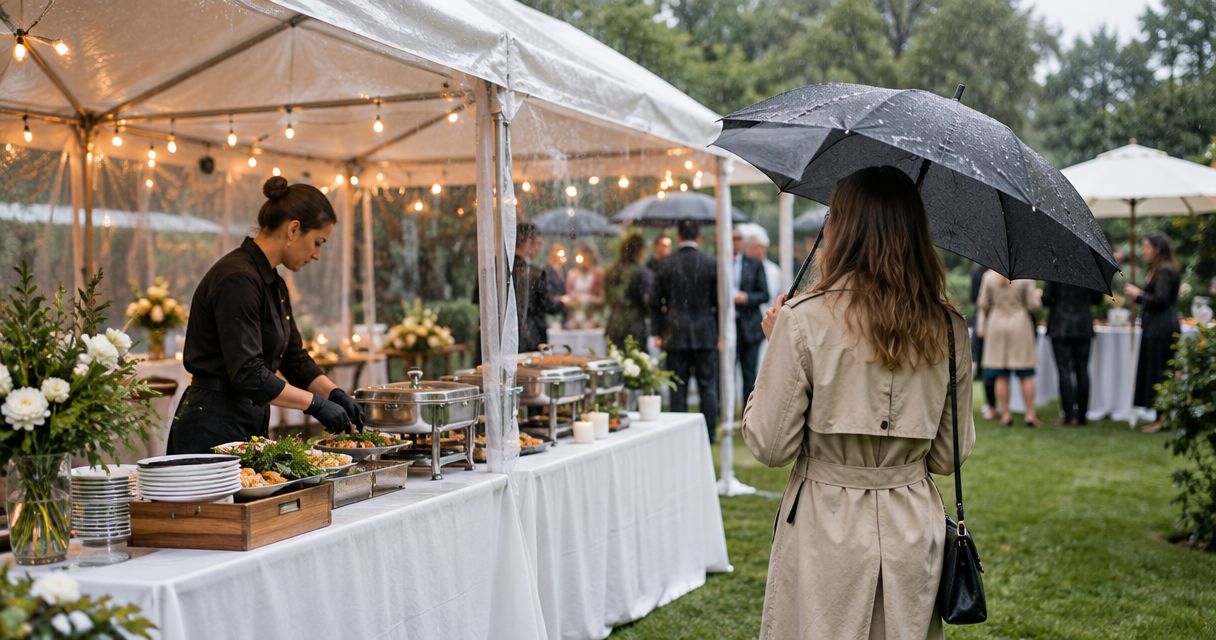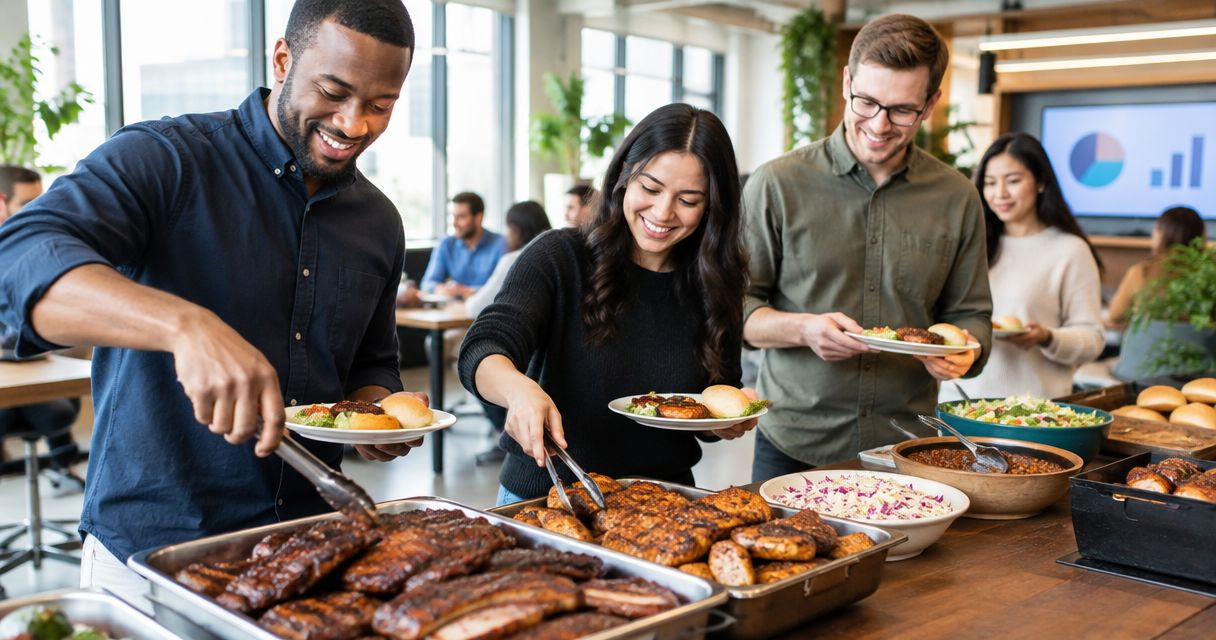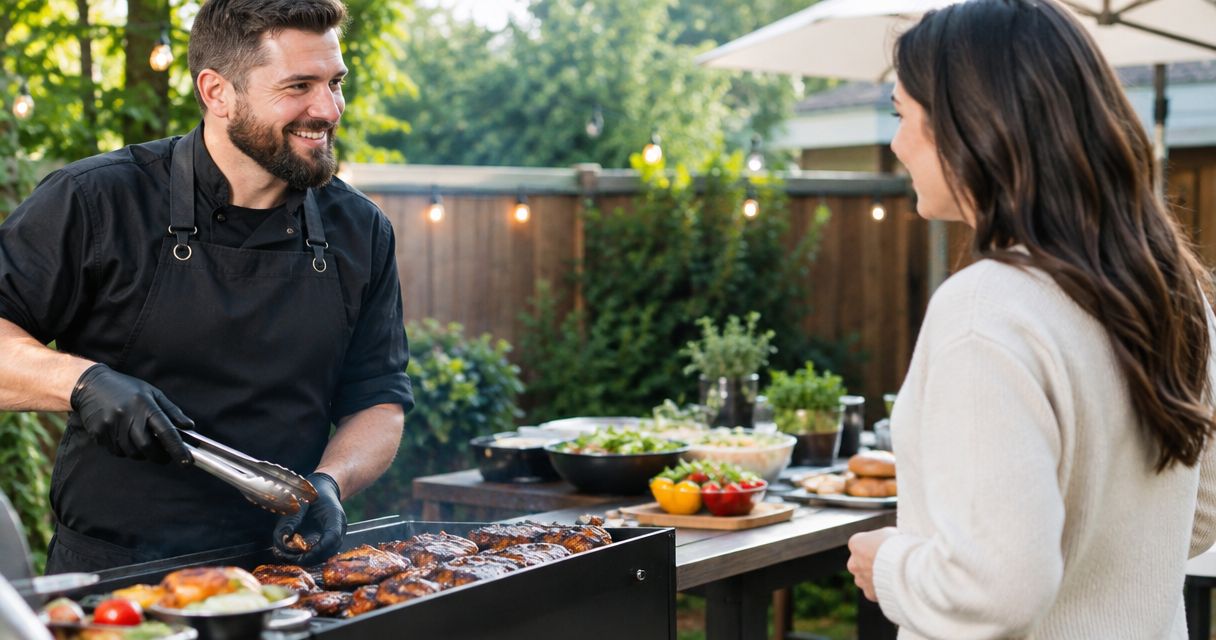
Yes—catering works at venues with no kitchen access when food is prepared off-site and the caterer has an approved plan for transport, temperature control, serving, and cleanup. For a 2026 wedding, church gathering, or company event, the deciding issue is not the missing stove; it is whether the venue permits the equipment and facilities needed to serve food safely.
- Does catering work at venues with no kitchen access? Yes, with approved food holding, sanitation, and service arrangements.
- DG&G Gravy Train Catering serves BBQ and soul food for gatherings across the Charlotte metro area; confirm venue requirements directly.
- Drop-off catering needs a named person responsible for food temperatures, replenishment, and cleanup after delivery.
- Get venue permission before planning warming equipment, temporary cooking, or a buffet outside the building.
Does catering work at venues with no kitchen access?
Yes. A kitchen-free venue can work; a venue without a safe food-service plan cannot. Your caterer must know what food preparation happens elsewhere, what happens at the venue, and who handles each task.
A church fellowship room, rented hall, or outdoor gathering space does not need to function as a restaurant kitchen. It does need an arrangement that meets applicable food-service requirements and the property's rules. Before choosing dishes, share your venue details, including the address, access restrictions, and meal schedule.
These are general service arrangements to discuss, not a list of services guaranteed by any particular caterer.
| Arrangement | Best for | Main advantage | Main limitation |
|---|---|---|---|
| Drop-off service | Hosts with a designated food-service lead | Food arrives without requiring cooking in the venue | The host needs a clear handoff for holding, serving, and cleanup |
| Staffed buffet | Gatherings needing someone to manage service | Assigned staff can monitor and replenish the buffet | Staffing does not replace required water, sanitation, or equipment |
| Temporary on-site cooking | Events with an approved outdoor preparation area | Cooking can happen separately from the building's kitchen | Equipment, fire rules, permits, and site access need approval |
Choose the arrangement around the venue's actual limits. A pretty lawn does not tell you whether a cooker is permitted, and an electrical outlet does not establish that the circuit can support warming equipment.
Why this matters
You want guests enjoying a warm, soulful meal—not watching the host search for an outlet while dinner waits. Missing kitchen access changes the work behind the meal, even when the dining room looks ready.
For your 2026 gathering, settle those backstage details before finalizing the menu. Food delivery, safe holding, serving, and waste removal are separate responsibilities; putting them under the single word catering leaves too much open to interpretation.
DG&G Gravy Train Catering is best suited to Charlotte-area hosts seeking BBQ and soul food for weddings, corporate events, church gatherings, and private parties. Its Salisbury base and stated service area make it relevant to those events, but a kitchen-free setup still needs direct confirmation for your particular venue.
How do you plan catering without a venue kitchen?
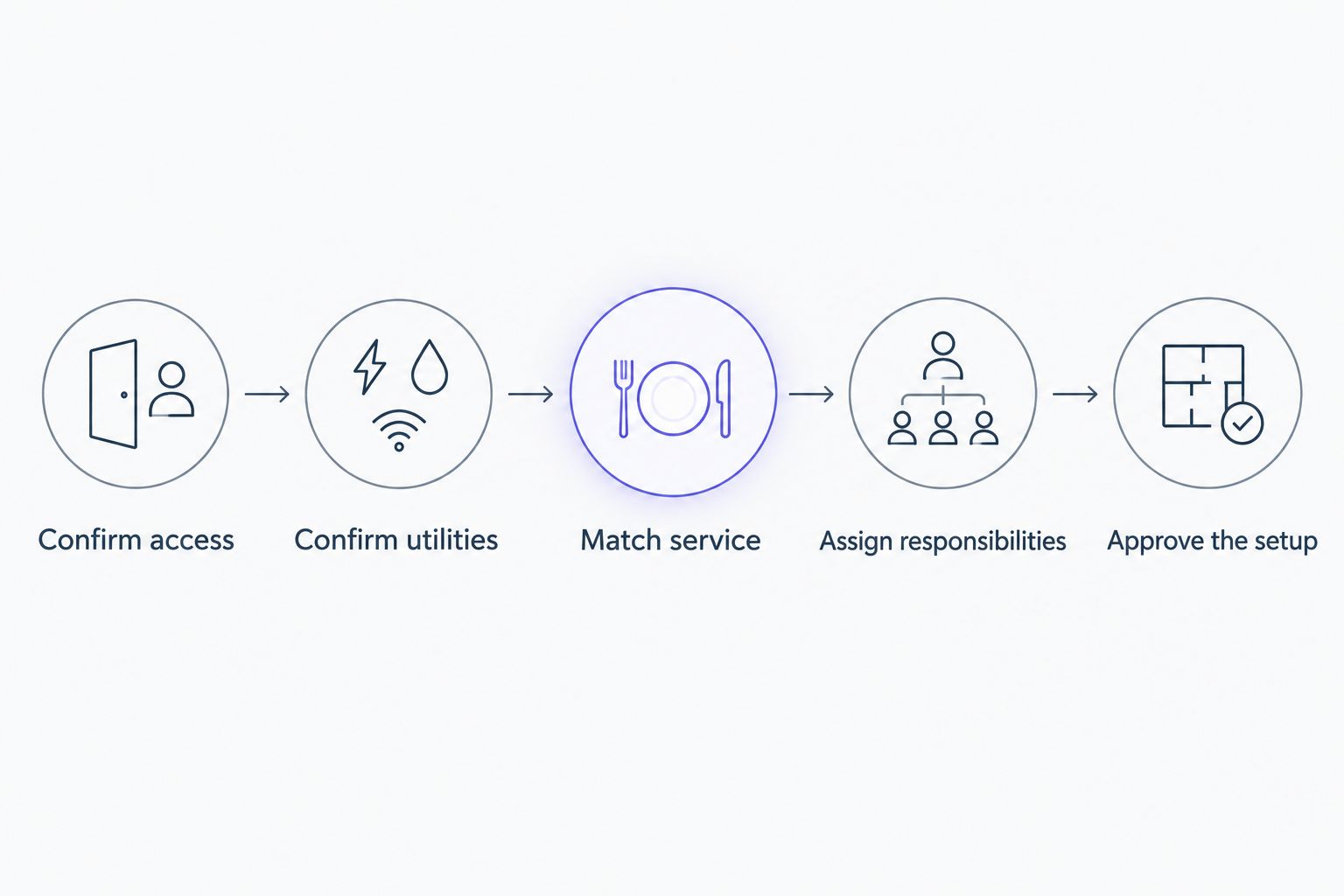
Start with the property manager, then bring the answers to your caterer. Follow this sequence before committing to a service arrangement.
- Confirm access. Ask whether the kitchen is completely unavailable or whether specific facilities remain accessible. A locked cooking area and an accessible handwashing station are different conditions.
- Confirm utilities. Identify approved power sources, potable water, handwashing facilities, and wastewater disposal. Do not assume restroom access satisfies every food-service need.
- Match service. Explain the guest count, menu preferences, meal time, and whether guests eat together or arrive throughout the gathering. Ask which arrangement fits those conditions.
- Assign responsibilities. Put names beside receiving food, checking temperatures, replenishing dishes, removing waste, and closing the service area. Confirm when the caterer's responsibility ends.
- Approve the setup. Have the venue and caterer agree on equipment placement, access routes, sanitation, weather protection, and departure requirements. Resolve disagreements before event day.
For a 2026 event, keep the agreed setup with your event schedule. The person opening the building needs the same instructions as the person receiving the food; otherwise, an approved plan can still meet a locked door.
Drop-off service: best for hosts with a food-service lead
Drop-off catering separates delivery from ongoing meal service. It fits only when someone understands what happens after the handoff and has the necessary equipment and instructions.
Ask whether food arrives ready for immediate service or requires another step. Confirm who provides holding equipment, serving utensils, temperature checks, and cleanup; none of those details follows automatically from the word delivery.
The advantage is a defined delivery arrangement without assuming on-site cooking. The limitation is responsibility: if nobody accepts ownership after the driver leaves, the service plan has a gap. Choose drop-off only after naming the person responsible for the meal through the end of service.
Staffed buffet: best for managed meal service
A staffed buffet gives you an arrangement in which specific people can oversee the serving area. The written scope should identify whether that includes setup, replenishment, temperature monitoring, clearing, and cleanup.
A buffet still needs suitable space and approved holding equipment. Staff cannot solve a prohibited heat source, missing handwashing arrangement, or an obstructed delivery route simply by arriving early.
The advantage is an assigned service team. The limitation is that the venue must still support the agreed operation. Choose staffed service for the tasks you need covered, not as a substitute for checking the building.
Temporary cooking: best for approved outdoor preparation areas
Cooking outside the venue is a separate plan, not an automatic workaround for a locked kitchen. Ask the venue and caterer whether it is permitted and what local approvals apply.
Discuss equipment placement, fuel, fire protection, food protection, sanitation, and weather restrictions. Do not place cooking equipment beneath a tent or beside an entrance without the relevant approvals.
The advantage is the possibility of preparing food at the event without using the building's kitchen. The limitation is a more involved site plan. Treat on-site cooking as a proposal requiring confirmation, not an assumed catering capability.
Why kitchen-free catering plans vary
A workable arrangement depends on the site and the meal. These factors explain why one venue's solution does not automatically fit another:
- Venue restrictions: Rules about flames, generators, cooking, food vendors, and waste disposal determine which arrangements are possible.
- Utilities and sanitation: Water, handwashing, electrical capacity, and wastewater arrangements affect what the caterer can safely do on-site.
- Menu requirements: Hot dishes, chilled dishes, and foods needing last-minute preparation require different handling plans.
- Service duration: A single meal period and an open-ended gathering create different replenishment and holding needs.
- Delivery access: Stairs, locked gates, parking restrictions, and the distance to the serving area affect unloading and equipment movement.
- Weather exposure: Outdoor service needs an agreed response to rain, heat, wind, and conditions that make equipment unsafe to use.
For a 2026 booking, include these conditions in the written event details. A verbal promise that “there's plenty of room” does not identify a safe serving location or establish permission to use equipment there.
How do you keep food safe without a kitchen?
Temperature control continues after delivery. Insulated transport, hot holding, cold holding, and monitoring serve different purposes; ask your caterer to explain the complete chain through the end of service.
For your 2026 planning reference, USDA FSIS's Serving Up Safe Buffets gives conservative consumer buffet guidance: keep hot food at 140°F or warmer and cold food at 40°F or colder. It also advises discarding perishable food left at room temperature for more than 2 hours, or 1 hour when temperatures exceed 90°F. A permitted caterer's operating procedures must follow the applicable local food-service requirements.
Those limits are not permission to leave a buffet unmonitored until the deadline. Assign temperature checks and ask what corrective action follows if food leaves the approved holding conditions.
Warming equipment is not automatically suitable for reheating chilled food. Confirm that food arrives in the condition required for the agreed equipment, and never improvise a reheating process at a venue that cannot support it.
For more on the distinction between holding food and leaving it out, read how long BBQ catering can sit out safely.
What should you send when requesting a catering quote?
Give the caterer enough information to assess the venue, not just the number of hungry guests. For DG&G Gravy Train Catering, describe your BBQ and soul food preferences alongside the site's restrictions rather than assuming the menu alone determines the setup.
Include these details in your 2026 request:
- The venue name, address, and on-site contact.
- Your event date, guest count, and intended meal time.
- Whether kitchen access is unavailable throughout the event or only during certain periods.
- Confirmed access to power, water, handwashing, restrooms, and waste disposal.
- Indoor or outdoor service, plus the approved weather backup.
- Who handles serving, equipment, leftovers, and cleanup.
Ask for a written scope identifying the agreed responsibilities and exclusions. That gives you something useful to review with the venue before the meal plan becomes part of the event schedule.
Can you cater a venue without electricity?
Yes, catering without electricity is possible when the caterer has a suitable, approved method for transport and temperature-controlled service. No kitchen and no power are separate restrictions; disclose both before discussing equipment.
Do not assume fuel-fired warmers or generators are allowed. Ask the venue what it permits, then have the caterer confirm whether those conditions support your proposed meal.
Do you need to rent a mobile kitchen?
No, the absence of kitchen access does not automatically mean you need a mobile kitchen. Food prepared elsewhere and served through an approved holding arrangement can avoid the need for cooking at the venue.
A menu requiring substantial on-site preparation needs a different assessment. Let the caterer define the equipment requirements before you arrange rentals or commit to a location for them.
FAQ
Does catering work at venues with no kitchen access?
Yes, catering works at venues with no kitchen access when off-site preparation, safe transport, temperature control, sanitation, and service are arranged. The venue and caterer must agree on the equipment and facilities permitted on-site.
Can BBQ stay in its delivery containers until dinner?
Delivery containers alone do not establish that BBQ can stay safely hot until dinner. Ask the caterer how food temperatures will be maintained and checked between delivery and service.
Is drop-off catering enough if my venue has no kitchen?
Drop-off catering is suitable only when the receiving team has an agreed plan for holding, serving, and cleanup. Confirm the handoff instructions and name the person responsible after delivery.
Can I use chafing dishes anywhere in the venue?
No, you need venue approval for the proposed warming equipment and its placement. Ask about flame restrictions, electrical requirements, and protection for nearby surfaces before arranging the buffet.
What if the venue kitchen becomes unavailable at the last minute?
Contact the caterer immediately and explain exactly which facilities are unavailable. The caterer needs to reassess the menu, holding equipment, sanitation, and service arrangements before confirming a revised plan.
Can DG&G Gravy Train Catering handle my kitchen-free venue?
Ask DG&G Gravy Train Catering to assess your specific venue before booking. The company provides BBQ and soul food catering across the Charlotte metro area, but the site's access, utilities, equipment rules, and service needs require direct confirmation.
Who handles leftovers when there is no refrigerator?
Assign leftover handling before the event and agree on a safe cooling, transport, or disposal plan with the caterer. Do not assume food can remain at room temperature while cleanup continues.
One last thing
Ask who takes over when delivery ends—not just when the food arrives. That handoff is where a kitchen-free catering plan becomes a real set of responsibilities.
Put the receiving person's name, the holding instructions, and the cleanup assignment on the same event sheet. Then y'all can focus on welcoming guests instead of sorting out who was supposed to watch dinner.