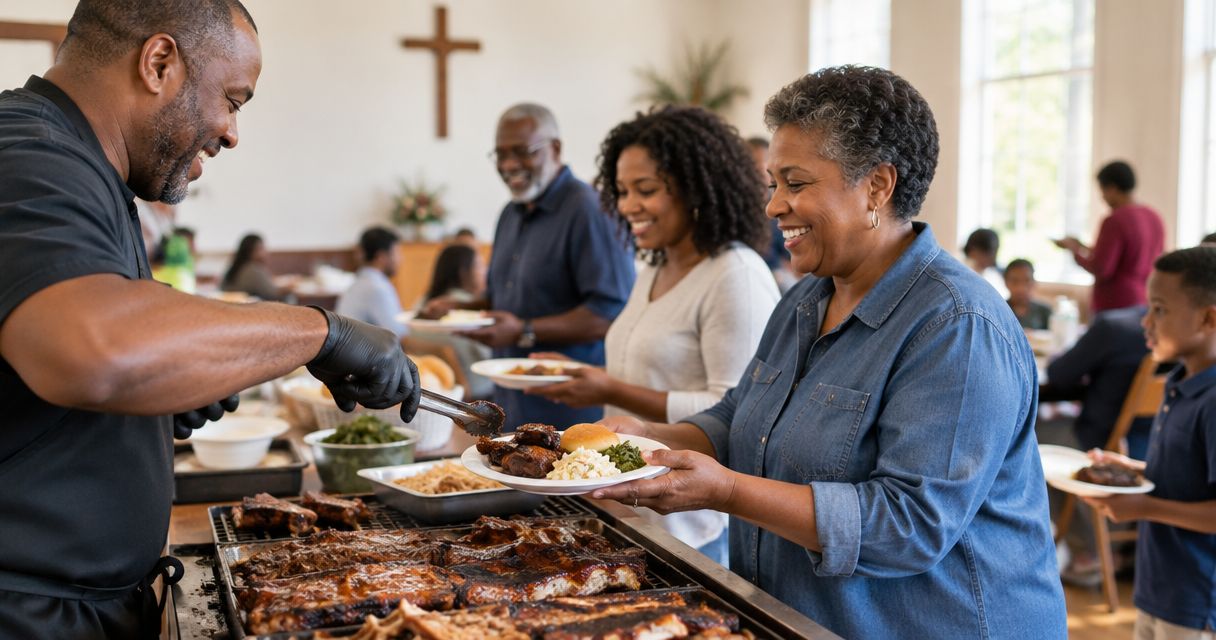
You can plan a Sunday church dinner around BBQ catering, but confirm the church’s date, address, and meal time with the caterer before announcing arrangements. Treat food preparation, setup, serving, and cleanup as separate responsibilities so your volunteers know exactly what they need to handle.
- Is BBQ catering available for Sunday church dinners? Confirm your specific date and service arrangements directly before booking.
- DG&G Gravy Train Catering serves church gatherings across the Charlotte metro area with BBQ and soul food catering.
- Match the serving plan to your fellowship hall, volunteer team, and congregation’s dietary needs.
- For a 2026 church dinner, get the menu, timing, equipment, and cleanup responsibilities in writing.
Is BBQ catering available for Sunday church dinners?
Confirm the specific Sunday and serving arrangements before treating your church dinner as booked. A caterer’s church-event service does not establish the details of your particular meal, including who sets out the food or stays to serve it.
DG&G Gravy Train Catering provides BBQ and soul food catering for church gatherings and other events across the Charlotte metro area. Use the contact page to share your church’s location, proposed Sunday, guest estimate, and meal time.
For your 2026 church calendar, follow this order:
- Set the date. Identify the Sunday, church address, and room where the meal will take place.
- Define meal time. Give the time guests should start eating, not just the worship-service start time.
- Gather guest needs. Record the expected attendance and any food allergies or dietary requirements.
- Confirm responsibilities. Agree on food handoff, setup, serving equipment, staffing, and cleanup.
- Record the agreement. Keep the accepted menu and event details together for the church coordinator.
Tell the caterer whether the meal follows worship, a church anniversary program, or another gathering. The event sequence helps you explain when the hall is accessible and when food needs to be ready.
Why this matters
A church dinner should give y’all time to sit down together, not leave the same volunteers carrying every pan, answering every question, and missing the meal. Catering can take food preparation off their list, but only an agreed service plan assigns the remaining work.
Buying prepared food and arranging a fully managed dinner are different decisions. Before choosing a service format, decide which jobs your church can realistically cover while worship is taking place.
Name a meal coordinator and a backup contact. Give both people the final arrangements so an unanswered phone or a locked fellowship-hall door does not leave everyone waiting.
Which serving plan fits your Sunday church dinner?
Compare the following arrangements as planning options, then ask your caterer which services you can book. These are not confirmed service packages from DG&G Gravy Train Catering.
| Arrangement to discuss | Best for | Main advantage | Main drawback | Confirm before booking |
|---|---|---|---|---|
| Church-managed pickup | Churches with a designated transport and setup team | Your team controls the handoff and hall setup | Volunteers take responsibility for transport and temperature control | Pickup arrangements, containers, and safe transport instructions |
| Drop-off with church volunteers serving | Churches with a ready fellowship hall and assigned helpers | Volunteers avoid transporting the meal | Receiving food does not automatically include setup or service | Handoff location, equipment, setup, and receiving contact |
| Staffed meal service | Churches seeking help during the meal | Serving duties can be assigned outside the volunteer team | Staffing still needs a defined scope | Staff duties, service period, equipment, and cleanup |
Best for a church with dependable meal volunteers: discuss a church-managed serving plan. Its strength is clear local control; its limitation is the work that remains with your congregation.
Best for a church trying to protect volunteer time: discuss staffed service. Its value depends on the duties included, not simply on whether someone accompanies the food.
Do not choose by the service label alone. Ask who opens containers, places serving utensils, monitors the food, replenishes the line, and clears the catering equipment afterward.
Why Sunday church dinner arrangements vary
The right plan depends on the building and the people using it. For a 2026 church dinner, work through these practical factors before settling the details:
- Worship timing. Explain when the service is expected to finish and who can receive food while the congregation is still worshipping.
- Guest count. Separate confirmed diners from uncertain attendance, and ask when the caterer needs your final count.
- Church location. Supply the full address, correct entrance, unloading instructions, and any access restrictions.
- Kitchen and equipment. Describe the actual holding equipment, outlets, water access, tables, and workspace the church can provide.
- Dietary requirements. Identify allergies and dietary needs before approving dishes rather than trying to solve them at the buffet.
- Volunteer coverage. Assign receiving, serving, food monitoring, and cleanup instead of assuming someone will step in.
Keep these details in a shared event sheet. A change to the room, schedule, or guest count belongs in the same document and needs to reach the caterer as well as the church team.
How should you coordinate worship, setup, and serving?
Start with the moment the congregation should eat, then work backward with your caterer. Keep the food handoff separate from the meal start so everyone understands that unloading and setting out food are tasks, not instant events.
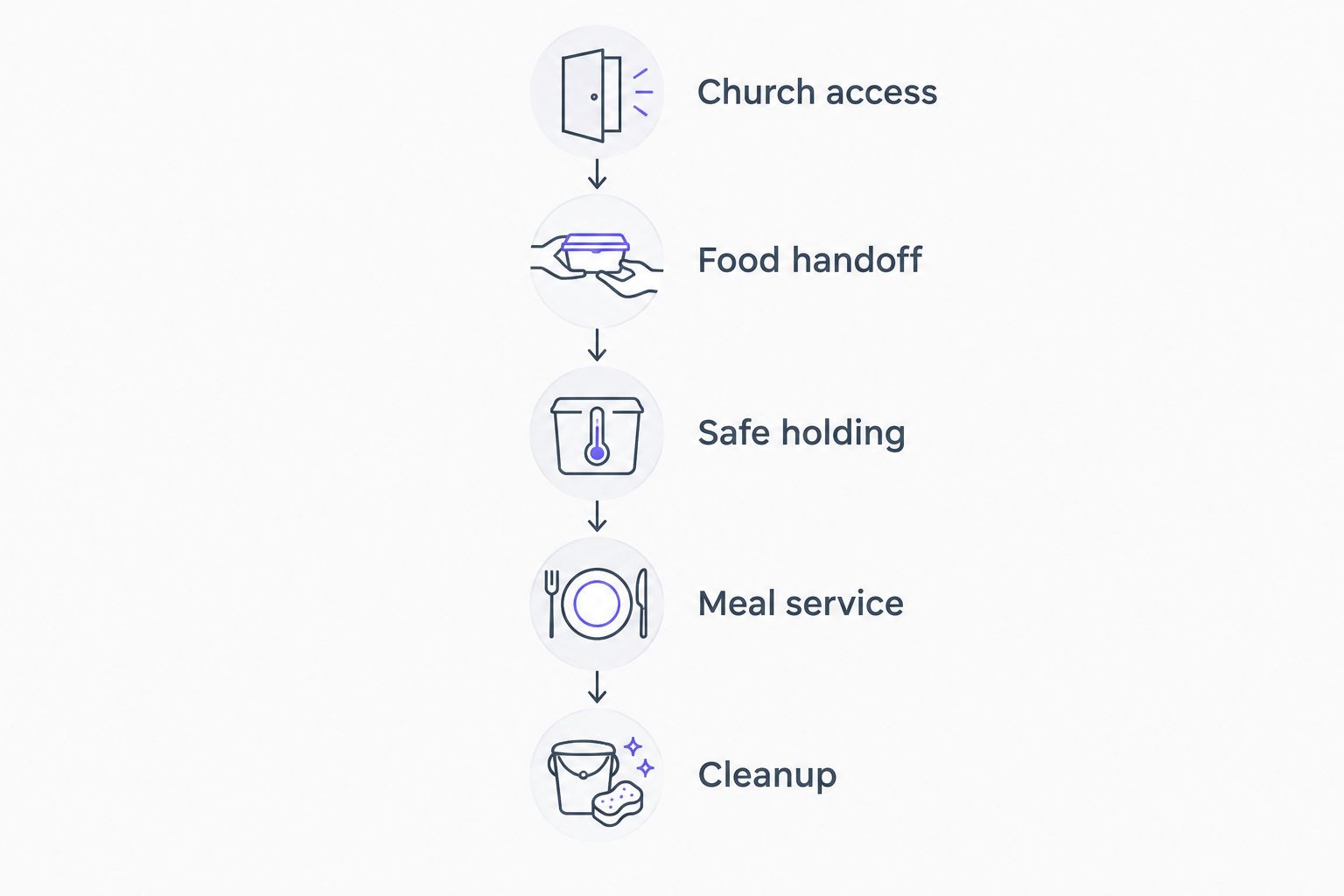
Use this sequence to assign the work:
- Church access. Designate someone to open the correct entrance and direct unloading away from arriving worshippers.
- Food handoff. Have the receiving contact check the order against the agreed menu and follow the caterer’s handling instructions.
- Safe holding. Put food into the agreed holding arrangement rather than leaving covered pans unattended on tables.
- Meal service. Open the serving line when the room and food are ready, with help for guests who need assistance.
- Cleanup. Follow the agreed plan for leftovers, waste, equipment, and returning the hall to church use.
If worship runs longer than expected, the meal coordinator needs authority to follow the agreed food-holding plan. Do not rely on a volunteer leaving the service to make an unfamiliar food-safety decision.
Walk the route from the unloading entrance to the serving tables. Check doors, steps, carts, and the space guests need to move around the line, including guests using mobility aids.
How do you plan a BBQ and soul food menu for church guests?
Start with your congregation’s needs, then ask for a menu that meets them. A familiar Sunday dinner should still have clear ingredient information and a practical serving plan.
Describe the meal you want rather than assuming a particular dish or package is included. If you want BBQ ribs, chicken, or Southern sides, ask which preparations fit your event and confirm the final selections in writing.
DG&G Gravy Train Catering is a fit for Charlotte-area churches seeking BBQ and soul food catering. The planning requirement remains the same: confirm the actual menu, service scope, and church-specific arrangements before committing.
Ask these questions during menu planning:
- Which dishes meet the dietary needs already identified by your guests?
- What ingredients and preparation details can the caterer confirm?
- How will dishes and serving utensils stay clearly identified?
- Which foods require particular holding or serving arrangements?
- Who will answer ingredient questions during the meal?
A vegetable side is not automatically vegetarian, and a dish without visible bread is not automatically suitable for someone avoiding gluten. Ask about ingredients and preparation; do not make those promises on the caterer’s behalf.
For a 2026 church anniversary dinner, keep the approved menu attached to the event plan. That prevents an early discussion from being mistaken for the final order.
How do you keep catered BBQ safe during a church dinner?
Use the USDA’s published consumer food-safety guidance for hot and cold holding: keep hot food at 140°F or above and cold food at 40°F or below. For your 2026 planning checklist, assign someone to monitor food with a food thermometer rather than judging safety by steam or appearance.
USDA consumer guidance also sets a 2-hour limit for perishable food left without temperature control. That limit drops to 1 hour when the surrounding temperature is above 90°F.
These limits apply to the food’s handling, not just the period when guests are actively eating. Do not treat an unopened container as proof that its contents are being held safely.
Ask the caterer for handling instructions before the event and identify who will follow them. For more on the serving window, read how long BBQ catering can sit out safely.
Do not stretch the fellowship time by stretching safe holding limits. Plan the meal service and leftover handling together, including the containers and refrigeration needed for food you intend to keep.
Can you arrange a recurring Sunday church dinner?
A recurring dinner needs an agreement that identifies each event date and its arrangements. Do not assume approval of an initial dinner carries over to every Sunday on the church calendar.
Keep the recurring plan specific: location, serving time, menu approval process, guest-count updates, and church contact. Ask how changes should be submitted and acknowledged.
A shared church calendar helps your committee see conflicts, but it does not replace direct coordination with the caterer. Confirm each change through the agreed contact rather than passing it through several volunteers.
What should you send when requesting church catering?
Send the church name, address, proposed date, intended meal time, and guest estimate in the initial request. Add the service arrangement you want to discuss and any dietary requirements you already know.
Describe the room honestly. A fellowship hall with tables is different from a kitchen equipped for holding and serving food, and the caterer needs the actual details.
For DG&G Gravy Train Catering, explain that you are planning a Sunday church dinner in the Salisbury or Charlotte metro area. Ask for confirmation of the event arrangements and a written outline of what the church will handle.
Plan your church dinner
Share your Sunday date, church address, guest estimate, and serving needs.
FAQ
Is BBQ catering available for Sunday church dinners?
Confirm your particular Sunday, church address, and serving time directly with the caterer before booking. Church-event catering does not establish the arrangements for an individual date.
Does DG&G Gravy Train Catering cater church gatherings?
DG&G Gravy Train Catering serves church gatherings with BBQ and soul food catering across the Charlotte metro area. Share your proposed Sunday dinner details to discuss the event.
Can we have BBQ ready right after church?
Plan around the time guests should begin eating and agree on the preceding handoff and setup arrangements. Assign a church contact who can receive food while worship is taking place.
Does church catering include servers and cleanup?
Servers and cleanup must be explicitly included in your agreed service scope. Ask who handles setup, serving utensils, food monitoring, equipment removal, and waste.
What should we tell the caterer about food allergies?
Tell the caterer the specific allergies and dietary requirements before approving the menu. Ask about ingredients, preparation, and cross-contact rather than relying on dish names.
How long can catered BBQ sit out at a church dinner?
Perishable catered food without temperature control has a 2-hour limit under USDA consumer guidance, reduced to 1 hour above 90°F. Keep hot food at 140°F or above and cold food at 40°F or below.
Can we book the same church dinner every Sunday?
Discuss a recurring arrangement that identifies the individual dates and responsibilities. Confirm how menu changes, guest counts, and schedule updates will be handled.
One last thing
Give someone responsibility for the handoff, not just the order. The person who approves the menu is not necessarily the person standing at the church door when food arrives.
Before Sunday, put the receiving contact’s name, entrance instructions, and serving plan together. Then y’all can spend less of the dinner sorting out jobs and more of it sharing the table.