Yes, BBQ catering can handle back-to-back events in one weekend when the caterer confirms the food preparation, staffing, transportation, and equipment plan for each event. The catch is that accepting one event does not confirm the other: each gathering needs its own agreed service schedule and responsibilities.
- Can BBQ catering handle back to back events in one weekend? Yes, with separately confirmed plans.
- Gravytraincatering serves BBQ and soul food for weddings, corporate events, church gatherings, and private parties.
- Confirm preparation, transport, setup, service, and cleanup for each gathering before committing to a weekend schedule.
- Plan separate food quantities for each event; do not build Sunday’s menu around Saturday’s leftovers.
Planning a 2026 wedding weekend, church celebration, or family gathering? Send both event outlines through the contact page, rather than treating the second meal as an extra detail.
Can BBQ catering handle back-to-back events in one weekend?
Yes—but the full weekend needs a workable plan, not just two open spaces on a calendar. A caterer needs to account for cooking, packing, loading, travel, setup, service, breakdown, and cleaning between commitments.
Different weekend arrangements create different pressure points. Use this comparison to identify what your caterer needs to confirm; these are planning scenarios, not advertised service packages.
| Weekend arrangement | Best for | Planning advantage | Main limitation |
|---|---|---|---|
| Events on separate days | Hosts organizing distinct gatherings | Preparation and service can be planned around separate dates | Overnight storage, cleaning, and next-day preparation still need attention |
| Events on the same day | Hosts with clearly separated meal schedules | A coordinated schedule identifies handoffs | Travel, setup, and breakdown can overlap |
| Events at the same venue | Celebrations using one property throughout the weekend | Venue access and receiving arrangements can be coordinated | Equipment and food storage cannot be assumed to remain in place |
| Events at different venues | Hosts serving different groups or locations | Each meal can suit its own audience | Each location needs a separate access and service plan |
The deciding question is whether the caterer can explain how each event will be served without depending on the previous event ending early. Ask for a plan that still works when normal venue handoffs take their full allotted time.
Why this matters
A Saturday reception and a Sunday church gathering are separate commitments, even when the same family organizes both. Guests, dietary needs, venue rules, and meal times can differ. A shared organizer does not make those details interchangeable.
For your 2026 weekend, distinguish the time guests eat from the time the caterer arrives. Arrival must leave room for the agreed setup, and the departure plan must account for whatever breakdown responsibilities the caterer accepts.
Gravytraincatering provides BBQ and soul food catering from Salisbury, NC, for events across the Charlotte metro area. That service area identifies the business’s geographic focus; your specific addresses, dates, and service needs still belong in the event discussion.
What should you confirm before booking both events?
Give the caterer a complete weekend outline before asking for a commitment. Y’all do not need a polished presentation—just clear information that keeps a Saturday reception from getting mixed up with Sunday dinner.
Define each event
Write a separate entry for every gathering. Include the event date, venue address, expected guest count, meal time, dietary requests, and venue contact. Label each entry by event name so later changes stay attached to the right meal.
Do not combine guest counts into one weekend total. A total hides which gathering needs which food, how much serving space each venue requires, and where dietary requests apply.
Map the handoffs
Ask the caterer to distinguish arrival, setup completion, meal service, service ending, and departure. Then identify who receives the food and who handles any responsibilities outside the agreed catering service.
A delivery handoff is not the same as a staffed meal. If your plan requires someone to replenish food, monitor holding temperatures, or clear serving equipment, name the responsible person rather than assuming someone will step in.
Check the reset
Ask what must happen between events: cleaning, equipment returns, fresh preparation, vehicle loading, and staff handoffs. Confirm which tasks depend on access to the first venue after guests leave.
The reset matters even when the events happen on different days. Overnight time is not automatically usable preparation time if equipment remains locked inside a reception venue.
Confirm the plan
Keep the final event details together in writing. Record what each service includes, which responsibilities belong to the host, and how changes get approved.
For a 2026 weekend with several organizers, choose one person to communicate approved changes. That prevents a relative’s menu suggestion from becoming an instruction that conflicts with the agreed plan.
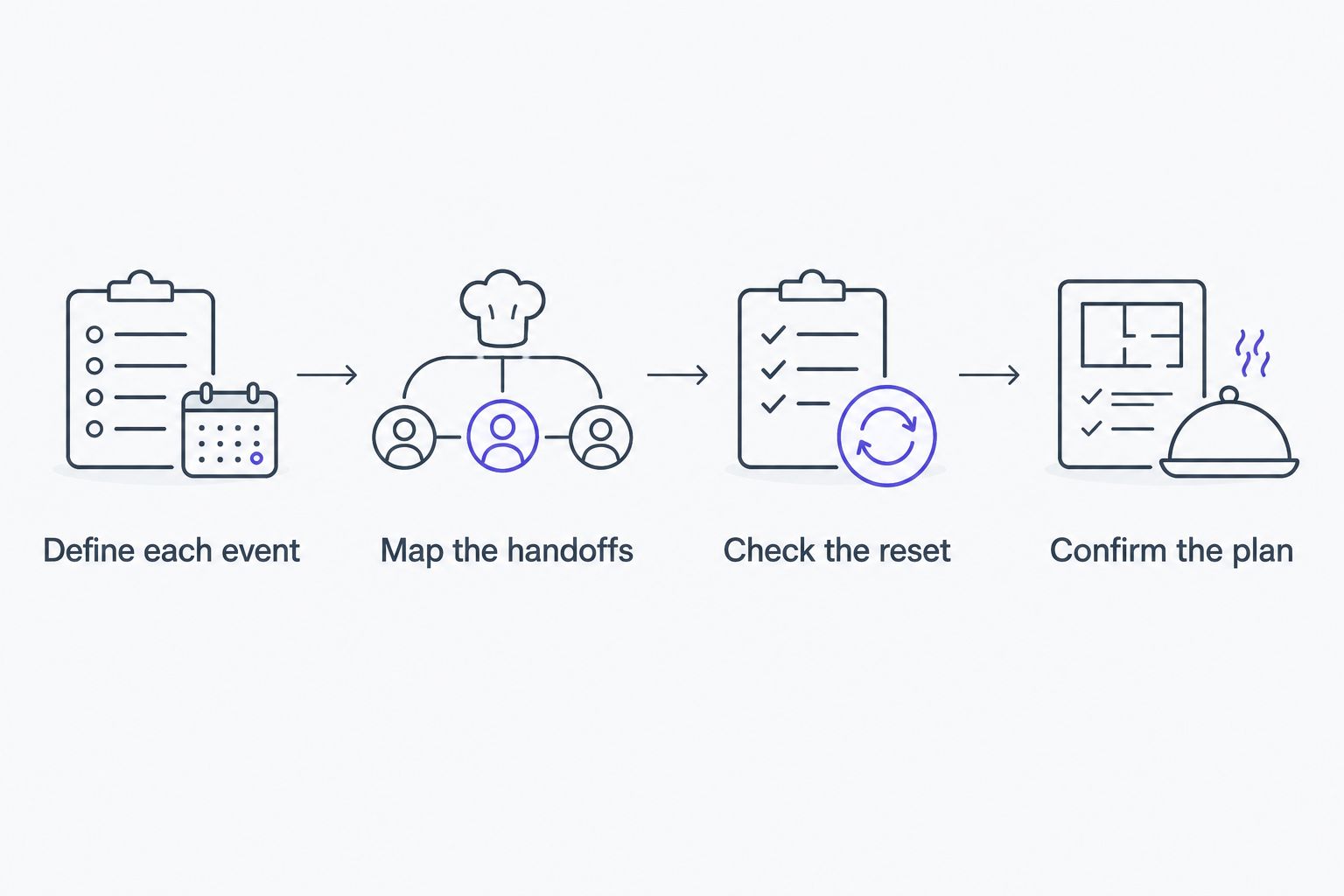
A shared checklist helps you spot missing responsibilities before they become event-day questions. The catering quote request to event-day planning workflow gives you a related planning reference.
Why back-to-back BBQ catering plans vary
The calendar alone does not explain whether a weekend schedule works. These factors determine what needs to happen between one gathering and the next:
- Guest counts: Each event needs its own food quantities and serving plan. A smaller second gathering still requires a separate preparation and delivery decision.
- Menu requirements: Different dishes bring different preparation, holding, and serving needs. Dietary requests also need to stay attached to the correct event.
- Venue access: Loading entrances, receiving contacts, stairs, kitchen access, and closing rules affect setup and breakdown. Confirm the actual arrangements instead of assuming every venue works alike.
- Travel: Different addresses add transportation and unloading tasks. Share the complete addresses before asking whether the timing works.
- Service responsibilities: Food delivery, buffet attendance, replenishment, and cleanup are different tasks. Ask which are included in the proposed arrangement.
- Equipment reset: Serving utensils, holding equipment, and transport containers need a plan between uses. Do not assume equipment can move directly from one meal into another without cleaning and preparation.
For 2026 planning, review these details for both events together. A clear first-event plan cannot compensate for an undefined second-event handoff.
Can the same BBQ menu work for both events?
The same menu can suit both gatherings, but each event still needs its own quantities and dietary review. Repeating a menu keeps your preferences consistent; it does not remove the need to plan the second meal separately.
Start with the people at each table. A wedding reception, corporate lunch, and church gathering can have different guest needs even when everybody enjoys a soulful meal. Ask about ingredients and preparation before promising that a dish meets a dietary requirement.
Keep menu changes tied to an event name. If the Sunday host requests a change, confirm whether that change applies only to Sunday or to the entire weekend.
The trade-off is straightforward: a shared menu reduces the number of distinct selections you need to communicate, while separate menus let you tailor each gathering. Neither choice proves that the caterer has confirmed the operational plan.
Can Saturday’s BBQ be served again on Sunday?
Do not make Saturday’s leftovers the foundation of Sunday’s catering order. A second catered meal needs an agreed preparation and food-safety plan, not an assumption that anything left on the buffet can be packed away and served again.
The FDA Food Code’s general holding standards for time/temperature control for safety foods are 135°F or above for hot holding and 41°F or below for cold holding. Those temperatures are holding standards, not cooking instructions, and cooling or reheating introduces additional requirements.
For hosts handling leftovers, USDA consumer guidance says to refrigerate perishable food within 2 hours, or within 1 hour when the surrounding temperature is above 90°F. These limits do not make food safe if its earlier handling is unknown.
Ask who takes responsibility for food after the agreed service ends. If you intend to keep leftovers, get handling instructions and arrange suitable storage before the event—not while everyone is stacking chairs.
Does using one caterer make a weekend easier?
One caterer gives you a single business to coordinate with, but each event still needs a separate service plan. Consolidating communication does not eliminate the work of confirming menus, locations, and responsibilities.
The advantage is continuity: you can discuss the whole weekend together and keep preferences in one conversation. The limitation is dependence on that caterer’s confirmed ability to meet every commitment, particularly when service times overlap.
Gravytraincatering is best for hosts seeking BBQ and soul food catering in the Charlotte metro area. Its stated focus includes weddings, corporate events, church gatherings, and private parties; a back-to-back schedule still needs direct confirmation for your particular events.
Before committing to your 2026 weekend, ask for a clear answer to this question: what happens at the second event if the first event’s breakdown takes longer than expected? Look for defined responsibilities rather than a general reassurance.
Plan your weekend catering
Share both dates, venue addresses, guest counts, and meal times to discuss your catering needs.
FAQ
Can BBQ catering handle a wedding reception and a church meal in one weekend?
Yes, BBQ catering can serve a wedding reception and a church meal in one weekend when the caterer confirms both event plans. Provide separate guest counts, venue addresses, menus, and meal times before committing.
Can the same catering team serve events at different venues?
The same catering team can serve different venues only when its confirmed schedule accounts for transportation, setup, service, and breakdown. Ask whether the plan depends on staff or equipment leaving the first venue before that event’s responsibilities are finished.
Do I need separate guest counts for back-to-back catered events?
Yes, give the caterer a separate guest count for each event. A combined weekend total does not show how much food belongs at each gathering or where dietary requests apply.
Can I change the menu for the second event?
Discuss a different menu for the second event before confirming the weekend plan. Ask how changes are approved, and identify the event name whenever you request a revision.
What temperature should catered BBQ stay at during service?
The FDA Food Code’s general hot-holding standard for time/temperature control for safety foods is 135°F or above; the general cold-holding standard is 41°F or below. Confirm who monitors temperatures and manages the food during your agreed service period.
Can I save catered food for the next day?
Saving catered food requires safe handling and prompt refrigeration, not simply covering the serving trays. USDA consumer guidance says to refrigerate perishables within 2 hours, or within 1 hour when the surrounding temperature exceeds 90°F; ask the caterer for handling instructions.
What should I send a caterer when planning back-to-back events?
Send each event’s date, address, guest count, meal time, dietary requests, and venue contact. Also describe the serving help you need and ask who handles setup, replenishment, breakdown, and leftovers.
One last thing
Check who has the keys after the first event. Equipment left behind a locked venue door cannot be cleaned, collected, or prepared for its next agreed use until someone provides access.
When discussing your weekend with Gravytraincatering, name the person authorized to receive food at each gathering and the person responsible for the final venue handoff. That small detail connects your written schedule to somebody who can actually open the door.