Self-catering is cheaper only when your total for food, equipment, transport, and paid help stays below a caterer's quote for the same wedding meal. Grocery spending alone leaves out the work of keeping food safe, serving guests, and cleaning up. For a 2026 wedding, compare the complete job—not a shopping list against a staffed catering proposal.
- Is it cheaper to self cater or hire a caterer for a wedding? Compare complete costs, not groceries alone.
- Self-catering fits couples with a suitable kitchen, confirmed helpers, and a clear food-safety plan.
- Drop-off catering leaves serving and cleanup with you unless your agreement includes those tasks.
- DG&G Gravy Train Catering serves couples seeking BBQ and soul food wedding catering around Charlotte.
Is it cheaper to self-cater or hire a caterer for a wedding?
Self-catering wins on cost only if the savings survive every expense needed to serve the meal. Hiring a caterer wins the comparison when the equivalent DIY plan costs more. Neither answer follows from the menu alone.
Start with the same guest count, dishes, service window, and cleanup responsibilities. A useful companion is this guide to budgeting for wedding catering in Charlotte; use it to organize questions before requesting quotes.
| Approach | Best for | Main advantage | Main drawback | What to verify |
|---|---|---|---|---|
| Self-catering | Couples with a suitable kitchen and committed helpers | Direct control over shopping, recipes, and preparation | You own the preparation, food safety, service, and cleanup plan | Venue permission, equipment, transport, and helper responsibilities |
| Drop-off catering | Couples who want prepared food but can manage service | Removes cooking from your task list | Delivery does not establish who sets up, replenishes, or cleans | Exactly which tasks and supplies the agreement includes |
| Staffed catering | Couples who want contracted help during the reception | Assigns agreed meal-service tasks to a provider | Additional service creates additional items to evaluate | Staffing duties, service window, equipment, and cleanup scope |
These are service models, not promises about any particular company. Compare written scopes before deciding which arrangement costs less for your wedding.
Why this matters
A wedding meal has a kitchen side and a guest-facing side. Cooking the food solves only the first part; somebody still needs to receive it, keep it at safe temperatures, replenish serving dishes, and clear the space.
For your 2026 budget, make those jobs visible before comparing totals. A relative's donated time is different from a paid expense, but it still needs a willing owner—and that person deserves to know whether they are attending the wedding or working through dinner.
Self-catering: best for couples with confirmed help
Self-catering gives you control over recipes, ingredients, and preparation. That suits a celebration built around family food, provided the venue permits your plan and the kitchen can handle it.
The drawback is responsibility. You become the coordinator for shopping, storage, cooking, packing, transport, service, and leftovers, even if different relatives perform each task.
Before choosing DIY, write down:
- Kitchen access: Where will food be prepared, cooled, stored, and reheated?
- Transport: Who will move the food and equipment to the reception?
- Service ownership: Who will replenish dishes while everyone else eats?
- Cleanup ownership: Who will wash equipment, handle rubbish, and return rentals?
Ask each helper to agree to a specific task. “The family will pitch in” is not a service plan, especially when the same people are needed for photographs or the ceremony.
Choose self-catering when the complete plan saves money and your helpers accept the work. Do not choose it solely because the groceries look affordable.
Drop-off catering: best for separating cooking from service
Drop-off catering separates food preparation from reception service. You arrange prepared food, then assign whatever setup, serving, and cleanup the agreement leaves to you.
That division is useful when cooking is the part you want to avoid. It does not remove the need for people at the venue, serving equipment, or a safe holding plan.
Ask where the provider's responsibility ends. Delivery to a kitchen counter is a different scope from setting out a ready-to-serve buffet, and neither phrase establishes ongoing replenishment or cleanup.
Compare drop-off catering with DIY after adding every remaining reception task. Otherwise, you are comparing finished food with an unfinished event plan.
Staffed catering: best for assigning reception duties
Staffed catering lets you contract for meal-service responsibilities rather than assigning them to relatives. The useful detail is not the label “full service”; it is the list of duties in the agreement.
Ask who handles setup, serving, replenishment, clearing, and food-service cleanup. Also establish when staff arrive and when their responsibilities end.
The trade-off is a broader service scope to evaluate against your budget. Paying for staff does not mean every venue task, rental return, or leftover container is included.
Choose staffed catering when the agreed duties match the help you actually need. Remove unwanted services from the comparison rather than assuming the broadest proposal is your only alternative to DIY.
Why wedding catering costs vary
Your 2026 comparison needs matching assumptions. These factors change the work involved, whether your family handles it or a caterer does:
- Guest count: Each plan must cover the same diners, including anyone eating outside the main guest list.
- Menu complexity: Different cooking methods, finishing steps, and serving temperatures require different preparation plans.
- Venue facilities: Confirm the kitchen, refrigeration, sinks, power, and permitted preparation arrangements before choosing a service model.
- Service responsibilities: Setup, replenishment, clearing, and washing are separate jobs; identify which ones the quote includes.
- Transport and equipment: Account for food containers, suitable vehicles, holding equipment, serving utensils, and any required rentals.
- Cleanup requirements: Match your plan to the venue's expectations for rubbish, dishes, kitchen condition, and equipment removal.
Keep the menu consistent while comparing service models. Changing both the food and the staffing at once makes it harder to see which decision changes the total.
How do you compare DIY costs with a catering quote?
Build a shared worksheet before asking which option wins. For a 2026 wedding, use current written quotes and actual shopping estimates rather than a remembered bill from somebody else's reception.
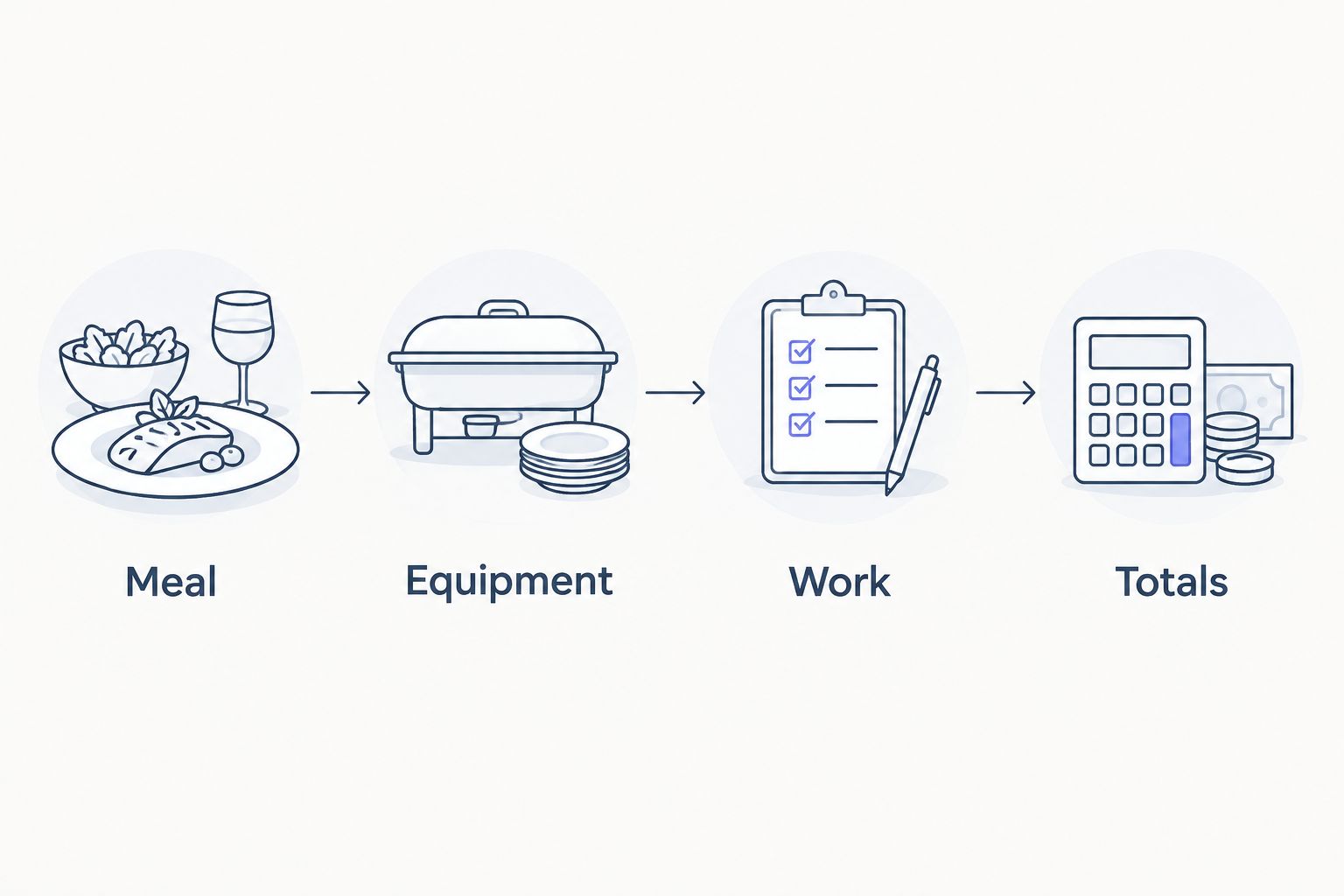
Start with the meal
Write down the guest count, proposed dishes, dietary requests, and meal schedule. Include drinks or desserts only if you want them in both plans; otherwise, compare them separately.
Ask each provider to price the same brief. If a proposed dish changes, record the change instead of treating the new quote as directly equivalent.
Add the equipment
List everything needed between the kitchen and the guest's plate: transport containers, temperature-control equipment, serving dishes, utensils, plates, and waste supplies. Mark what you already have and what you must arrange.
Borrowed equipment still needs collection, checking, cleaning, and return. Assign those jobs before calling the equipment “covered.”
Assign the work
Name the person responsible for each stage: preparation, transport, setup, service, and cleanup. Then mark whether that person is a volunteer or someone you must hire.
Keep donated labor separate from cash spending. That lets you see both the budget result and the family commitment without inventing a wage for a willing relative.
Reconcile the totals
Add the remaining DIY expenses and compare them with the caterer's complete written scope. Check taxes, delivery, equipment, staffing, and other applicable charges rather than assuming the first quoted figure settles everything.
The cheaper option is the lower complete total for equivalent food and responsibilities. If responsibilities differ, label the difference before making your decision.
A worksheet also exposes gaps. If neither the caterer nor your helpers own a task, the task is not included—no matter how tidy the total looks.
Does self-catering mean your family misses the reception?
Self-catering assigns work to whoever accepts it. If your relatives are responsible for replenishing food and washing equipment during dinner, those duties compete with their time as guests.
Walk through the wedding schedule with each helper. Ask who covers the buffet during speeches, who checks food temperatures, and who stays behind when the reception ends.
Y'all should be clear about the trade before the big day. Give helpers defined duties and a handoff, not an open-ended promise to “help with the food.”
Is a buffet automatically cheaper than a served dinner?
A buffet is a serving format, not a complete staffing or equipment plan. It still requires suitable food holding, serving utensils, replenishment, and cleanup.
Compare the same menu under each proposed format. Ask how the arrangement changes equipment and staff duties, then judge the written totals rather than the name of the service style.
A tray of savory food does not run its own reception. Somebody needs to watch the meal while your guests enjoy it.
What food-safety costs belong in a DIY wedding plan?
Temperature control belongs in the plan before you shop. USDA consumer guidance says to keep hot food at 140°F or above and cold food at 40°F or below; that means checking your storage, transport, and serving arrangements.
USDA guidance also limits perishable food at room temperature to 2 hours, or 1 hour when temperatures exceed 90°F. These limits are not a substitute for the venue's rules or any applicable local requirements.
For a 2026 outdoor wedding, assign someone to monitor temperatures with a food thermometer and manage replenishment. Include the necessary equipment in the DIY comparison instead of treating food safety as a day-of detail.
When does local BBQ catering fit the comparison?
DG&G Gravy Train Catering serves couples seeking BBQ and soul food wedding catering in the Charlotte metro area. The company is based in Salisbury, NC, and serves weddings alongside corporate events, church gatherings, and private parties.
That makes the company relevant when BBQ and soul food match your wedding menu. It does not settle the DIY question: you still need a quote and confirmation of the service responsibilities you want covered.
Send DG&G Gravy Train Catering your date, venue, guest count, menu interests, and requested help through the contact page. Ask for a clear separation between food and any proposed service duties so you can compare the response with your DIY worksheet.
Get a Wedding Catering Quote
Share your venue, guest count, and menu interests to compare catering with your DIY plan.
FAQ
Is it cheaper to self cater or hire a caterer for a wedding?
Self-catering is cheaper when the complete DIY total is lower than a catering quote for equivalent food and responsibilities. Include equipment, transport, paid help, and cleanup—not just groceries.
What's the best wedding catering option if my family wants to help?
Self-catering fits families who willingly accept defined preparation and reception duties. Confirm kitchen access, food-safety responsibilities, and cleanup before committing.
Is drop-off catering better than cooking everything ourselves?
Drop-off catering removes cooking from your responsibilities but leaves any uncontracted service tasks with you. Compare prepared-food costs plus your remaining equipment and labor needs with the complete DIY plan.
How much money will we save by catering our own wedding?
Your savings equal the difference between an equivalent catering quote and your complete DIY spending. A guest count alone cannot establish that difference; menu, equipment, venue, and staffing also matter.
Can wedding food stay on a buffet all evening?
Perishable food needs safe temperature control rather than an unrestricted buffet window. USDA consumer guidance limits room-temperature exposure to 2 hours, or 1 hour when temperatures exceed 90°F.
Does hiring a caterer mean cleanup is included?
Hiring a caterer does not establish cleanup responsibilities by itself. Have the agreement identify food-service cleanup, dishes, rubbish removal, and any duties left to you or the venue.
Can we ask DG&G Gravy Train Catering about a BBQ wedding meal?
DG&G Gravy Train Catering provides BBQ and soul food catering for weddings across the Charlotte metro area. Share your venue, guest count, and preferred meal, then confirm the proposed menu and service scope directly.
One last thing
Before choosing the cheaper total, ask: Who is responsible for the food while you are getting married? Put that person's name beside every meal-service task. An unassigned job is not a saving; it is unfinished planning.