
Yes—drop-off catering generally costs less than full-service catering because you take on more of the setup, serving, and cleanup. For your 2026 event, compare the complete scope rather than the food alone: equipment, delivery, venue requirements, and help you arrange separately can narrow the difference.
- Is drop off catering cheaper than full service catering? Generally yes, because fewer on-site tasks stay with the caterer.
- Drop-off catering suits hosts with reliable helpers; full-service catering suits events that need an on-site service team.
- Compare matching menus, equipment, setup, serving, and cleanup before choosing a catering quote.
- DG&G Gravy Train Catering serves BBQ and soul food for gatherings across the Charlotte metro area.
Why this matters
A tray of savory BBQ and a room full of hungry guests are only part of the catering plan. Someone still needs to receive the food, prepare the serving area, replenish dishes, and handle the mess afterward.
For a 2026 gathering, decide which jobs your group can actually cover before comparing proposals. If you're planning locally, contact the catering team with your event details and ask for a written breakdown of the service you're considering. A cheaper quote is useful only when the remaining work has an owner.
Is drop-off catering cheaper than full-service catering?
Drop-off catering generally has a lower quoted total when the menu and guest count match because it involves less on-site labor. Full-service catering adds staff responsibilities during the event, with the exact duties defined in the agreement. Neither label tells you everything that's included.
Use this comparison to separate the food from the work around it. These are service-model distinctions, not a promise about any individual caterer's package.
| Service model | Best for | Main advantage | Main drawback | What to confirm |
|---|---|---|---|---|
| Drop-off catering | Hosts with a serving space and dependable helpers | Less on-site service to pay for | Your group handles tasks after the delivery handoff | Setup, equipment, utensils, replenishment, and cleanup responsibilities |
| Full-service catering | Hosts who need an on-site team managing meal service | More event-day responsibilities assigned to catering staff | Additional staffing and service scope increase the quote | Staff duties, service window, rentals, and cleanup boundaries |
Don't compare a food-delivery proposal against a staffed-event proposal as though they buy the same thing. Ask each caterer to identify what happens from arrival through the end of meal service. That makes the difference understandable without relying on an advertised starting figure.
Compare the same meal before comparing service
Keep the guest count, menu, meal timing, and serving expectations consistent. A different menu creates a different comparison, even before staffing enters the picture.
Then separate the proposal into food, delivery, equipment, labor, and any other listed charges. Ask which items are required and which are optional. Choose the service model after you understand the whole event, not just the food order.
Drop-off catering: best for hosts with a working service plan
Drop-off catering fits an event where your group can take responsibility after the food arrives. Think about a church gathering with assigned volunteers, an office lunch with a designated organizer, or a family party where helpers have agreed to specific tasks.
The advantage is control over how much on-site help you purchase. The trade-off is responsibility: delivery doesn't automatically mean someone stays to watch the buffet, answer ingredient questions, or clear the room.
Before choosing drop-off service, assign these jobs:
- Delivery handoff: Receive the order and check it against the written confirmation.
- Buffet setup: Prepare the serving area and place the correct utensils with each dish.
- Meal oversight: Monitor food conditions and replenish dishes as planned.
- Guest assistance: Help guests who need support and relay ingredient questions accurately.
- Cleanup: Clear serving items, manage leftovers safely, and meet venue requirements.
Y'all don't need a fancy production to serve a welcoming meal. You do need willing helpers who know what they're doing before guests arrive. If those jobs are still unassigned, the drop-off plan isn't finished.
Full-service catering: best for hosts who need event-day help
Full-service catering fits an event where meal service needs its own team. That matters when you're managing a wedding timeline, welcoming clients, or hosting a gathering where family members shouldn't spend the meal working.
The advantage is having defined responsibilities assigned to catering staff. The trade-off is a larger service commitment in the proposal—and the need to read that proposal carefully. Full-service doesn't automatically include every rental, every cleanup task, or every part of the venue.
Ask what staff will actually do. Setting out food, serving guests, replenishing a buffet, clearing dining tables, and removing waste are separate duties; don't assume they're bundled together.
For your 2026 event, put the service window beside the event schedule. If the team finishes before the room needs clearing, you still need someone responsible for the remaining work. Buy the help your event needs, and confirm where that help ends.
Why the difference between catering quotes varies
The difference between drop-off and full-service catering depends on the work included, not simply the words printed at the top of the proposal. These factors explain what to inspect.
- Staff responsibilities: A team serving guests and clearing tables has a different workload from a driver handing over an order. Ask for the duties in writing.
- Service duration: Compare when staff arrive, when meal service begins, and when staff leave. Your venue schedule needs to fit those boundaries.
- Equipment responsibilities: Confirm who supplies serving utensils, food-holding equipment, tables, and any required rentals. Don't treat an unlisted item as included.
- Venue access: Tell the caterer about stairs, loading arrangements, kitchen access, and serving-space restrictions. Those details shape the work required.
- Cleanup boundaries: Distinguish clearing catering equipment from cleaning the dining area or removing all event waste. Assign anything outside the catering agreement.
Keep these factors visible when you compare proposals. A shorter list of included tasks isn't automatically a better deal; it means more tasks remain with you.
How do you compare catering proposals fairly?
Build a shared event brief before requesting different service options. For a 2026 booking, the useful comparison is the same event with different responsibility splits—not unrelated menus and different assumptions.
- Match the menu. Request the same dishes and serving expectations for each proposal. State any dietary needs without assuming a caterer can accommodate them.
- Match the headcount. Give each caterer the same expected attendance and explain how you'll confirm the final count.
- List responsibilities. Identify who handles delivery, setup, food holding, serving, replenishment, and cleanup.
- Check equipment. Mark each item as supplied by the caterer, supplied by the venue, or arranged by you.
- Confirm the handoff. Establish who receives the order or directs the service team, then document what happens when catering responsibilities end.
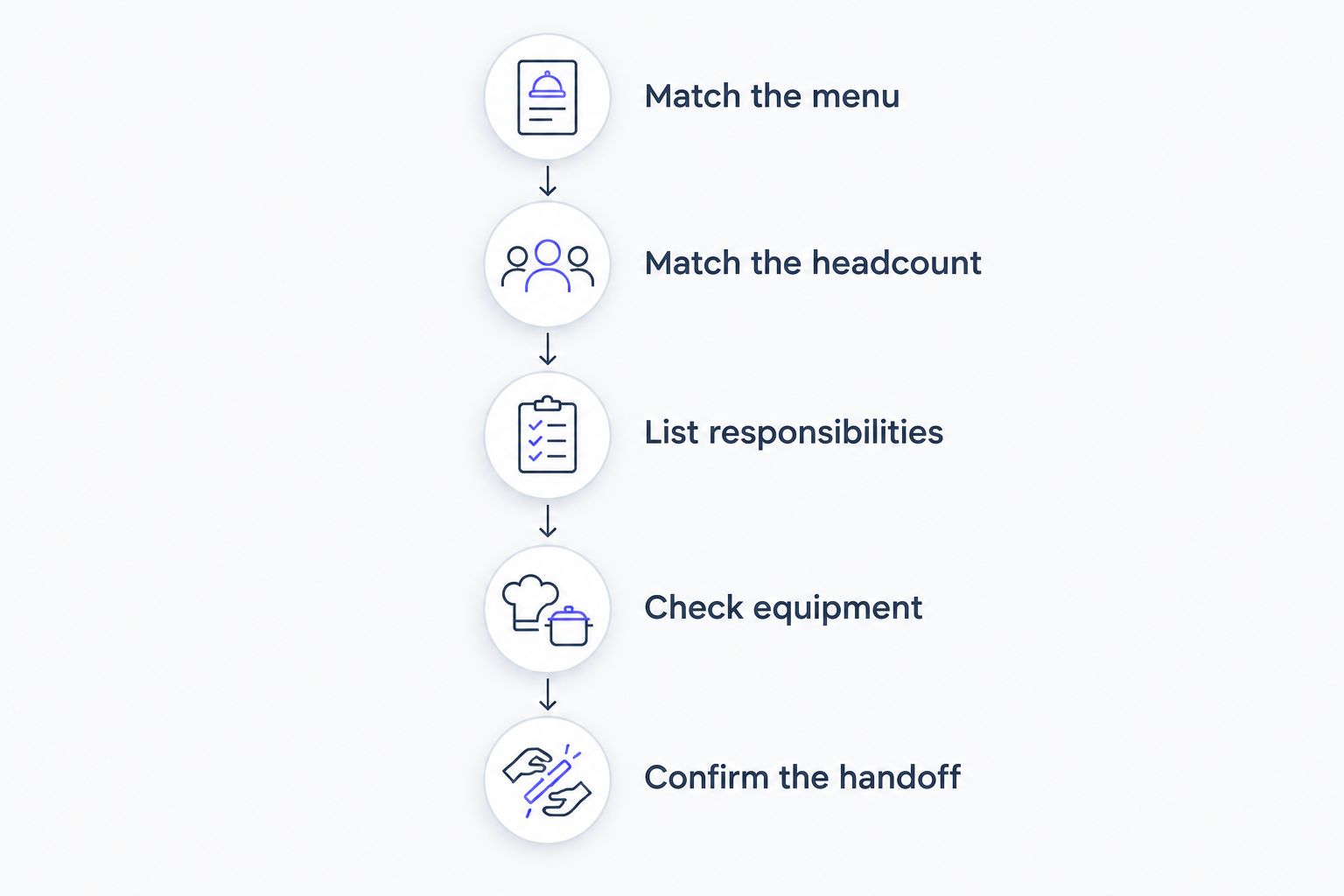
Read the proposals against that brief, line by line. If one includes a task and another doesn't, ask how you'll cover the gap before making a decision. An unanswered question isn't a saving.
DG&G Gravy Train Catering is best for Charlotte-area hosts seeking BBQ and soul food catering. The Salisbury-based company serves weddings, corporate events, church gatherings, and private parties; confirm the available service arrangements and responsibilities directly rather than assuming either format is offered for your event.
Plan your catering conversation
Share your guest count, venue, meal timing, and the tasks you need covered.
Is drop-off catering a good choice for a wedding?
Drop-off catering suits a wedding when someone other than the couple has agreed to manage the food service. The ceremony, photographs, guest arrivals, and meal schedule still need attention, so don't make the newlyweds the default problem-solvers.
Check the venue's catering rules before committing. Ask who will receive the order, maintain the serving area, help guests, and clear everything within the venue's required schedule. If those roles aren't covered, compare a staffed arrangement before choosing.
Do you need servers for a buffet?
A buffet doesn't automatically require hired servers, but it still needs oversight. Someone must manage replenishment, food conditions, serving utensils, and guests who need assistance.
Choose staffing based on those responsibilities rather than assuming self-service means no work. A buffet can reduce direct plate service while leaving plenty of behind-the-table tasks.
Can church volunteers replace catering staff?
Church volunteers can take on agreed serving tasks when they have the time, equipment, and instructions to do them. Their help works best when responsibilities are assigned in advance rather than announced as the food arrives.
Be honest about the trade-off. Volunteers working the meal aren't fully participating in the gathering, and goodwill doesn't replace a food-safety plan. Make sure each helper understands the assignment and can decline it.
Don't let a cheaper service plan weaken food safety
For a 2026 event, decide who will monitor food after the catering handoff. Food safety doesn't stop when the delivery vehicle leaves, and a full-looking buffet isn't proof that food is being held safely.
USDA consumer guidance on keeping food safe gives these benchmarks for perishable food:
- Keep hot food at 140°F or above.
- Keep cold food at 40°F or below.
- Don't leave perishable food without temperature control for more than 2 hours.
- Reduce that limit to 1 hour when the surrounding temperature is above 90°F.
These are consumer safety benchmarks, not a substitute for your caterer's instructions or applicable food-service requirements. Ask how the food should be held and served, and make sure the responsible person has suitable equipment and a food thermometer.
Plan leftovers before the meal begins, too. Decide who will handle them and where they can be stored safely. Don't stretch the serving window just because food remains on the table.
FAQ
Is drop off catering cheaper than full service catering?
Yes, drop-off catering generally costs less because it includes less on-site service. Compare matching menus and guest counts, then account for equipment, serving help, and cleanup you must arrange separately.
Does drop-off catering include setting up the buffet?
Setup depends on the catering agreement; the term drop-off doesn't guarantee it. Ask whether the order is handed over, placed on tables, or arranged for service, and confirm who supplies equipment.
Is full-service catering better for a wedding?
Full-service catering is better suited to a wedding that needs an on-site team handling meal-service tasks. Confirm the specific duties and service window rather than assuming the package covers the entire reception.
Can I save by having family serve the food?
Family help can reduce the paid service you need when relatives agree to the work and have a clear plan. Account for setup, safe food holding, replenishment, and cleanup—not just carrying dishes to the buffet.
How long can catered food sit out?
Perishable catered food without temperature control should not sit out longer than 2 hours under USDA consumer guidance. That limit becomes 1 hour when the surrounding temperature is above 90°F; follow the caterer's handling instructions and applicable requirements.
What should I ask before accepting a catering quote?
Ask what the quote includes for food, delivery, setup, equipment, staffing, and cleanup. Confirm the guest count, service timing, and any responsibilities left with you or the venue.
Does DG&G Gravy Train Catering serve Charlotte-area events?
DG&G Gravy Train Catering serves weddings, corporate events, church gatherings, and private parties across the Charlotte metro area. The company is based in Salisbury, NC, and provides BBQ and soul food catering; ask directly about arrangements for your event.
One last thing
Ask a question that a food-only quote doesn't answer: Who is responsible after the meal is served? Name that person before booking, whether it's a catering lead, a venue contact, or a willing organizer.
That answer helps you choose honestly. Drop-off catering makes sense when the remaining jobs are covered; full-service catering makes sense when you need those jobs assigned to a team. Keep the hospitality warm and the responsibilities clear.