A BBQ catering package includes the number of sides listed in that caterer’s written package; there is no universal standard you should assume. Check whether the allowance means distinct side dishes, portions for each guest, or separately ordered trays. For your 2026 event, confirm substitutions, bread, sauces, and additional sides before you approve the menu.
- How many sides come with a BBQ catering package? Confirm the written allowance, not an assumed standard.
- Side choices and serving quantities answer different questions; confirm both before approving your BBQ catering menu.
- DG&G Gravy Train Catering serves BBQ and soul food for weddings, corporate events, church gatherings, and private parties.
- Ask whether bread, substitutions, and additional sides are included in your specific catering agreement.
How many sides come standard with a BBQ catering package?
The package description determines the included side count. A menu listing tells you which dishes you can choose from; the package allowance tells you which selections are included in your order. Those are different things.
Start by asking for the included side count and the serving quantity for each selected dish. You can contact the catering team with your event details and request those answers in writing.
Use this comparison to read a proposal without confusing a choice, a substitution, and an addition. These are planning distinctions, not descriptions of any particular company’s packages.
| Proposal wording | What to confirm | Best for | Limitation |
|---|---|---|---|
| Included side | Which dish and serving quantity the package covers | Establishing your baseline menu | A dish name alone does not establish quantity |
| Side substitution | Whether a replacement keeps the same allowance and terms | Adjusting the menu without expanding it | Replacement rules need confirmation |
| Additional side | Whether the dish adds variety, food quantity, or both | Expanding a menu deliberately | More selections do not automatically establish adequate portions |
| Separately ordered tray | The stated serving yield and its role in the meal | Supplementing a specific dish | A tray description alone does not establish guest coverage |
Keep the final selection list attached to your event agreement. That gives you something concrete to check when the menu changes.
Why this matters
A good BBQ spread needs more than a long list of savory dishes. You need to know what your guests will actually be served, how the dishes fit together, and whether the order covers the people eating.
For a 2026 wedding, church anniversary, or office gathering, confirm variety and quantity separately. An appealing menu does not answer the portion question, and a generous quantity does not answer a guest’s dietary question.
Getting those details settled also makes comparing proposals easier. You can compare the same meal requirements instead of treating every use of the word package as an equivalent offer.
How do you confirm exactly what the package includes?
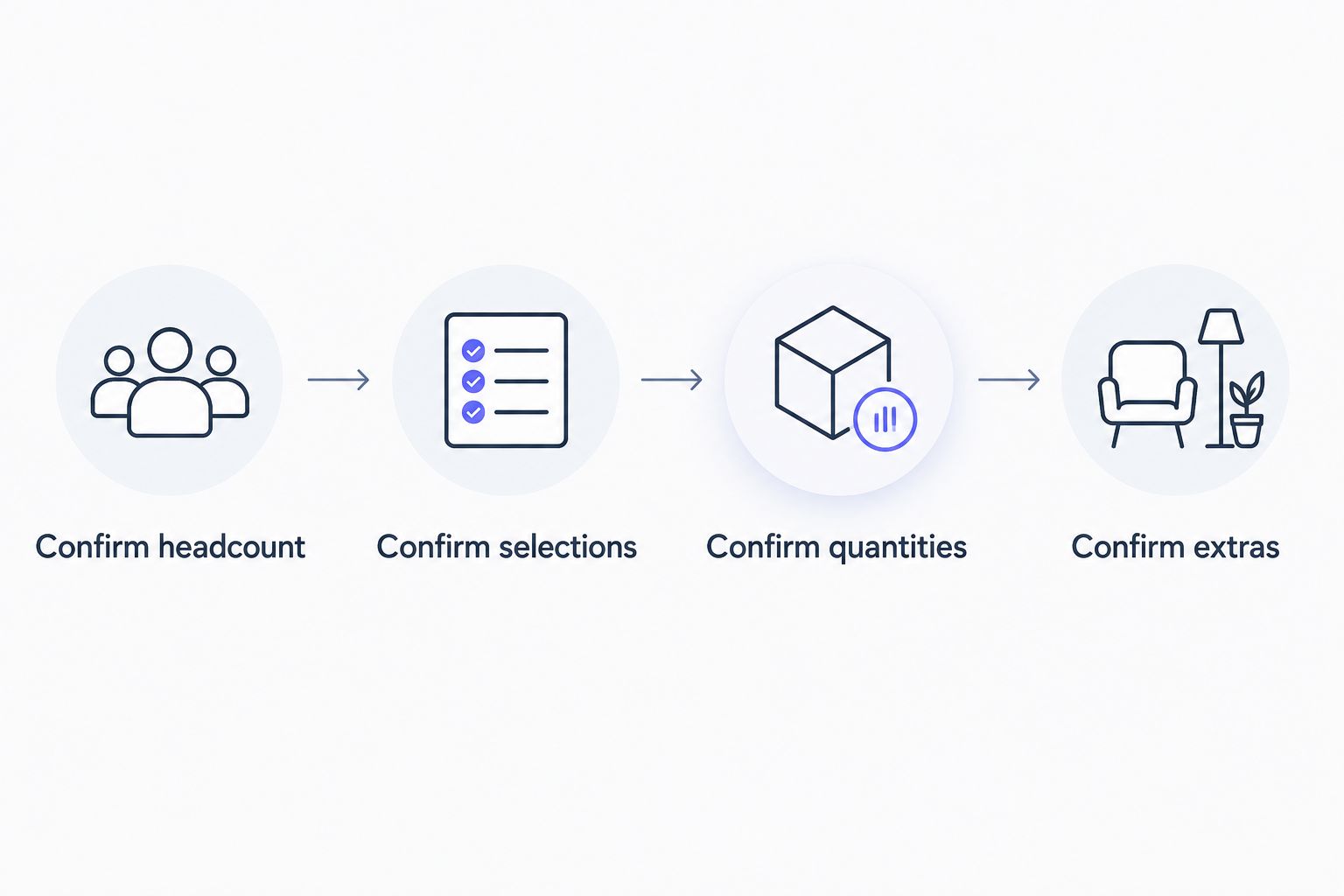
Follow this sequence before choosing your final sides. You do not need catering jargon; you need plain answers tied to your event.
- Confirm headcount. Tell the caterer who is eating, including any separately planned meals for children, vendors, or staff. Ask which guests the quoted quantities cover.
- Confirm selections. Request the names of the included sides and the number of distinct dishes you can select. Keep optional dishes separate from included selections.
- Confirm quantities. Ask how each side is portioned or how its stated serving yield relates to your headcount. Do not substitute pan count for a serving explanation.
- Confirm extras. Resolve bread, sauces, dietary substitutions, serving utensils, and any additional dishes. Record the final decisions with the menu.
After those steps, read the proposal as if someone else will receive the food. Can that person identify every included dish, understand the intended guest coverage, and distinguish extras from the original package? If not, request a clearer version.
What counts as a side in your catering package?
Use the caterer’s written categories, not your own assumptions. A dish appearing beside the meat on a menu does not establish whether it uses an included side selection.
Ask about bread separately. A roll or piece of cornbread might feel like part of a complete plate, but you still need the proposal to establish its place in the order. Apply the same check to sauces, pickles, garnishes, and desserts.
You should also distinguish a menu category from an ingredient. A vegetable-based dish is not automatically suitable for a vegetarian guest, and a familiar dish name does not establish its allergen information.
For your 2026 menu, request a plain itemized list rather than relying on a package name. Descriptive names help you picture the meal; itemized inclusions help you approve it.
Side choices are not the same as side portions
A side choice is a distinct dish you select. A side portion is an amount served to a guest. Keep those terms separate whenever you discuss the order.
Ask whether every selected side is planned to serve the full guest count or whether quantities are divided across selections. Then ask how the caterer accounts for the rest of the meal. You need an answer specific to your menu, not a general promise that there will be plenty.
More variety is not proof of more food. Confirm the serving plan before adding another dish just to make the menu look fuller.
Why the included side count varies
The useful question is not whether your package matches someone else’s event. It is whether the written offer fits yours. Review these factors with the caterer:
- Package terms. The specific offer establishes which selections are included and which require a separate decision. Read the inclusions rather than assuming all packages work alike.
- Menu selection. Ask whether every listed side is eligible for the package or whether particular selections have different terms.
- Guest coverage. Confirm how the chosen dishes relate to the people being served. Selection count and guest coverage need separate answers.
- Dietary substitutions. Establish whether a suitable replacement changes an existing selection or adds a separately prepared dish.
- Serving arrangement. Ask how the agreed quantities will be presented and served. The menu should make sense for the actual meal setup.
These are confirmation points, not reasons to accept an unclear proposal. If an answer changes your order, request an updated menu so everyone works from the same version.
How do you choose sides that fit the whole meal?
Start with the meal, not a wish list. Tell the caterer what main dishes you are considering, who is attending, and whether guests will eat a full meal or something lighter.
Then ask for selections that bring different textures and flavors to the plate. A creamy dish and a crisp dish serve different purposes; choosing variety deliberately is more useful than adding dishes simply because they sound good together.
For a church gathering or family celebration, ask the people organizing the event about known preferences and dietary needs. Familiar food can be part of the welcome, but familiarity does not replace checking ingredients.
DG&G Gravy Train Catering is a fit for hosts seeking BBQ and soul food catering in Salisbury and the Charlotte metro area. Its stated event focus includes weddings, corporate events, church gatherings, and private parties; confirm the side allowance for your particular event before booking.
That service focus gives you a relevant starting point, not a substitute for package details. Make your decision on the actual menu and serving plan.
Should you add another side or increase an existing dish?
Add variety to solve a variety problem; increase quantity to solve a quantity problem. Those decisions are not interchangeable.
If a guest needs a suitable dish, discuss ingredients and preparation before expanding the menu. Adding another familiar favorite does not address a dietary restriction unless its suitability is confirmed.
If your concern is running out of food, ask about quantities first. You need to understand the serving plan for the existing selections before deciding that another dish is the answer.
For your 2026 event, explain the concern behind the request. Saying that you need a suitable meal for a particular guest or clearer coverage for the headcount gives the caterer a practical problem to resolve.
Do all guests need to eat every side?
Not every guest needs to choose every dish, but the order still needs a clear serving plan. Ask whether quantities assume guests sample each selection or choose among the sides.
That distinction matters when a particular dish is the only suitable choice for some attendees. Do not treat those guests as covered simply because the buffet has several options.
Keep the discussion specific. Describe the dietary requirement, confirm the relevant ingredients and preparation, and ask how the suitable food will be identified during service.
Does bread count toward the included sides?
Bread counts toward the included sides only when the package terms say it does. Ask whether rolls, cornbread, or another accompaniment are included separately, use a side selection, or need to be ordered separately.
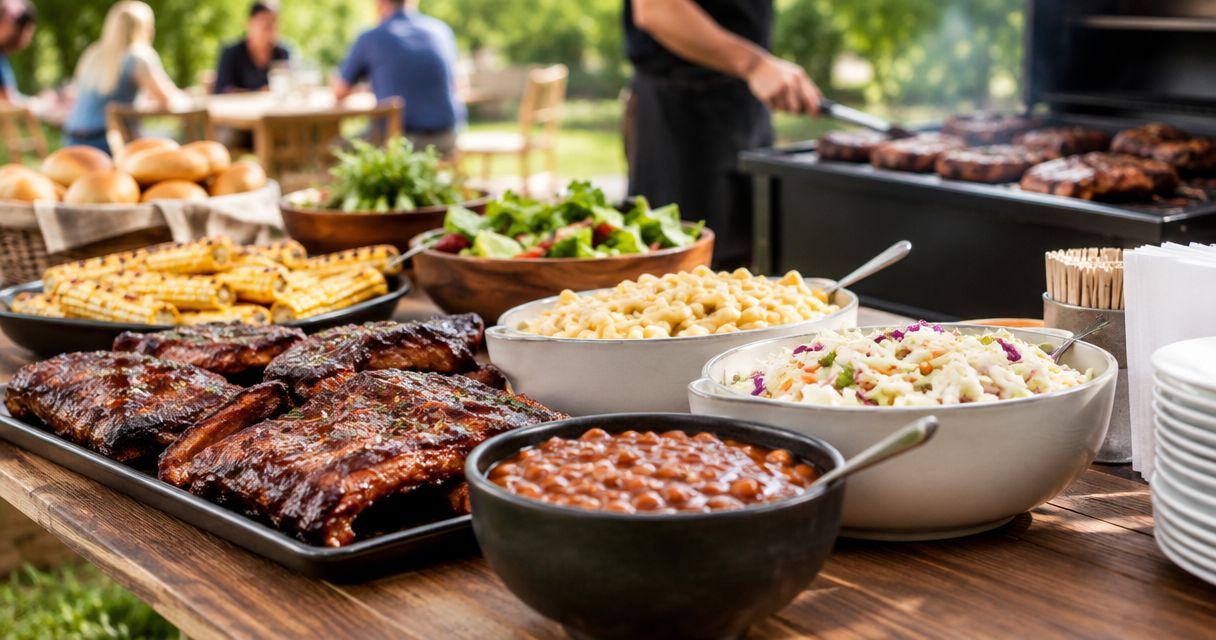
Do the same for sauces and desserts. A complete-looking menu photograph or a familiar meal combination is not a written inclusion list.
What should you send with a catering inquiry?
Send enough detail for the caterer to answer the side question in context. A short, organized request beats a long exchange built around an undefined package.
- Event details: Give the occasion, date, location, and intended meal time.
- Guest coverage: State the expected headcount and identify separately planned meals.
- Menu direction: Explain that you want BBQ and soul food, then ask which side selections fit the proposed package.
- Dietary needs: Describe requirements without assuming a dish is suitable from its name.
- Written inclusions: Request the side count, quantities, substitutions, and accompanying items together.
When contacting DG&G Gravy Train Catering for BBQ and soul food catering, use those details to request an event-specific menu. Keep your 2026 correspondence and final approved selections together so later changes are easy to trace.
FAQ
How many sides come with a BBQ catering package?
The included side count is the number stated in the caterer’s written package. Confirm both the distinct dishes you can select and the serving quantities for your guest count.
Does DG&G Gravy Train Catering include a standard number of sides?
Confirm the included side count directly with DG&G Gravy Train Catering for your specific event. Ask for the selected dishes and quantities to appear in the written proposal.
Does cornbread count as a side in BBQ catering?
Cornbread counts as a side only if the package categorizes it that way. Ask whether bread is included separately, uses a side selection, or needs a separate order.
Can I swap a side instead of adding another dish?
Request a substitution and confirm the terms before approving it. Make sure the revised proposal identifies the replacement and its serving quantity.
Does adding more side choices mean there is more food?
Adding more side choices does not by itself establish a larger food quantity. Ask whether the added selection increases the order or divides the planned quantity across more dishes.
Are vegetable sides automatically vegetarian?
Vegetable sides are not automatically vegetarian; ingredients and preparation determine suitability. Confirm stocks, fats, sauces, and other ingredients rather than relying on the dish name.
Should every side serve the full guest count?
Confirm the serving plan for each side rather than assuming every dish covers the full headcount. Ask how quantities account for guest choices and any separately planned dietary meals.
One last thing
Ask for the final menu to work as a receiving checklist. Someone checking the delivery should be able to match the agreed dishes and quantities to the order without reconstructing earlier conversations.
Before you approve, read that list aloud: main dishes, included sides, quantities, bread, sauces, dietary meals, and serving items. If you have to add an explanation from memory, put that explanation into the written agreement. That is a practical way to keep a warm, generous meal from turning into a last-minute guessing game.