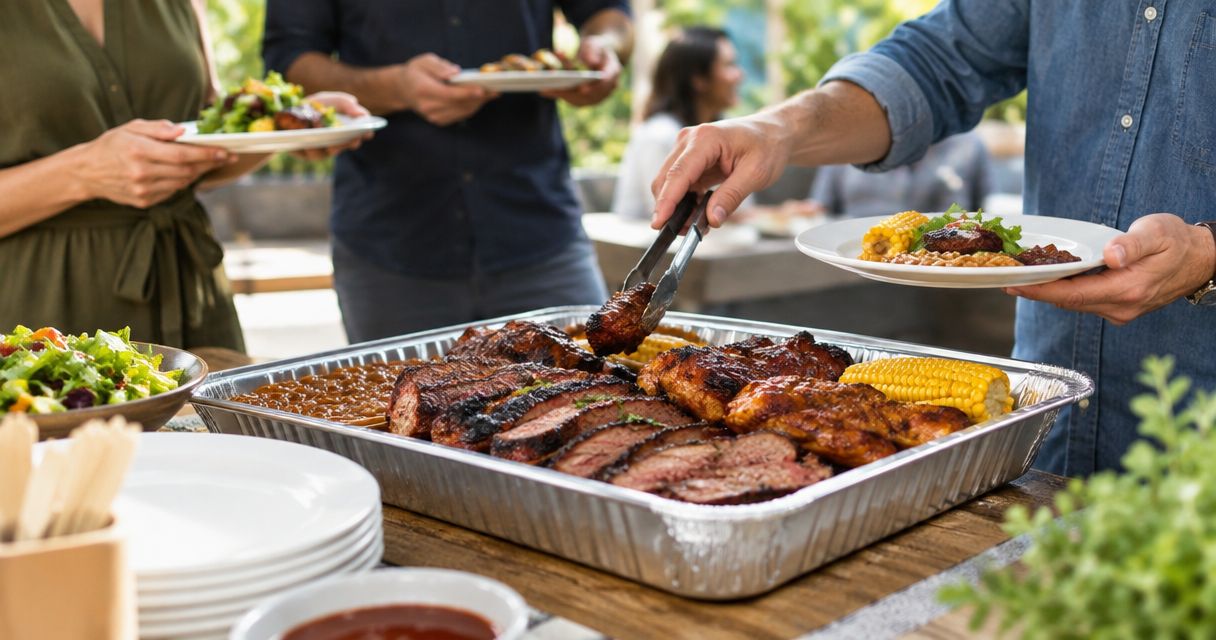
A BBQ catering tray has no fixed guest count: how many people it feeds depends on its cooked, usable food weight and the portion served to each guest. For your 2026 event, ask for the tray’s serving count for your actual menu—not a headcount based on the pan’s appearance. Bones, sauce, sides, and second helpings all affect whether that tray covers dinner.
- How many people does a BBQ catering tray feed? Divide usable cooked food weight by the planned portion per guest.
- Gravytraincatering serves BBQ and soul food for gatherings in Salisbury and across the Charlotte metro area.
- Confirm whether a tray’s serving estimate covers a main course, sandwiches, or a shared meat selection.
- Order from a written serving plan, not from the words full tray or half tray alone.
Why this matters
You want everyone fed, without discovering halfway through supper that a tray count meant something different from a meal count. A pan of meat and a complete dinner are not interchangeable ordering units.
Before booking your 2026 gathering, contact the caterer with your guest count, menu, and serving style. Ask how many complete meals the proposed order covers, as well as how many portions each tray contains. The useful number is guests fed by the whole menu, not containers delivered.
How many people does one BBQ catering tray feed?
One BBQ catering tray feeds the number of guests supported by its usable cooked contents at your chosen portion size. The calculation is straightforward:
Usable cooked food weight ÷ food weight per guest = portions per tray.
Both weights must use the same unit. If the tray’s contents are measured in pounds and the serving is measured in ounces, convert first: 1 pound equals 16 ounces. For metric measurements, 1 kilogram equals 1,000 grams.
That calculation estimates portions of the food inside that particular tray. It does not automatically establish how many complete dinners you have, especially when guests need several dishes to make a plate.
| Information provided | What it tells you | What still needs checking |
|---|---|---|
| Tray size only | The container format | Food weight, portion size, and meal coverage |
| Cooked food weight | The amount of food before portioning | Whether the weight includes bones or other nonedible material |
| Portions per tray | The intended number of servings | Whether those servings suit your menu and service style |
| Complete meals covered | The intended guest coverage of the whole order | Which dishes and portions make up each meal |
Treat a caterer’s serving estimate as a description that needs context. Ask whether it assumes meat as the main course, sandwich filling, or part of a larger spread. Those are different meals, even when the pan looks the same.
How to calculate your tray count
Build your estimate around the food guests will actually receive. Keep the same assumptions from your first inquiry through the final order; changing from sandwiches to dinner plates changes the question you are asking.
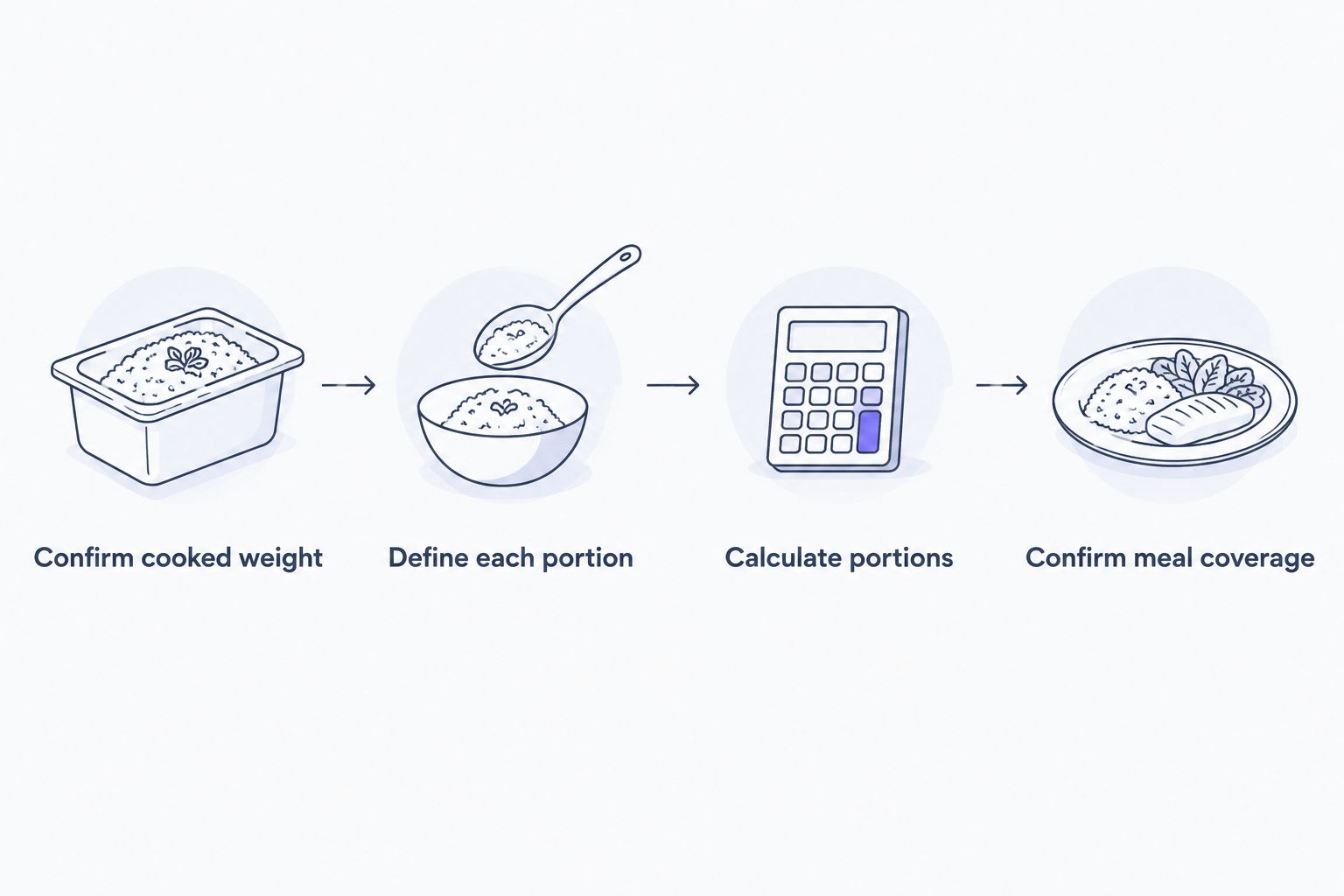
1. Confirm cooked weight
Ask for the usable cooked weight in each tray. Raw purchasing weight is not the same as the cooked food ready to serve, and the weight of a filled container is not necessarily the weight of its edible contents.
For bone-in food, ask for a piece count and the intended serving pattern instead of treating every ounce as edible meat. Do not apply a boneless-meat calculation to ribs or bone-in chicken without an adjustment supplied by the caterer.
2. Define each portion
Describe the plate you intend to serve. Is the BBQ the main attraction, sandwich filling, or one selection beside another meat?
Ask the caterer to state the portion used in the tray estimate. A serving count without a serving definition is not a finished ordering plan. If guests will choose among meats, establish whether the estimate assumes a choice or a taste of each.
3. Calculate portions
Divide usable cooked weight by the agreed portion weight. Convert pounds to ounces or kilograms to grams before dividing, rather than mixing measurement systems in the same calculation.
Record the resulting portions beside the dish name. Keep meat and side calculations separate: equal-looking trays do not establish equal serving counts, and a side portion does not replace a main-course portion.
4. Confirm meal coverage
Compare the portions available across the entire menu with the number of people eating. Check that guests with dietary restrictions have a suitable meal, not simply a place in the overall headcount.
For your 2026 order, finish with a written statement of the menu, guest count, and intended meal coverage. That gives you something clearer to approve than a list of pans.
Why BBQ tray serving counts vary
A generous-looking tray is not a reliable measuring tool. These details explain why the same container description can lead to different serving estimates:
- Food type: Pulled meat, sliced meat, and bone-in pieces require different portioning methods. Ask which method supports the stated headcount.
- Usable contents: Bones and other nonedible material must not count as edible portions. Clarify whether a weight describes usable meat or the entire prepared dish.
- Meal role: A main-course serving and a tasting portion serve different purposes. Tell the caterer what else will be on the plate.
- Menu composition: Bread, sides, and additional mains change the meal you are building. Do not assume adding dishes makes each meat tray cover a specific extra number of people.
- Serving method: A measured serving and an unrestricted buffet are different plans. Decide who portions the food and how second helpings will work.
- Guest requirements: Appetites, dietary restrictions, and who is actually eating affect meal coverage. Count people who need a meal, including any event workers you intend to feed.
There is no need to turn this into guesswork, y’all. Describe the meal clearly, then ask the caterer to connect that meal to a serving count.
Should I order by tray, by weight, or by guest count?
Order against complete meal coverage, even when the caterer sells food by the tray or by weight. Each ordering method answers a different question; none removes the need to define portions.
| Ordering method | Best for | Advantage | Limitation |
|---|---|---|---|
| By tray | Adding a specific dish to an existing menu | Makes the requested container count clear | Tray size alone does not establish portions |
| By cooked weight | Planning boneless meat portions | Supports a direct portion calculation | Needs an agreed serving weight and usable-food definition |
| By guest count | Planning a complete catered meal | Keeps the order focused on people eating | Requires clarity about included dishes and portion assumptions |
For a church supper where other hosts bring food, ordering a particular dish by tray can fit the plan. The limitation is coordination: someone still needs to confirm that the combined menu covers everybody.
For a complete wedding or office meal, guest-count planning keeps the conversation focused on dinner rather than containers. Its limitation is that a headcount alone says nothing about menu choices, dietary needs, or second helpings. Put those details beside it.
Does a full tray feed twice as many people as a half tray?
A full tray does not establish twice the servings unless its usable contents are twice the amount at the same portion size. Container names do not confirm depth, fill level, or food weight.
Ask for the serving count of each tray format separately. If you compare formats, use the same dish and portion definition; comparing a full tray of one food with a half tray of another does not answer the question.
Do side dishes make a BBQ tray feed more people?
Side dishes do not increase the amount of meat in a tray. They change the complete meal and can support a different planned meat portion, but that portion needs to be agreed before ordering.
Avoid reducing the meat order just because the menu includes several sides. Ask how the proposed portions fit together on a plate, then confirm the resulting guest coverage for the entire spread.
How do I plan for seconds without overordering?
Plan second helpings as an explicit part of the order, not an assumption hidden inside the tray count. Tell the caterer whether your priority is a single complete meal, a buffet with repeat visits, or food remaining after service.
Keep leftovers separate from essential meal coverage. Feeding every guest comes first; a take-home plan is an additional requirement that needs its own handling and storage arrangements.
What to confirm before you approve the order
Use a short written worksheet for your 2026 event. You do not need a complicated spreadsheet, but you do need the serving assumptions in one place.
- People eating: Record the expected meal count, including hosts and any workers you plan to feed.
- Menu: List each main, side, and bread item you are ordering.
- Portion basis: Record weight, pieces, or another clearly defined serving measure for each dish.
- Tray coverage: Write down the portions supplied by each tray format.
- Service plan: Specify whether guests serve themselves or someone portions the food.
- Additional food: Identify dishes supplied by family, another vendor, or the venue.
- Final confirmation: Ask what happens when your guest count or menu changes before the event.
Gravytraincatering is a BBQ and soul food catering choice for hosts in Salisbury and the Charlotte metro area. The company serves weddings, corporate events, church gatherings, and private parties. When discussing your meal, bring the worksheet rather than asking for a tray count in isolation.
That local service fit does not replace a serving calculation. Have the portions and complete-meal coverage confirmed for your specific order.
Plan Your BBQ Catering Order
Share your guest count, menu needs, and serving style to discuss portions for your gathering.
FAQ
How many people does a BBQ catering tray feed?
A BBQ catering tray feeds the number supported by its usable cooked food weight and the planned serving per guest. Ask for the portion size behind the stated serving count, then confirm how the complete menu covers your guests.
Can I work out BBQ servings from pounds?
Yes, divide usable cooked weight by the planned portion weight using the same units. Convert pounds to ounces first when needed: 1 pound equals 16 ounces.
Does a tray of ribs feed the same number as pulled meat?
Do not assume ribs and pulled meat have the same tray coverage. Ask for the ribs’ piece count and serving plan, and use an agreed cooked-weight portion for boneless pulled meat.
Should I count children as full BBQ meals?
Ask for a serving plan that distinguishes any smaller meals you intend to provide. Do not remove children from the meal count; record what they will actually eat and confirm those portions.
Will guests choosing between meats need a full portion of each?
A choice between meats is different from serving every guest each meat. Tell the caterer whether guests choose a main or receive a mixed plate, then request quantities for that arrangement.
Do I need extra trays for a self-serve buffet?
A self-serve buffet needs an agreed plan for portions and repeat visits, not an automatic extra tray. Discuss those expectations before approving the quantity.
What should I ask Gravytraincatering about BBQ portions?
Ask Gravytraincatering how many complete meals your proposed BBQ and soul food order covers. Include the guest count, selected dishes, serving style, dietary requirements, and whether you want second helpings or leftovers.
One last thing
The smallest serving count on your menu deserves a second look. Plenty of meat does not guarantee complete plates if another dish runs short, especially when that dish is essential to a guest’s dietary needs.
Before approving your 2026 catering order, read the quantities dish by dish. Then ask the final question: does this combination provide the meals you intend to serve? That is a better finish than counting pans and hoping supper works out.