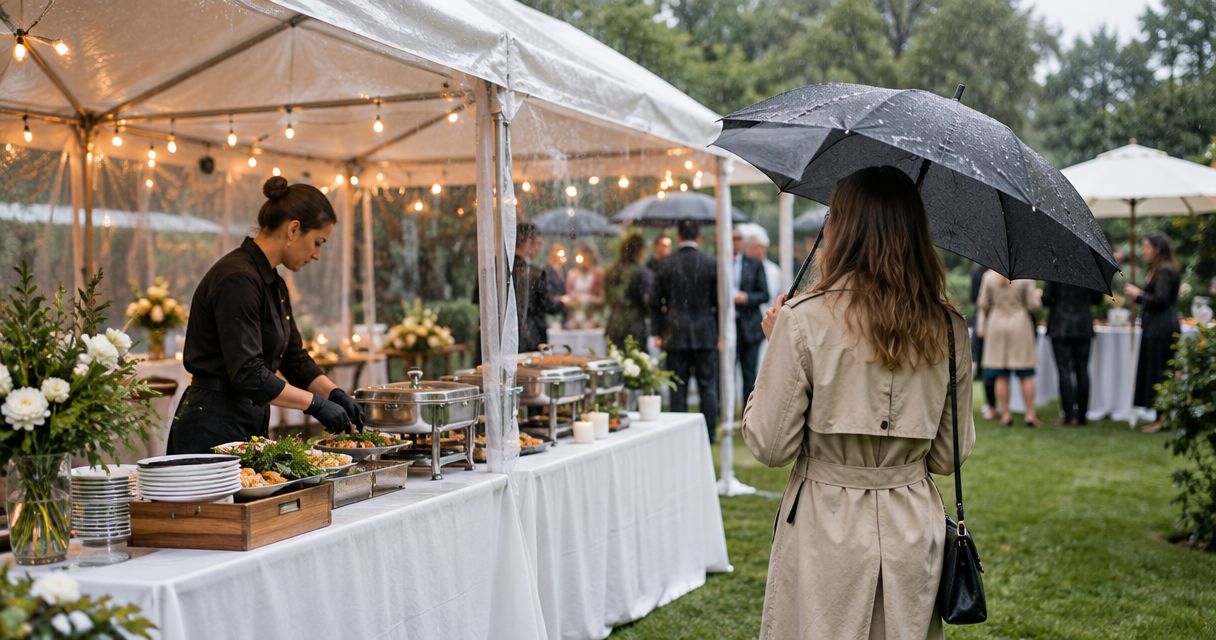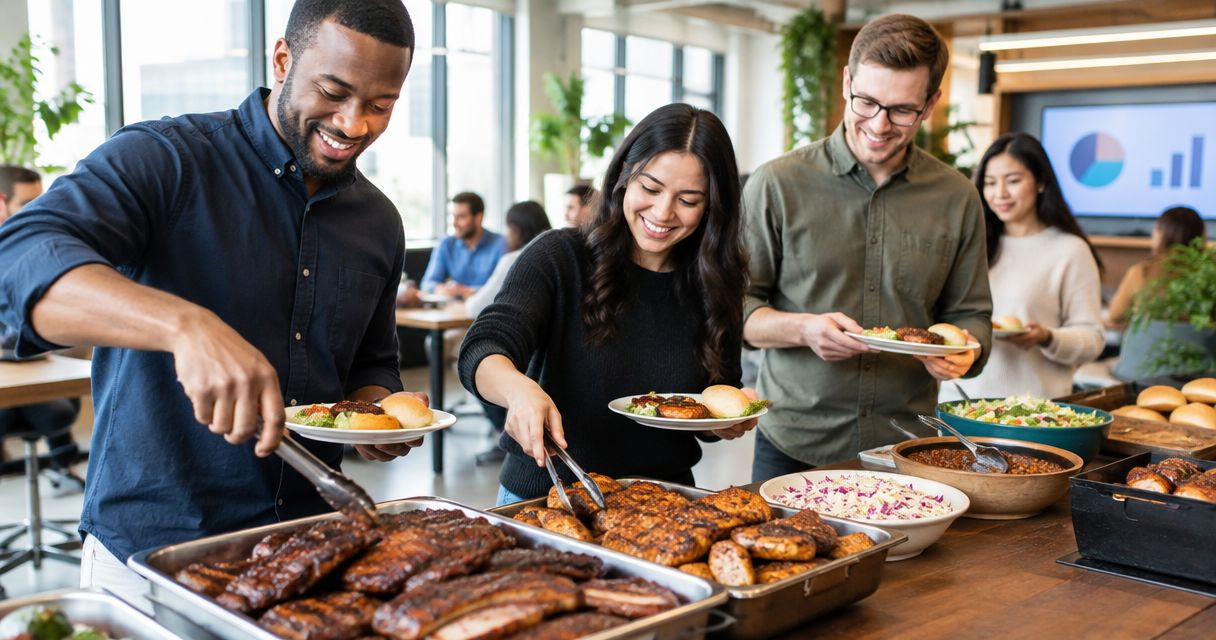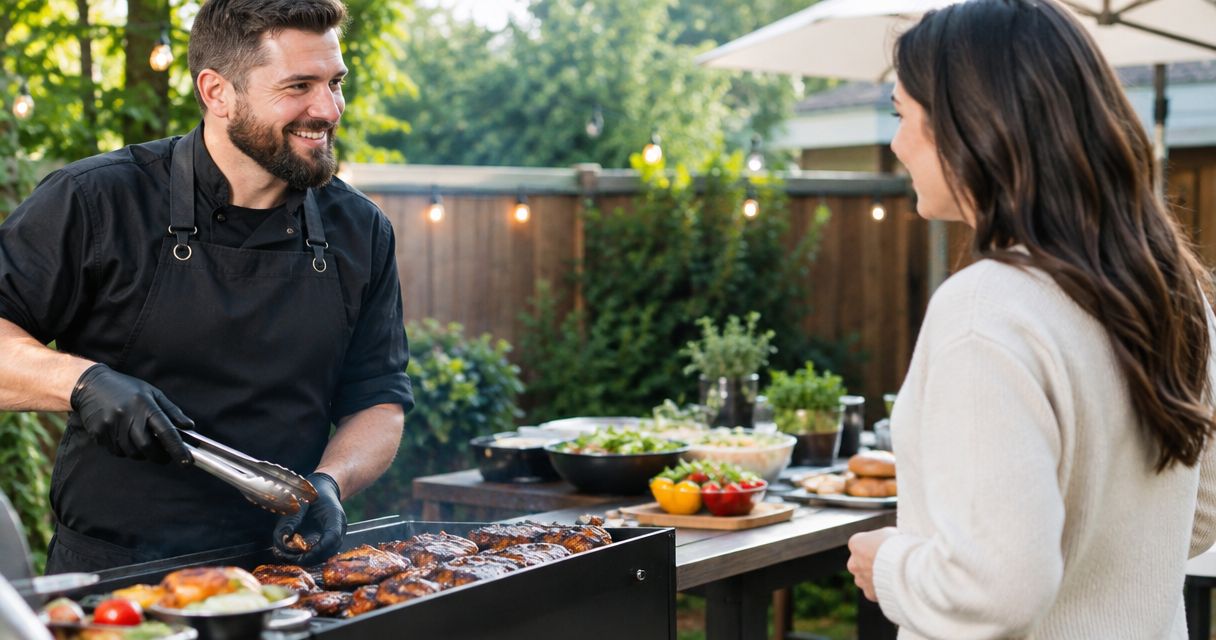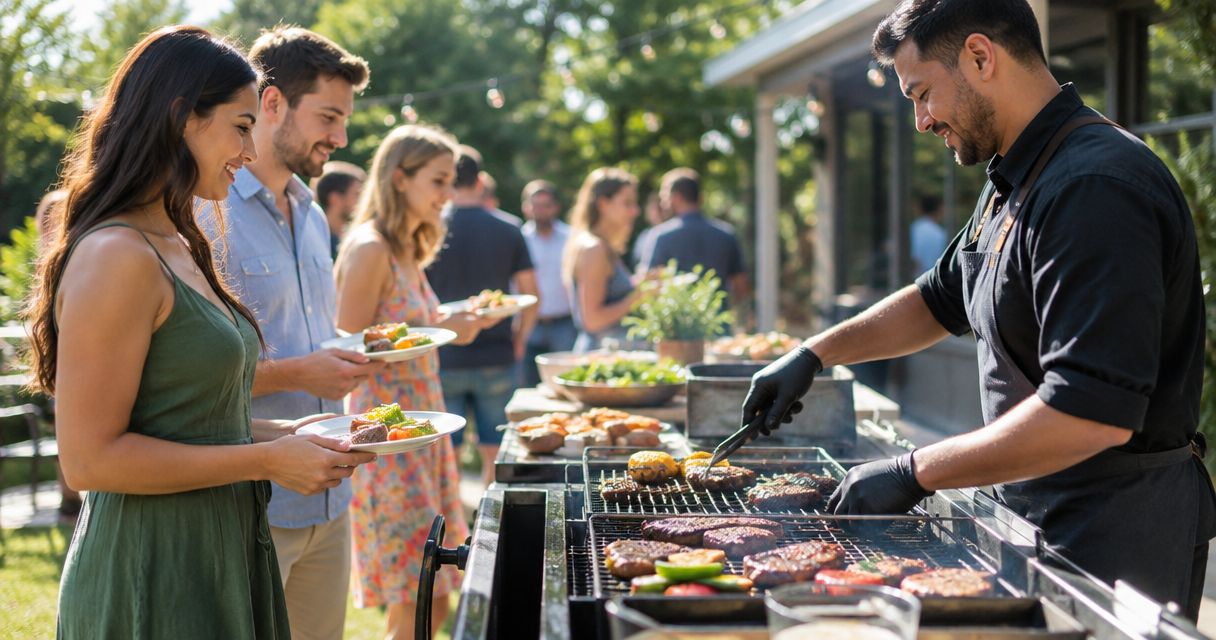
BBQ catering has no universal guest limit: the number a caterer can serve depends on the menu, kitchen capacity, staffing, venue, and meal schedule. Food quantity alone does not establish event capacity; your caterer must also confirm that the entire group can receive a safely held meal within your serving window.
- How many guests can BBQ catering serve? Confirm capacity against your headcount, menu, venue, and serving window.
- DG&G Gravy Train Catering serves BBQ and soul food for events across the Charlotte metro area.
- A confirmed guest count needs a matching preparation, transport, holding, and service plan.
- Choose your catering setup around guest flow, not just the amount of food ordered.
Why this matters
A generous spread of savory BBQ does not answer the most important planning question: can everyone get fed when you need them fed? A wedding dinner, church anniversary, and company lunch each put different demands on the same headcount.
DG&G Gravy Train Catering suits Charlotte-area hosts seeking BBQ and soul food catering for weddings, corporate events, church gatherings, and private parties. Based in Salisbury, NC, DG&G Gravy Train Catering serves those occasions across the Charlotte metro area. Confirm event-specific capacity before building your schedule around a meal.
For your 2026 event, treat guest capacity as a service commitment rather than a tray count. You need agreement on who is eating, what they are eating, where service happens, and when the meal must finish.
How many guests can BBQ catering serve at one event?
BBQ catering can serve the number of guests that a caterer confirms for your particular event—not a standard maximum that applies to every company. Establish that number through the following steps before accepting a proposal.
- Define the meal headcount. Count everyone who needs food, including hosts, children, vendors, and volunteers where applicable. Separate confirmed attendance from people who have not responded.
- Identify the menu. Share your preferred BBQ and soul food dishes, plus dietary requirements. Ask the caterer to confirm quantities for the agreed menu rather than applying a generic tray estimate.
- Set the serving window. State when guests can start eating and when service must finish. Distinguish a scheduled dinner from an open-house gathering with staggered arrivals.
- Describe the venue. Explain access, stairs, loading arrangements, serving space, and available equipment. Ask what the caterer needs from you or the venue.
- Confirm the service arrangement. Establish who transports, sets up, serves, replenishes, and clears the food. Do not assume those tasks are included.
- Get written confirmation. Have the proposal identify the accepted headcount, menu, location, timing, and responsibilities. Check how changes to attendance affect that agreement.
An accepted headcount is useful only when it comes with an agreed service plan. A statement that a kitchen can prepare enough food does not establish how that food will reach your guests.
Compare service arrangements before choosing
The arrangements below are planning options, not a statement that a particular caterer offers each one. Ask which configurations fit your venue and confirmed headcount.
| Service arrangement | Best for | Planning advantage | Limitation to resolve |
|---|---|---|---|
| Host-managed buffet | Hosts with designated people to manage the meal | Keeps serving decisions with your event team | Your team must handle setup, replenishment, and safe holding |
| Staff-managed buffet | Events needing dedicated meal supervision | Assigns serving and replenishment responsibilities | Staffing, space, and responsibilities need explicit agreement |
| Separate serving stations | Venues with room to divide guest traffic | Allows the serving plan to distribute guests across locations | Each station needs food, equipment, and a replenishment plan |
| Staggered meal service | Events where groups eat at scheduled times | Separates arrivals instead of releasing everyone together | Later groups still need safely held food and reliable timing |
Do not select a format from the guest count alone. A room with limited access presents a different challenge from a venue with clear routes to several serving areas, even when attendance is identical.
Why BBQ catering capacity varies
Guest capacity changes when the work required to feed each guest changes. These are the factors to discuss for your 2026 gathering:
- Menu complexity. Each dish needs its own preparation, transport, holding, and replenishment arrangements. Ask how your chosen menu affects the proposed service plan.
- Serving window. Feeding everyone during a scheduled break creates a different task from serving guests as they arrive throughout an event.
- Staff responsibilities. Preparing food, carrying trays, replenishing dishes, and assisting guests are separate jobs. Identify who handles each one.
- Venue layout. Doorways, stairs, loading access, table placement, and guest routes all belong in the capacity discussion.
- Holding equipment. Food needs suitable temperature control before and during service. Ask what equipment is required and who supplies it.
- Dietary requirements. Separate meals need clear identification and a distribution plan. Discuss allergy concerns directly rather than assuming a dish is suitable.
Avoid asking only whether a caterer handles large events. Describe your actual event and ask whether the complete plan works for that headcount.
Match the meal schedule to your gathering
The occasion matters because it determines when people reach the food. Use these event patterns to describe your needs, not as automatic capacity ratings.
Weddings: best for a coordinated meal release
For a wedding, connect dinner service to the reception schedule. Tell the caterer about speeches, photographs, and any other activity that affects when guests will eat.
If tables will be released in sequence, decide who makes those announcements. Keep the serving route clear of other activities so guests are not crossing the room in competing directions.
Corporate events: best for a defined lunch window
For a corporate meal, share the actual break schedule and whether employees eat together or in shifts. Include the time people need to return to work or attend the next session.
Ask how meal distribution fits that window. A proposal should address the schedule you have, not depend on extending a break that your event cannot change.
Church gatherings and private parties: best for clear host roles
For a church gathering or family celebration, identify volunteers and hosts who will help with the meal. Warm hospitality works better when everybody knows their job.
If arrivals are staggered, explain that before the menu is finalized. Late arrivals still need a planned meal, while early guests should not have to wait for an unclear serving time.
Build a serving layout that supports your headcount
A serving area needs more than room for trays. Give guests a clear place to enter, collect their meal, and leave without blocking people behind them.
Walk through the route from a guest's perspective. Check whether reaching drinks, utensils, or seating requires crossing back through the food queue, and move those items where the venue permits.
Use this sequence when reviewing the setup:
- Guest entry: identify where the food queue begins.
- Meal service: establish where guests receive or select food.
- Replenishment access: preserve a route for the people replacing dishes.
- Guest exit: direct guests away from the serving area toward seating.
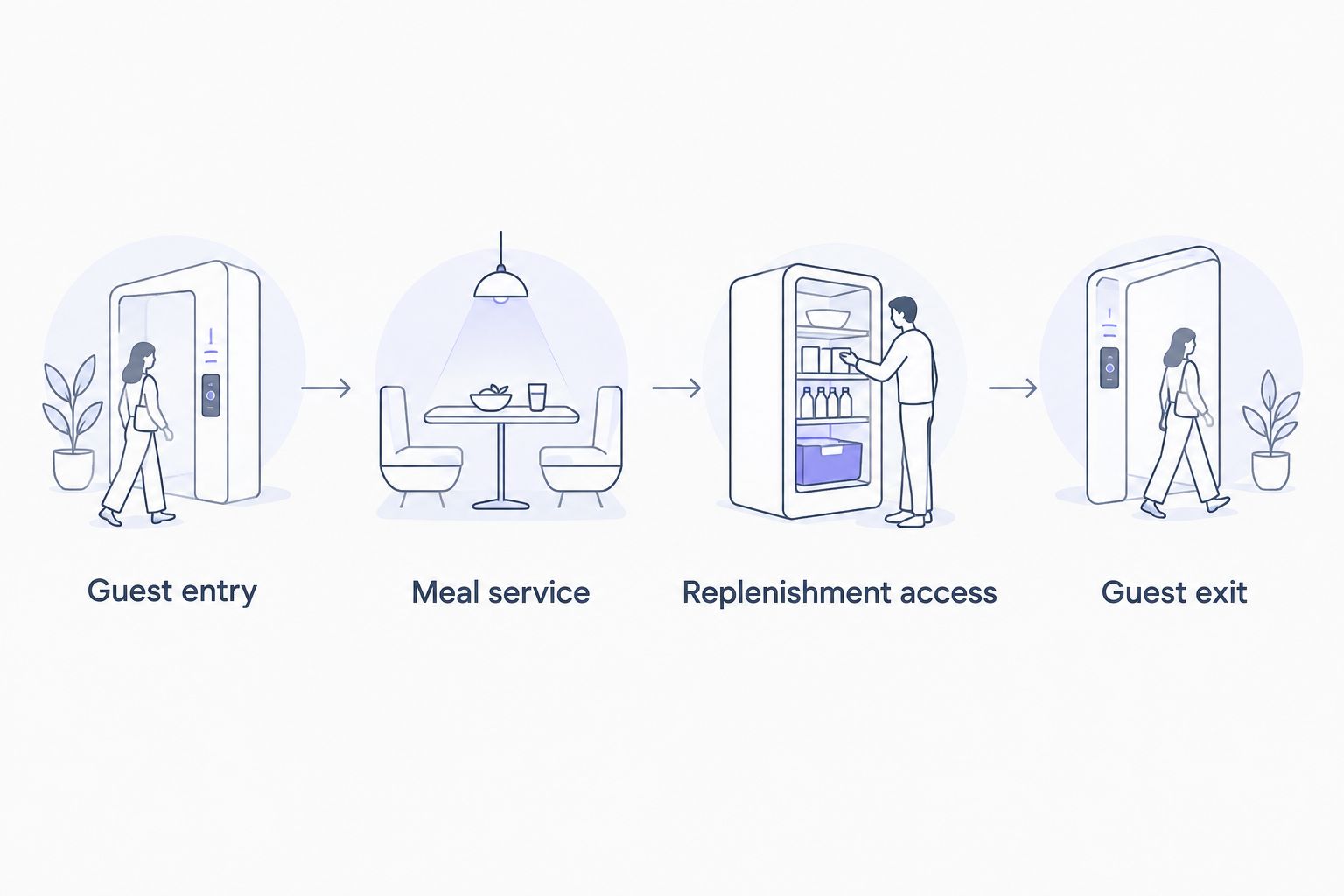
Keep accessibility part of the layout conversation. Ask whether guests who need assistance can receive a meal without negotiating a crowded queue, and assign someone to help rather than leaving the task unclaimed.
Before your 2026 event, review the layout with both the venue and caterer. Each should understand the same setup; a seating diagram alone does not explain how food will move.
Safe holding is part of guest capacity
The FDA Food Code sets hot-holding requirements for foods that need time and temperature control for safety at 135°F or above, and cold-holding requirements at 41°F or below. These are food-safety thresholds, not guest-capacity ratings or instructions for cooking every BBQ dish.
For previously cooked and cooled food being reheated for hot holding, the FDA Food Code generally calls for 165°F for 15 seconds, reached within 2 hours; specified exceptions apply. Ask the caterer to manage the requirements that apply to the actual menu and service method.
Your role is to clarify responsibility, not supervise the kitchen. Establish who provides holding equipment, monitors food during service, and handles the end of the meal.
For a 2026 outdoor gathering, share the setup conditions before the event. Do not build the plan around leaving trays on a table without an agreed food-safety arrangement.
What should I send when requesting a guest-capacity confirmation?
Send an event brief that makes the meal understandable without a string of follow-up guesses. Include practical details rather than describing the gathering only as small, medium, or large.
Your brief should cover:
- Event date, venue, and address.
- Expected attendance and current RSVP status.
- Everyone who needs a meal beyond the main guest list.
- Preferred menu and dietary requirements.
- Meal start time and required finish time.
- Whether guests arrive together or throughout the event.
- Available serving space and known access restrictions.
- Tasks you expect the caterer, venue, and hosts to handle.
Ask for a clear answer to this question: Can you serve this headcount, with this menu, at this location, within this meal window? Then check that the written proposal reflects the answer.
Discuss Your Event Headcount
Share your guest count, venue, menu preferences, and meal schedule with DG&G Gravy Train Catering.
Can I add guests after confirming BBQ catering?
Guest additions require the caterer's approval and an updated plan. Ask about the final headcount deadline and change process before you commit, then submit additions through that process.
Do not assume extra attendees can be accommodated because the menu is served buffet-style. Additional guests affect food quantities and can also change the service arrangement.
Does a buffet automatically serve more guests?
A buffet does not establish a guest limit by itself. Capacity still depends on food quantities, holding equipment, guest movement, staffing, and the meal window.
Ask how the proposed buffet will be replenished and managed. A serving table is only part of the system needed to feed your group.
Do children, vendors, and volunteers count as catering guests?
Count children, vendors, and volunteers whenever they need a meal. Identify those groups separately so the caterer can confirm the appropriate portions and distribution arrangements.
Avoid subtracting them from the order simply because they are not part of the main seating plan. A person working behind the scenes still needs an agreed meal if you are responsible for feeding them.
FAQ
How many guests can BBQ catering serve at one event?
BBQ catering has no universal guest maximum. Confirm the headcount with the caterer against your menu, venue, staffing, holding equipment, and serving window.
Can BBQ catering work for a small family gathering?
BBQ catering can be planned for a family gathering when the caterer accepts the headcount and service requirements. Ask about ordering requirements and who handles setup, serving, and cleanup.
Is buffet service better than separate serving stations?
Buffet service and separate serving stations solve different layout needs. Compare the available space, guest routes, replenishment access, and staffing before choosing either arrangement.
How do I confirm catering capacity for my 2026 wedding?
Confirm your wedding headcount alongside the menu, reception schedule, venue layout, and service responsibilities. Get the accepted plan in writing before treating capacity as settled.
What temperature should hot catered food be held at?
The FDA Food Code sets hot holding for foods requiring time and temperature control for safety at 135°F or above. The caterer should manage the requirements that apply to your menu and service method.
Should I include event staff in the catering headcount?
Include event staff whenever you are responsible for providing their meals. Identify staff meals separately so quantities, timing, and distribution are agreed before the event.
Does DG&G Gravy Train Catering serve events outside Salisbury?
DG&G Gravy Train Catering serves weddings, corporate events, church gatherings, and private parties across the Charlotte metro area. Confirm your venue and event-specific requirements directly.
One last thing
Ask who eats last. The answer exposes gaps that a headline guest count can hide: volunteers finishing their duties, vendors taking a later break, or relatives arriving after the main meal.
Before your 2026 gathering, give those people a place in the serving plan. Y'all deserve to enjoy the occasion without discovering that the folks helping everyone else were never included.