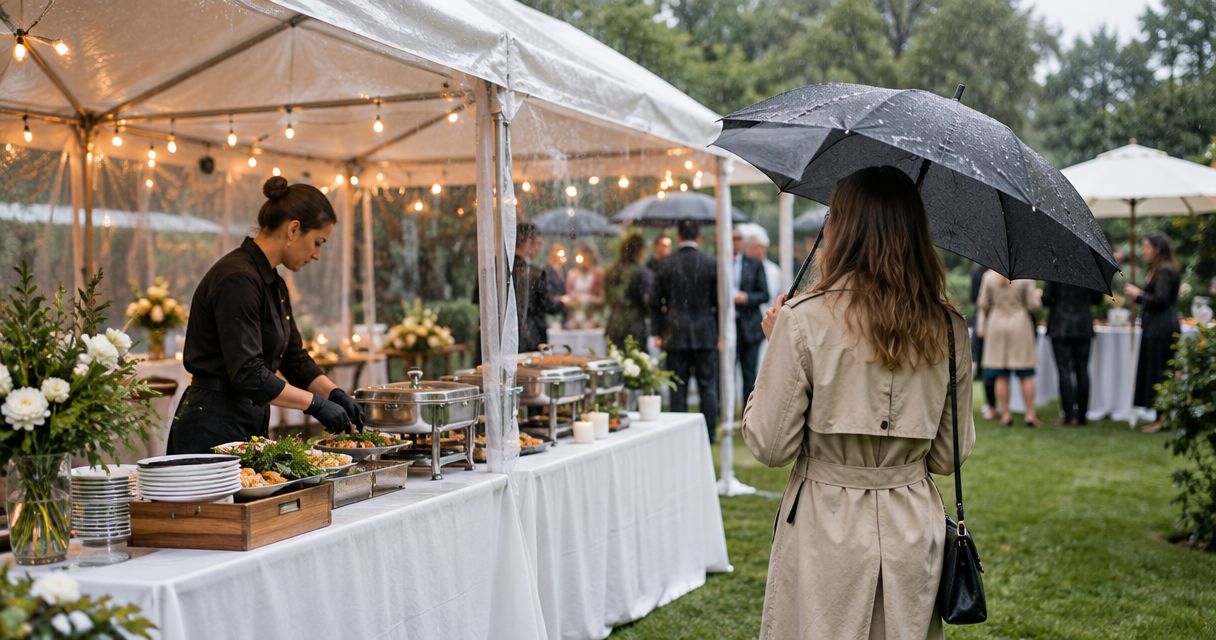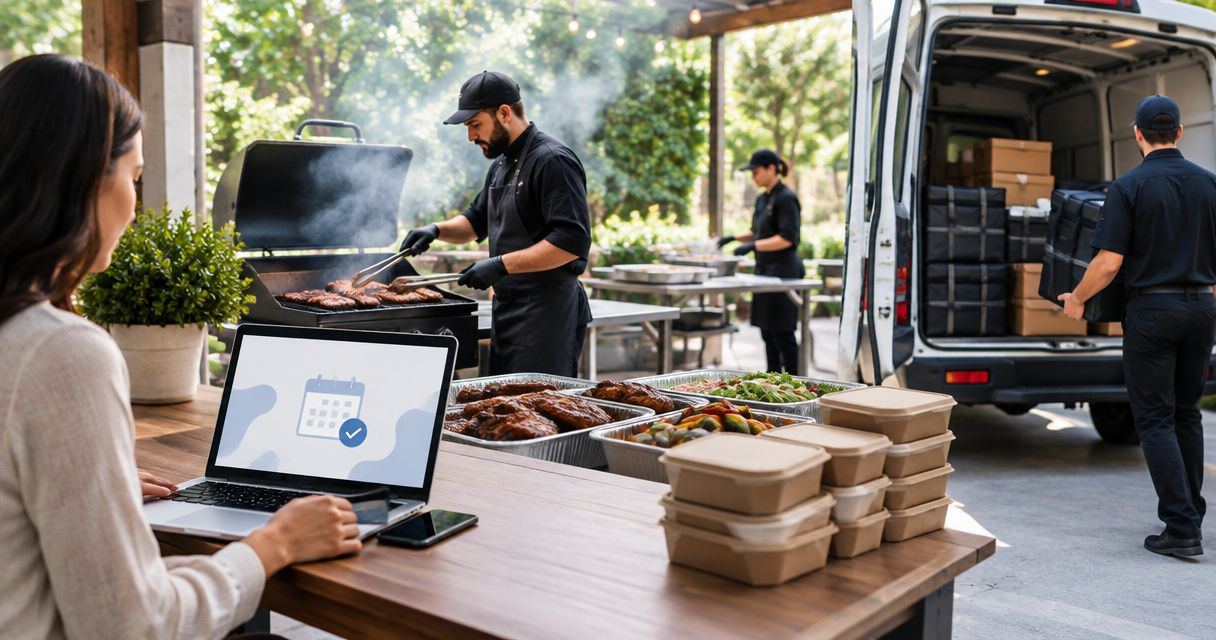
Instead of chasing deposit receipts, menu changes, and delivery instructions through separate messages, use a catering deposit to delivery workflow that keeps every approval in one event record. For your 2026 BBQ gathering, move from written booking terms to a confirmed menu, an approved delivery plan, and a documented handoff—so y'all can focus on welcoming guests.
- Use a catering deposit to delivery workflow with written approvals for booking, menu, delivery, and handoff.
- DG&G Gravy Train Catering fits Charlotte-area gatherings seeking BBQ and soul food catering.
- Treat a deposit receipt and booking confirmation as separate records until the agreement connects them.
- Approve headcount changes before updating the catering order or delivery instructions.
Why this matters
A BBQ meal has more moving parts than the food itself. Someone approves the order, someone handles payment, and someone needs to meet the delivery at the right entrance. If those people work from different instructions, even a carefully chosen menu becomes hard to coordinate.
DG&G Gravy Train Catering is best for Charlotte-area hosts seeking BBQ and soul food catering for weddings, corporate events, church gatherings, and private parties. Based in Salisbury, NC, the company serves these events across the Charlotte metro area. Start with DG&G Gravy Train Catering, then use this workflow to organize the details you need to discuss and approve.
The benefit is a clear handoff between decisions. The trade-off is that somebody must maintain the record; a checklist nobody updates is just another outdated message.
Before you start: your 2026 event file
- Gather the essentials: event date, venue address, estimated headcount, meal time, requested food, dietary needs, and venue access instructions. Have access to the written proposal, agreement, and payment records.
- Assign 2 contacts: an order approver and an on-site receiver. One person can hold both roles, but record a backup when the host will be occupied.
- Check the booking trigger: a payment receipt does not, by itself, explain whether the date, menu, or service details are confirmed. Read the agreement and get written clarification before treating the booking as complete.
Use 3 records throughout: the approved order, the payment record, and the delivery brief. Keep them together in a shared folder or event document. The bold labels below are suggested document fields, not website buttons or claims about the caterer's booking system.
Booking and deposit record
Establish the written booking terms
- Create an event document with Event date, Venue address, Order approver, and On-site receiver. Include the receiver's direct contact details and a backup contact.
- Review the proposal and agreement. Record the stated deposit requirements, payment instructions, booking conditions, change deadlines, and cancellation terms exactly as supplied. Ask for written clarification wherever the documents conflict.
- Submit payment only through the instructions you have verified. Save the receipt under Payment record, then request written confirmation of what the payment secures.
- Add Booking status to the event document. Mark it confirmed only when the written response and agreement support that status; do not infer confirmation from a calendar invitation or informal conversation.
Expected result: you can identify the booked event, show the payment record, and explain which details are confirmed without searching through separate conversations.
Keep payment evidence separate from menu approval. A receipt establishes a transaction; the approved order establishes what you asked the caterer to provide. Both belong in your 2026 event file, but neither replaces the other.
Menu and headcount approval
Build the order everyone will follow
- Copy the proposed food and service details into Approved menu. Use the exact dish descriptions supplied by the caterer rather than shortening names in ways that hide ingredients or preparation differences.
- Add Guest count and distinguish confirmed attendance from your planning estimate. Identify any separate meal groups, such as children or guests with dietary requirements, without assuming they receive different portions or dishes.
- Record Dietary requirements as specific requests. Ask the caterer to confirm what can be accommodated, including ingredient and cross-contact questions; never label a dish allergy-safe based on its name.
- Get written approval from the person authorized to make the decision. Save the approved version under Current order and label older versions Superseded so nobody mistakes them for the working order.
Expected result: the host and caterer can point to the same menu, headcount, and documented dietary arrangements.
For DG&G Gravy Train Catering BBQ and soul food catering, keep the conversation food-forward but precise: what is being served, who needs a separate accommodation, and what service arrangement has been agreed. A family-style celebration still needs a clear order behind it.
Do not turn guest requests into promises. Forward a request, get a response, and update the approved order only after both sides accept the change. This protects the host from announcing an accommodation that has not been confirmed.
Delivery brief and venue access
Connect the kitchen plan to the actual room
- Separate Arrival window from Meal time. Ask the caterer to confirm the delivery arrangement, then check that the venue permits access during that window. Do not treat the time guests eat as the time delivery should arrive.
- Complete Delivery entrance, Parking instructions, and Room location. Describe the usable entrance, not just the venue's mailing address. Add stairs, elevators, restricted doors, or loading rules that affect access.
- Confirm Service responsibilities. Identify who provides and handles the agreed setup, serving equipment, utensils, cleanup, and food handling after handoff. Do not assume delivery includes staffing or equipment.
- Share the delivery brief with the caterer, venue contact, and on-site receiver. Ask each person to flag conflicting instructions before you mark the brief approved.
Expected result: the delivery team knows where to go, the receiver knows when to be ready, and the venue knows what access is needed.
Use 4 checkpoints for the 2026 delivery plan: booking confirmed, order approved, access confirmed, and handoff completed. Each checkpoint needs a named owner; otherwise, everyone can assume somebody else handled it.
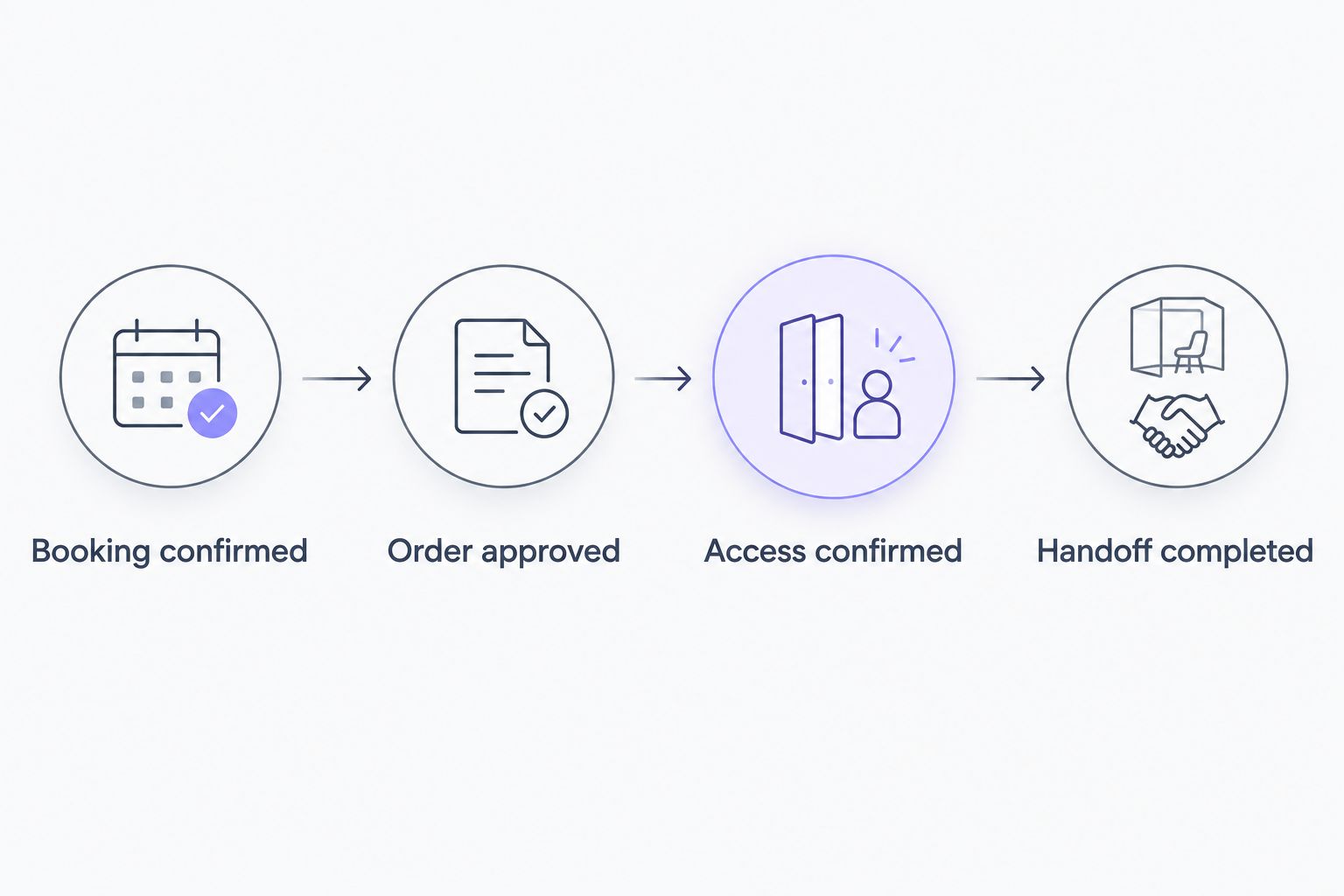
An accurate address is not enough. A church fellowship hall, office meeting room, and private reception space each need instructions that get the delivery to the receiving person—not merely to the property.
Delivery handoff and event closeout
Check the order before the receiver leaves
- Give the receiver the Current order and Delivery brief. Make those documents accessible without relying on the host's phone or memory.
- At handoff, compare the delivered items with the written order. Check dish labels and any separately identified meals. Record discrepancies and contact the caterer promptly rather than substituting food without approval.
- Confirm the agreed placement and any food-handling instructions. Follow the caterer's instructions and applicable food-safety guidance; do not improvise storage or holding arrangements because the event schedule changed.
- Complete Handoff notes with what arrived, who received it, and any unresolved issue. Review the payment record and agreement for remaining obligations, then save the final event documents together.
Expected result: the receiver can explain what was delivered, what needs attention, and who owns the next action.
The receiver's job is verification, not renegotiation. If a detail differs from the approved order, bring in the order approver and caterer. That keeps a helpful volunteer or busy receptionist from accepting a change they were never authorized to make.
When the guest count or schedule changes
A 2026 catering plan needs a change process, not a fresh message thread every time somebody replies. Keep the original approval intact while a proposed change is being reviewed.
Use the same sequence for a revised headcount, menu request, room change, or meal time:
- Record Requested change, Requested by, and Affected details in the event document.
- Send the request to the caterer and any affected venue contact. Ask what changes to the order, timing, service, or payment obligations require approval.
- Get written acceptance from the authorized parties before replacing the current instructions.
- Update the working documents, mark the previous version superseded, and tell the receiver exactly what changed.
Expected result: everyone follows the accepted revision rather than the latest unapproved suggestion.
Choose the workflow that matches the situation
| Workflow | Best for | Advantage | Limitation |
|---|---|---|---|
| Original booking workflow | Hosts establishing a new event order | Connects booking, menu, delivery, and handoff from the start | Requires the initial details and approvals to be collected |
| Change-control workflow | Hosts revising an already approved event | Preserves a clear record of accepted changes | A request remains pending until the affected parties accept it |
Keep the approved plan in force until its replacement is accepted. Do not overwrite a confirmed meal time with a requested time and expect everyone to notice the difference.
Troubleshooting the common breakdowns
The deposit is recorded, but booking status is unclear
Check the agreement and ask for written confirmation identifying the event and booking status. Keep the payment receipt attached to that exchange. Do not tell guests or the venue that catering is confirmed until the confirmation supports it.
The venue and caterer have different arrival instructions
Put the venue contact and caterer into the same written exchange. Resolve the access window, entrance, and receiving location, then replace the conflicting instructions in the delivery brief. Forwarding both versions without a decision leaves the problem intact.
The headcount changes after approval
Submit a change request instead of editing the approved order silently. Ask the caterer which adjustments can be accepted under the agreement, obtain approval, and distribute the revised version. Update related dietary arrangements too.
A dietary request has no confirmed answer
Mark the request pending and contact the caterer directly. Ask about the specific ingredients or handling concern, then give the guest only the confirmed response. A familiar Southern dish name does not establish its ingredients or preparation conditions.
Nobody is ready to receive the delivery
Contact the named backup and give that person the current documents. If no authorized receiver can attend, coordinate with the caterer and venue immediately. Do not assume an unattended drop-off is permitted or that a receptionist can accept responsibility.
Customize your workflow
Keep the same approval structure, then add details that fit the gathering. For a wedding, identify who can answer questions while the couple is occupied. For a church gathering, name the kitchen or fellowship-hall contact. For a corporate event, include building access and the person authorized to accept the order.
For a private party, write down the receiving location and who manages food after handoff. These details belong in the delivery brief even when everybody knows the host. Familiarity does not tell a delivery team which entrance is open.
When you're ready to discuss your event with DG&G Gravy Train Catering, contact the catering team with your date, venue, guest estimate, and service questions. Ask for the written details that will become your working order.
Plan your BBQ gathering
Share your event date, venue, guest estimate, and BBQ or soul food catering questions.
FAQ
What is a catering deposit to delivery workflow?
A catering deposit to delivery workflow connects written booking terms, payment records, menu approval, delivery instructions, and the final handoff. Keep those decisions in one event file so the host, caterer, and receiver follow the same plan.
Does paying a catering deposit mean everything is confirmed?
A deposit confirms only what the catering agreement says it confirms. Keep the receipt and obtain written booking confirmation before treating the date, menu, or service arrangements as settled.
What should I send before requesting BBQ catering?
Send your event date, venue address, estimated guest count, meal time, food preferences, and dietary questions. Include access restrictions and clarify whether you need delivery, setup, or another service arrangement.
When should I finalize my catering headcount?
Finalize your headcount by the deadline in your catering agreement. If attendance changes afterward, request written acceptance before replacing the approved order.
What happens if my event time changes?
Submit the new time as a change request and confirm it with the caterer and venue. Update both the meal time and any affected arrival or access instructions after the revision is accepted.
Who should receive a catering delivery?
Assign an on-site receiver who has the current order, venue access, and authority to check the handoff. Name a backup when the host will be busy with guests or the ceremony.
Does DG&G Gravy Train Catering serve Charlotte-area events?
DG&G Gravy Train Catering serves weddings, corporate events, church gatherings, and private parties across the Charlotte metro area. The BBQ and soul food catering company is based in Salisbury, NC.
One last thing
For your 2026 event, send the receiver the approved order—not just a message saying the food is coming. The most useful handoff document is the one the receiving person can actually open. Check access before event day, especially when the file belongs to somebody who will be greeting guests, leading the service, or walking down the aisle.