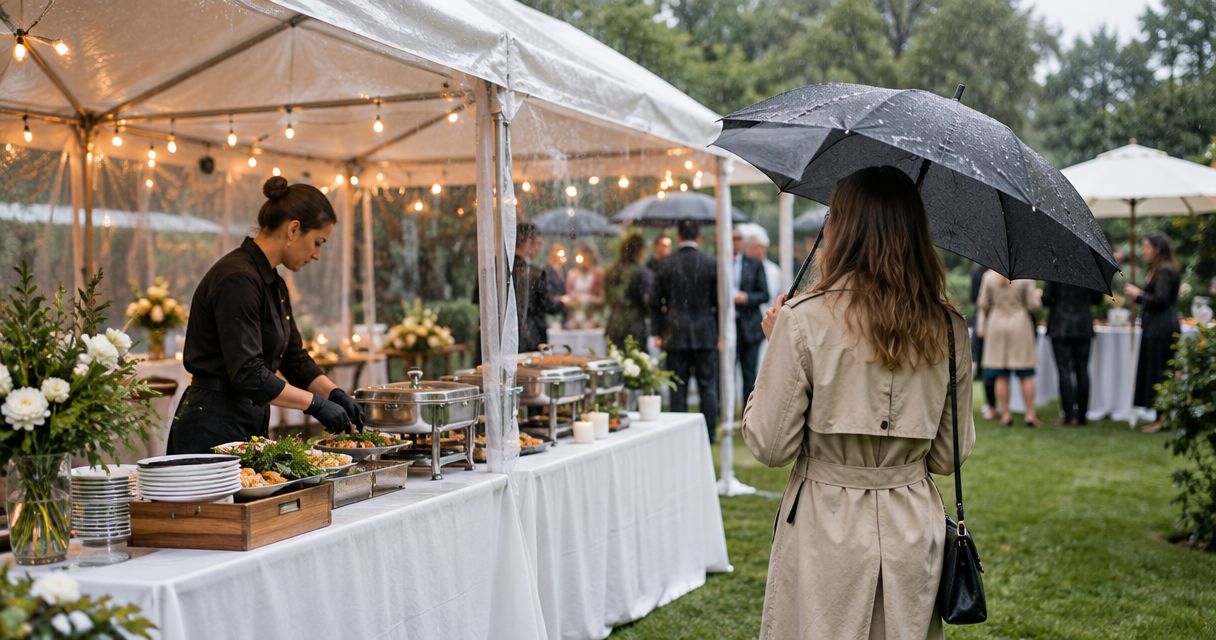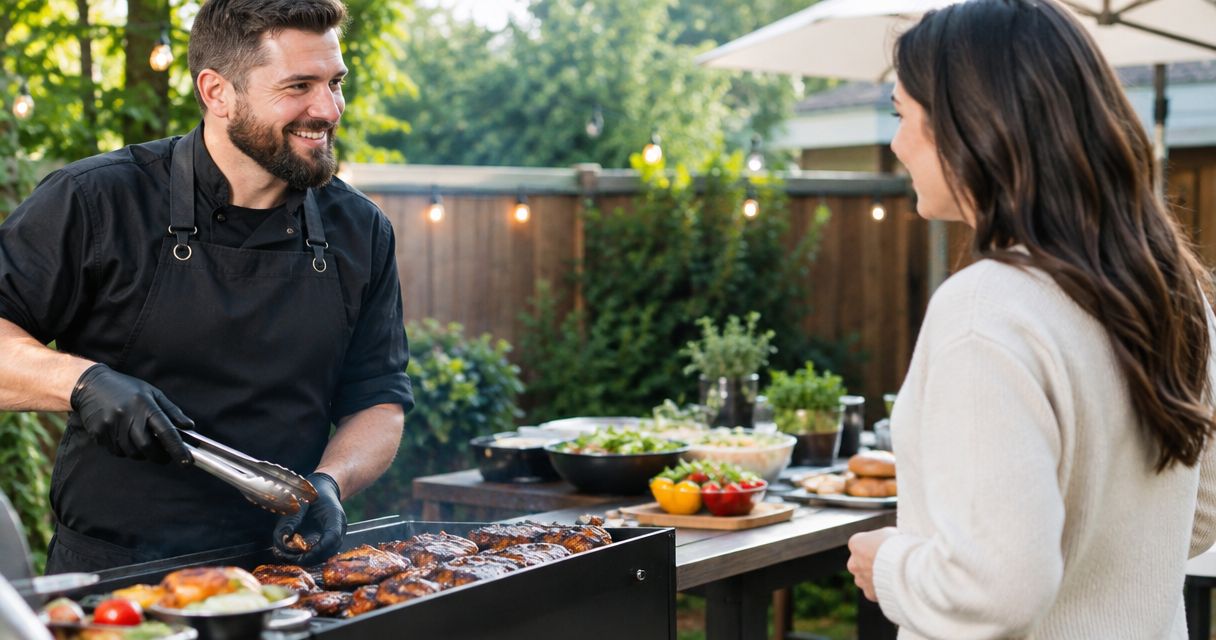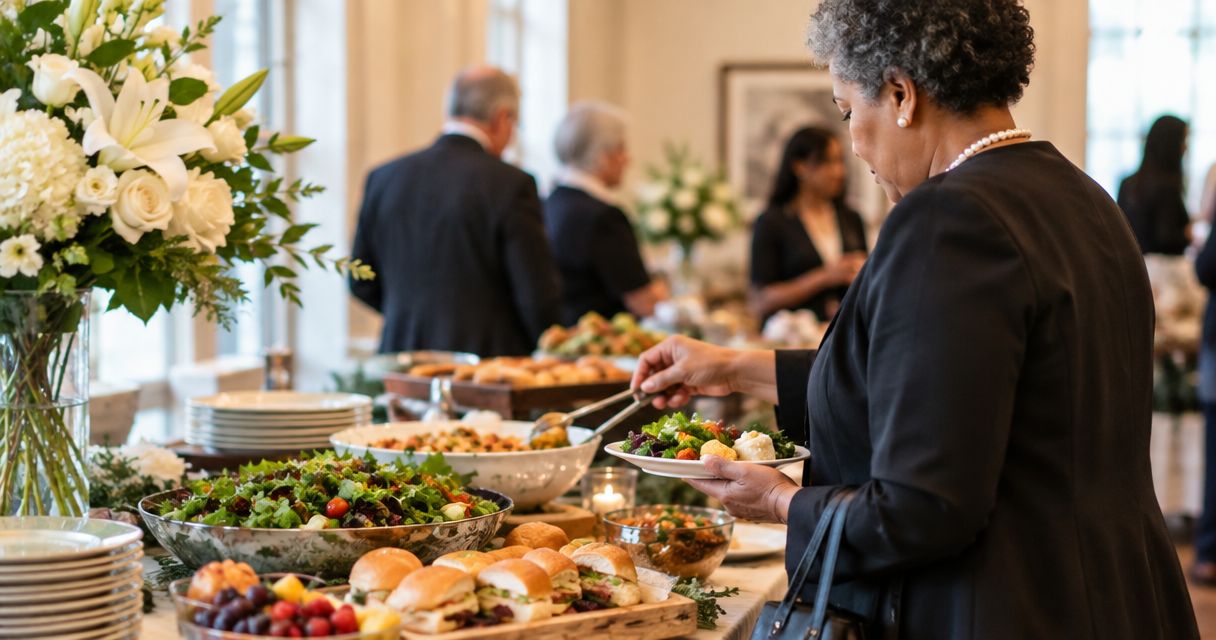
Best overall: a classic soul food buffet; best for a BBQ-centered gathering: a BBQ buffet; best simple option: sandwiches with easy-to-serve sides. For families considering the best catering menu for a funeral repast in Salisbury, NC, Gravytraincatering is a local BBQ and soul food catering option; the menus below are planning ideas, not confirmed packages.
- The best catering menu for funeral repast Salisbury NC families can plan starts with familiar food and straightforward service.
- A classic soul food buffet is the default recommendation for a seated gathering after the service.
- Gravytraincatering offers BBQ and soul food catering in Salisbury; ask directly about your repast requirements.
- Choose sandwiches for drop-in visitors, or a vegetarian main when guests need a meat-free meal.
Why this matters
A funeral repast gives family and friends somewhere to gather, eat, and remember someone they love. The food should support that time together, not give the family another job.
For a 2026 gathering in Salisbury, start with the setting: a church fellowship hall, a private home, or another reception space. A menu that works around dining tables is different from one guests eat while standing or arriving throughout the afternoon.
Choose the service arrangement before choosing every dish. Someone must receive the food, keep it safely held, replenish serving dishes, and handle cleanup. Decide who owns those responsibilities before placing an order.
What makes the best funeral repast catering menu
Judge each menu against these practical criteria:
- Familiarity: Choose food the family welcomes. A favorite dish matters more than an elaborate spread.
- Easy eating: Consider utensils, bones, sauces, and whether guests will have a place to sit.
- Dietary coverage: Include a substantial option for guests who cannot eat the main dish. A side salad alone is not a complete substitute.
- Serving fit: Match the food to the venue’s kitchen, serving area, and approved equipment.
- Family workload: Specify who delivers, sets up, serves, replenishes, and clears away the meal.
- Timing: Build the plan around the service ending and guests arriving, including a procedure for delays.
Ask the caterer to confirm each requirement in writing. Warm, familiar food is the goal; an unclear handoff is not part of the menu.
Funeral repast menus at a glance
These are suggested menu formats to discuss with your caterer. Individual dishes, preparation methods, and service arrangements require confirmation.
| Rank and menu | Best for | Standout feature | Key limitation |
|---|---|---|---|
| 1. Classic soul food buffet | Seated family gathering | Familiar main dishes and comforting sides | Needs a clear hot-food holding plan |
| 2. BBQ buffet | Honoring a loved one’s BBQ preference | A menu centered on the food they enjoyed | Sauces and bone-in dishes need dining space |
| 3. Sandwiches and simple sides | Drop-in visitors | Easy portions without a full plated meal | Less suited to guests expecting a substantial dinner |
| 4. Vegetarian comfort-food buffet | Meat-free meal requirements | A main dish rather than side-only substitutions | Ingredients still need allergy and dietary checks |
| 5. Soup and soft-food lunch | A quieter seated lunch | Spoon-friendly dishes with a gentle serving pace | Bowls and spill control complicate standing service |
1. Classic soul food buffet: best for a seated family gathering
A classic soul food buffet is the strongest default when guests will sit down after the funeral. Build the proposed menu around a familiar main dish, satisfying sides, and bread rather than a long list of competing choices.
An example to discuss is chicken, macaroni and cheese, greens, and cornbread. These are menu suggestions, not a statement that any particular caterer supplies them or prepares them to a specific dietary standard.
For a 2026 repast, give the caterer the family’s priorities first. If a loved one had a favorite side, let that dish guide the conversation instead of adding items simply to fill the table.
Classic soul food buffet pros:
- Provides a clear main-meal structure.
- Allows you to center a meaningful family favorite.
- Works with a seated gathering where guests have plates and utensils.
Classic soul food buffet cons:
- Hot dishes need appropriate holding equipment and supervision.
- Dairy, wheat, and meat-based ingredients require careful checking.
Best for: Families hosting a seated meal in a venue with a suitable serving area.
Buy: Choose the classic soul food buffet after confirming the dishes, dietary alternatives, and serving responsibilities.
2. BBQ buffet: best for honoring a loved one’s food preference
A BBQ buffet makes sense when barbecue belongs in the family’s memories of the person being honored. Keep the proposed spread focused: a BBQ main, complementary sides, bread, and sauces served separately where practical.
Discuss whether a boneless main is suitable for your gathering. Bone-in dishes require more handling and somewhere to set discarded bones; that matters when guests are dressed for a funeral or balancing plates away from tables.
Gravytraincatering’s stated catering focus is BBQ and soul food. Ask about the specific main dishes, preparation, and service needed for your event rather than assuming the company has a fixed funeral package.
BBQ buffet pros:
- Centers a food preference that can feel personal.
- Offers a straightforward main-and-sides format.
- Lets you discuss sauce preferences separately from the main dish.
BBQ buffet cons:
- Saucy or bone-in dishes are awkward without dining space.
- A meat-centered spread needs a separate substantial vegetarian option.
Best for: Families who specifically want BBQ and have room for guests to eat comfortably.
Buy: Choose the BBQ buffet when it reflects the family’s wishes and the venue supports proper service.
3. Sandwiches and simple sides: best for drop-in visitors
A sandwich menu fits a gathering where people arrive at different times or stop by a private home after the service. Ask about manageable portions, clearly identified fillings, and sides that do not require a crowded buffet line.
A proposed menu might include assorted sandwiches, a vegetable side, and a fruit dish. Confirm how fillings will be labeled and which sandwiches meet dietary requests; removing one ingredient does not automatically make a sandwich suitable for every guest.
For 2026 planning, distinguish a short reception from a full meal. If guests are traveling or attending through a normal mealtime, tell the caterer that the food needs to function as lunch or dinner, not refreshments.
Sandwich menu pros:
- Offers clearly portioned food.
- Suits visitors who do not all sit down together.
- Makes it easier to separate and identify different fillings.
Sandwich menu cons:
- Bread and fillings introduce dietary restrictions that need checking.
- Perishable sandwiches still require temperature control.
Best for: A home gathering or reception with staggered arrivals.
Buy: Choose sandwiches when the gathering calls for simple portions rather than a formal seated meal.
4. Vegetarian comfort-food buffet: best for meat-free meal needs
A vegetarian buffet should have a real main dish, not a plate assembled from whatever sides happen to be meat-free. Discuss a vegetable-based casserole, beans prepared without meat, or another substantial main that fits the family’s preferences.
Do not assume familiar Southern sides are vegetarian. Greens and beans can be cooked with meat or broth, while casseroles can contain ingredients guests need to avoid. Ask about the actual recipe and serving utensils.
A vegetarian menu also is not automatically vegan, dairy-free, or allergen-free. Write down each requirement separately so the caterer can respond to the specific need.
Vegetarian buffet pros:
- Gives meat-free guests a complete meal option.
- Can retain a comforting main-and-sides structure.
- Makes dietary planning intentional rather than an afterthought.
Vegetarian buffet cons:
- Familiar dish names do not establish ingredient suitability.
- Shared preparation or serving equipment needs discussion when allergies are involved.
Best for: A gathering with vegetarian guests or a family requesting a meat-free meal.
Buy: Choose this menu only after the caterer confirms ingredients and the required preparation arrangements.
5. Soup and soft-food lunch: best for a quieter seated gathering
A soup-centered lunch offers an alternative when the family wants a smaller, seated gathering rather than a large buffet. Discuss soup with soft bread and a suitable accompanying dish so the meal is more than a bowl on its own.
Choose this format because it matches the setting and guest preferences, not because you assume every older guest needs soft food. Anyone with a prescribed swallowing or texture requirement needs food that meets their individual instructions; ordinary soup is not a medical substitute.
For a 2026 church-hall lunch, confirm bowls, spoons, table space, and who will serve hot liquids. This menu loses its practical advantage if guests must carry full bowls across a crowded room.
Soup lunch pros:
- Supports a quiet, seated meal.
- Offers spoon-friendly menu choices.
- Keeps the meal focused when the family wants a limited spread.
Soup lunch cons:
- Hot liquids create carrying and spill concerns.
- A light soup needs suitable accompaniments to serve as a full meal.
Best for: A smaller gathering with seating and controlled serving.
Buy: Choose the soup lunch when the venue and guest needs support it; skip it for a standing reception.
How these menus are ranked
The classic soul food buffet ranks first because it combines a recognizable meal structure with room for family preferences. BBQ follows when the loved one’s tastes make it the better fit. Sandwiches, vegetarian mains, and soup each solve a different gathering requirement.
This is a ranking of menu formats, not a taste test or a comparison of Salisbury catering businesses. The deciding criteria are familiarity, easy eating, dietary coverage, serving fit, family workload, and timing.
Turn the menu idea into a clear catering request
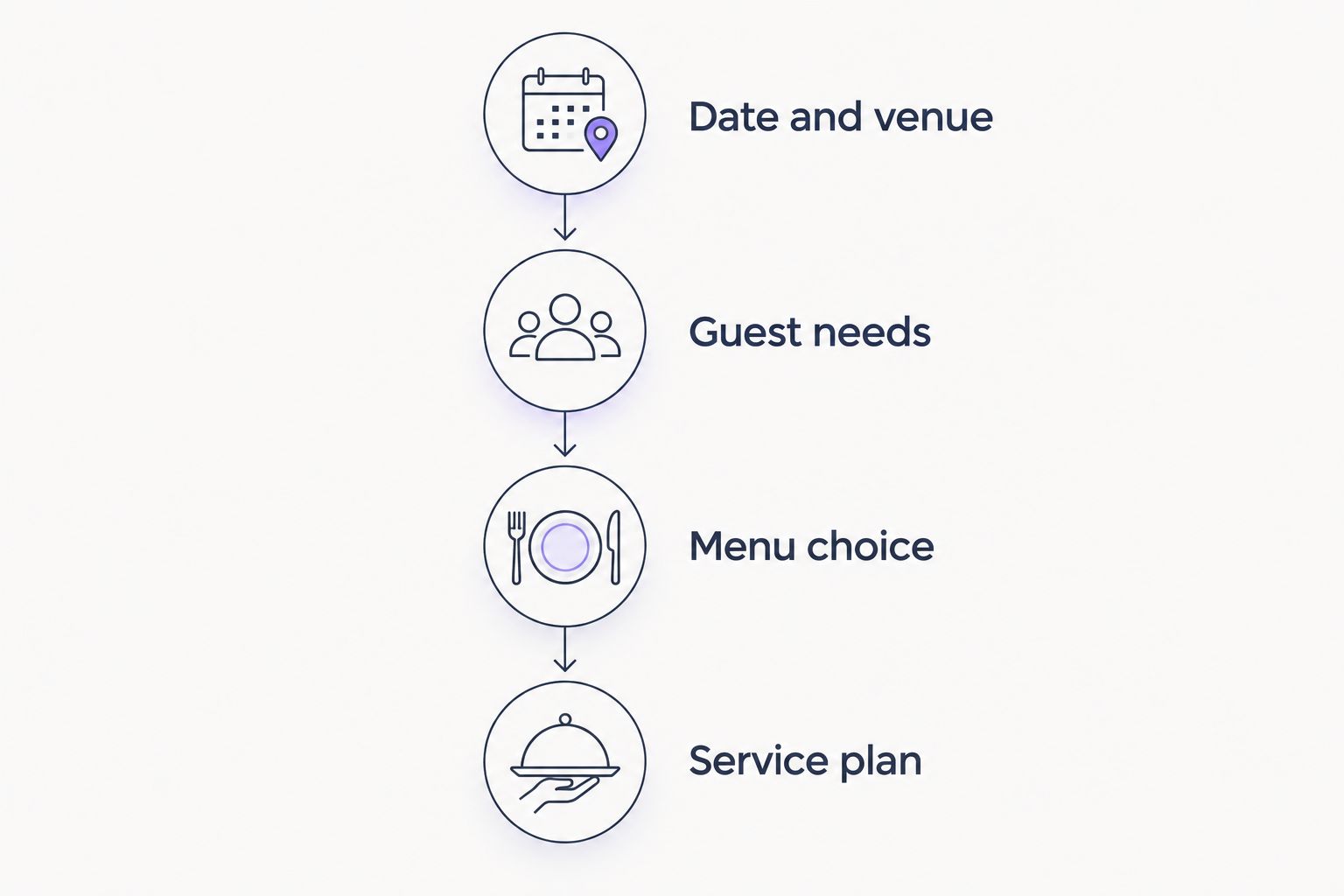
Before requesting a quote, gather the details below. A short, complete brief gives the caterer something concrete to answer and keeps family members from having to repeat decisions.
Date and venue
Provide the event date, reception address, access arrangements, and expected service ending time. Ask the venue what food-service equipment is permitted and whether kitchen access is included.
Guest needs
Give your expected attendance and explain how firm that count is. List dietary requests separately, including allergies, vegetarian meals, and any individual texture requirements.
Menu choice
Name your preferred menu format and the dishes that matter most. Separate essential requests from flexible choices so substitutions do not erase the family’s priorities.
Service plan
Specify whether you need food delivery, setup, attended service, or cleanup, then ask what the caterer actually provides. Establish who receives the order and who communicates changes while the family attends the funeral.
For your 2026 event, send these details together rather than in scattered messages. Ask Gravytraincatering whether the requested funeral repast arrangements fit its catering service, and get the agreed scope in writing.
Discuss your family’s catering needs
Share your Salisbury venue, guest needs, and preferred BBQ or soul food menu.
Keep the meal safe when timing changes
Funeral schedules and guest arrivals need a food-holding plan. Follow the USDA’s published food-safety guidance: keep hot food at 140°F or above and cold food at 40°F or below.
Perishable food should not remain outside safe temperature control for more than 2 hours, or 1 hour when temperatures exceed 90°F. These limits apply to the food’s handling conditions, not simply the time printed on the reception invitation.
Ask who monitors the food, replenishes serving dishes, and handles leftovers. If the service runs late, contact the person responsible for catering rather than leaving food unattended and hoping the schedule catches up.
Which funeral repast menu should you choose?
Choose the classic soul food buffet unless the family’s preferences or venue point clearly elsewhere. It gives you a familiar starting point without requiring a complicated menu.
Choose BBQ to honor a specific food preference. Choose sandwiches for staggered arrivals, a vegetarian main for meat-free requirements, or soup for a smaller seated lunch. Do not combine every option just to cover every possibility; confirm the actual guest needs first.
FAQ
What’s the best catering menu for a funeral repast in Salisbury, NC?
A classic soul food buffet is the default recommendation for a seated funeral repast in Salisbury, NC. Choose familiar dishes, include a substantial dietary alternative, and confirm the serving arrangements.
Is BBQ appropriate for a funeral repast?
BBQ is appropriate when it matches the family’s wishes and the person being remembered. Choose dishes that guests can eat comfortably in the available seating and serving space.
Does Gravytraincatering provide funeral repast packages?
Contact Gravytraincatering directly to discuss funeral repast requirements. The company’s stated service is BBQ and soul food catering in Salisbury and across the Charlotte metro area; confirm the menu and event arrangements before ordering.
What should I serve vegetarian guests at a repast?
Serve a substantial vegetarian main rather than relying on side dishes alone. Confirm broth, cooking fats, ingredients, and serving arrangements with the caterer.
Are sandwiches better than a hot buffet after a funeral?
Sandwiches fit staggered arrivals, while a hot buffet fits a seated meal. Both formats require appropriate food handling and a clear plan for serving guests.
What information should I give a funeral repast caterer?
Provide the date, venue, expected attendance, dietary needs, preferred menu, and required service. Identify a contact person who can receive the food and communicate changes during the funeral.
Who should handle the food while the family attends the service?
Designate a contact person and agree on the catering handoff before the funeral. Confirm responsibility for receiving, temperature control, replenishment, and cleanup rather than leaving those tasks unassigned.
One last thing
Put the family’s favorite dish ahead of an extra menu choice. A familiar food can make the meal feel personal without turning the repast into a large production.
Then appoint a contact person outside the immediate grieving family to handle the catering handoff. Good food matters, y’all, but letting the family sit down and be together is the point.