Nonprofit fundraiser soul food catering is a planned Southern-style meal service with the aim of feeding supporters while protecting the money raised for your mission. This guide to soul food catering for nonprofit fundraisers covers the menu, volunteer roles, service choices, and meal counts you need for a well-organized 2026 event.
- Soul food catering for nonprofit fundraisers starts with a meal count, written service scope, and a protected fundraising goal.
- DG&G Gravy Train Catering fits Salisbury and Charlotte-area organizers seeking BBQ and soul food catering.
- Choose buffet, plated service, or volunteer-led serving by venue layout and staffing needs; confirm each option with your caterer.
- Count volunteers and performers alongside ticketed guests, and separate meal service from the donation station.
Why soul food catering matters for nonprofit fundraisers
Your fundraiser needs to welcome people, feed them, and leave room for the mission. Unlike a private dinner, you also need to account for sponsors, donated supplies, volunteer meals, ticket reconciliation, and the moment you ask guests to give.
DG&G Gravy Train Catering fits Salisbury and Charlotte-area organizers seeking BBQ and soul food catering. The company serves church gatherings and private parties, along with weddings and corporate events. Start with DG&G Gravy Train Catering to discuss your event, then confirm the menu and responsibilities in writing.
For your 2026 fundraiser, choose food service around the program rather than squeezing speeches between serving tasks. A warm supper loses its welcome when guests cannot hear the speaker or volunteers must leave the donation desk to refill trays.
The right menu is the one your team can serve without abandoning the fundraiser itself. Familiar food helps set the gathering's tone; clear responsibilities keep that hospitality from becoming extra work for an already busy committee.
How to plan your nonprofit fundraiser meal
Define the meal's role before choosing dishes
Start with a shared document or paper worksheet. Decide whether the meal is the main attraction, a thank-you for supporters, or part of a larger program with an auction, performance, or appeal.
Write 1 event brief before requesting proposals. Include the audience, venue, serving window, expected attendance, and the person authorized to approve changes. That brief gives your board and catering contact the same starting point.
Set your fundraising goal separately from the meal plan. A generous spread should support the event, not quietly consume resources intended for the mission.
- State whether guests eat before, during, or after the main program.
- Identify who approves the menu and who approves spending.
- Record venue restrictions, access arrangements, and cleanup responsibilities.
- Name a meal coordinator who is not also leading the fundraising appeal.
Build a headcount that includes everyone eating
Use a spreadsheet with separate rows for ticketed guests, volunteers, speakers, performers, and other people receiving meals. A ticket-sales total alone leaves out the folks working behind the scenes.
Keep 2 meal counts visible: your current confirmed count and your working planning count. Label them clearly so a committee member does not mistake a tentative attendance estimate for the final order.
Ask the caterer when the final count is due and how changes are handled. For a 2026 event with sponsor tables, assign someone to collect attendee names and dietary requests instead of assuming every reserved seat is confirmed.
- Include volunteers who work through the meal period.
- Track children and adults separately when requesting serving guidance.
- Mark sponsor seats as confirmed, unconfirmed, or released.
- Collect dietary requests through the registration process.
Build a menu your serving team can manage
Sketch a menu yourself first: main dish, sides, bread, beverages, and any dessert. These are planning categories, not a confirmed catering package. Check every proposed dish against the caterer's current offerings.
DG&G Gravy Train Catering provides BBQ and soul food catering; ask which available dishes suit your venue and serving plan. A focused menu gives the conversation a useful starting point without assuming a particular package or service arrangement.
If y'all want a church-supper feel, consider how dishes travel from kitchen to table, not just how they sound on an invitation. The guide to catering menus for church gatherings in Salisbury offers a related planning angle for community-centered meals.
- Request the current menu rather than copying an old event's order.
- Ask for ingredient details before describing dishes as suitable for dietary restrictions.
- Confirm whether sauces and dressings can be served separately.
- Choose dishes that match the serving equipment and venue access.
Match the service format to the room
Draw the room on paper before committing to a serving style. Mark entrances, tables, the food area, the speaker's position, and the donation station. Walk the route guests will take while carrying a plate.
A buffet requires room for a queue and replenishment. Table service requires coordination around seated guests. Volunteer-led serving requires named people who understand their duties. These are options to discuss, not confirmed services from any particular caterer.
Do not make supporters choose between hearing the appeal and collecting supper. Put meal service and the program on a shared schedule, with a clear handoff between them.
- Keep food queues away from registration and donation collection.
- Provide a clear route for guests using mobility aids.
- Confirm access to electricity, water, and approved serving equipment.
- Assign responsibility for clearing plates and managing waste.
Put every catering responsibility in writing
Start with a simple responsibility list. For every task, write the name of the person or organization doing it. Avoid vague entries such as catering team or volunteers unless someone has accepted that responsibility.
Ask DG&G Gravy Train Catering to confirm the proposed scope for your BBQ and soul food catering event. Discuss food preparation, transport, setup, serving, equipment, and cleanup individually; do not treat any of them as automatically included.
This is where your 2026 planning becomes practical. A written handoff lets the nonprofit identify what remains on its own task list before recruiting volunteers or ordering supplies.
- Record who supplies serving utensils, plates, napkins, and beverages.
- Confirm who handles food during setup and service.
- Put arrival access and the serving window in the event brief.
- Ask how dietary requests and ingredient questions will be handled.
- Assign responsibility for leftovers and end-of-event cleanup.
Assign volunteers around the fundraising program
Make the volunteer plan on paper or in a shared document before sending a general call for help. Divide the work into specific assignments with a named lead, a location, and a handoff.
Use 3 checkpoints: before doors open, before the appeal, and before cleanup. At each checkpoint, confirm who is covering food service and who is free to support guests. These are planning checkpoints, not a substitute for food-handling instructions.
The meal coordinator should stay available for catering questions. Your auction host, speaker, or donation lead needs room to focus on the job supporters came to see.
- Name a meal coordinator and a volunteer lead.
- Keep donation handling separate from food-handling duties.
- Assign a guest-help role for seating and accessibility questions.
- Brief volunteers on whom to ask about ingredients and food handling.
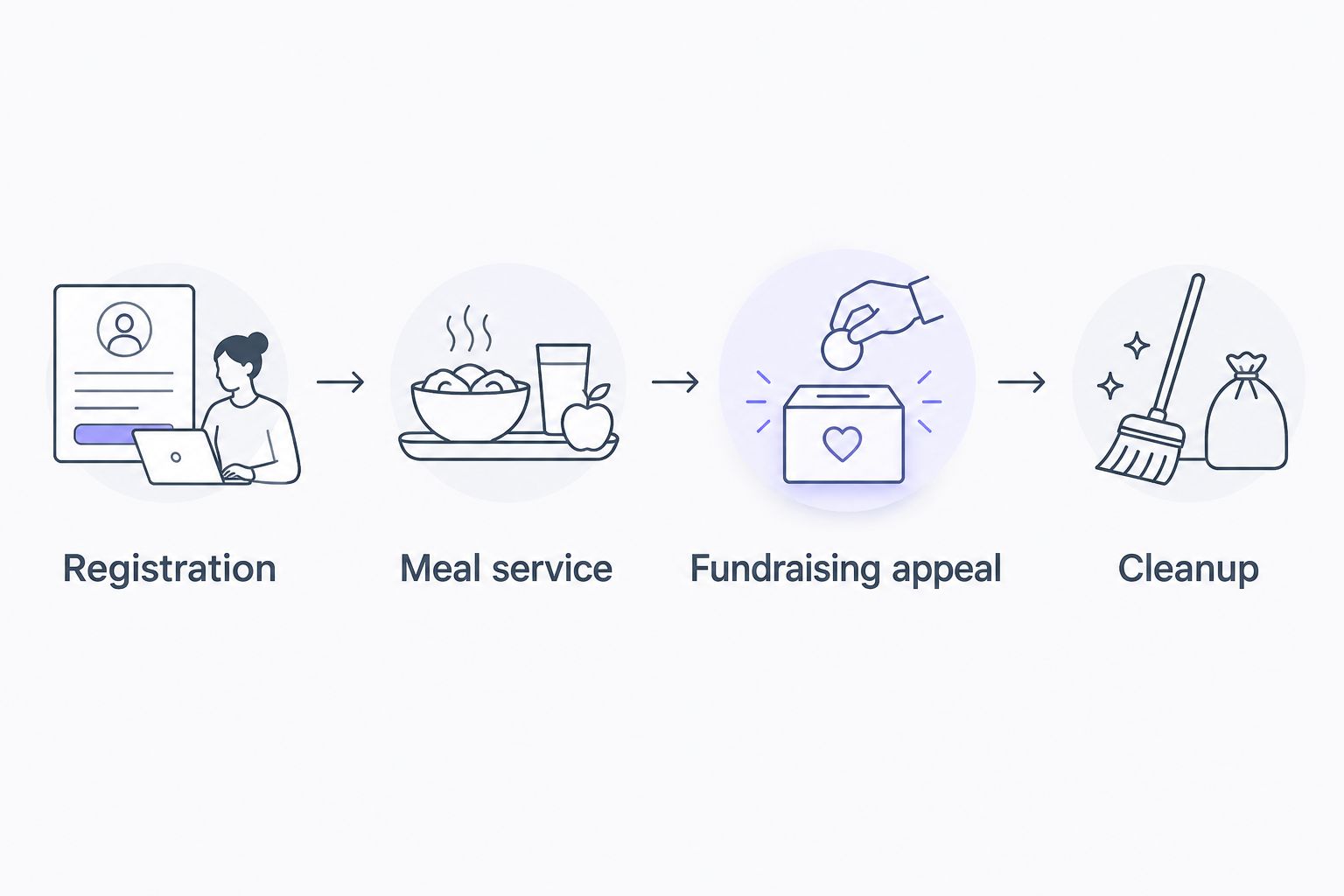
The handoff should follow the guest's experience, from arrival through supper and into the mission-focused program. Use the same sequence in your volunteer briefing so nobody has to guess what happens next.
Reconcile the meal after the event
Keep a short event log during service, then compare it with registration and meal records afterward. Record what happened rather than relying on the busiest volunteer's memory.
For your 2026 review, separate meal planning from fundraising results. Attendance, meals served, food remaining, and donations answer different questions. A full room does not tell you whether you ordered appropriately or met your mission goal.
Save the final brief for the next organizing committee. Written lessons are more useful than a reminder to order less or start earlier without explaining why.
- Compare confirmed attendance with actual attendance.
- Record meals served to volunteers and other non-ticketed participants.
- Note food remaining by dish rather than by general impression.
- Document queue problems and missed program handoffs.
- Record the decisions you want the next committee to repeat or change.
Compare meal-service options for your fundraiser
Choose by staffing and room requirements, not by how formal an option sounds. Each format below has a useful role and a limitation. Ask prospective caterers which formats they provide and what your nonprofit must supply.
| Option | Best for | Main advantage | Key limitation |
|---|---|---|---|
| Catered buffet | A shared meal before a seated program | Guests choose from the planned spread | Requires queue space and a replenishment plan |
| Individually packed meals | Guests eating in different areas or taking meals away | Meals can be handed out without a serving line | Changes and dietary requests need clear identification |
| Plated table service | A seated dinner with a coordinated program | Guests remain at their tables | Requires a detailed staffing and serving plan |
| Caterer-prepared food with volunteer serving | Organizations with a reliable serving crew | Volunteers take defined event-day roles | The nonprofit carries the agreed serving and cleanup work |
| Volunteer-prepared meal | Organizations with an established cooking team and suitable facilities | The team controls preparation and menu decisions | Food preparation adds responsibility alongside fundraising duties |
These are service-format comparisons, not a list of confirmed brand offerings. Request an itemized proposal for the format you want, and check it against your venue agreement before approving it.
Discuss Your Fundraiser Meal
Share your venue, guest count, and program schedule to discuss BBQ and soul food catering.
Common mistakes nonprofit fundraiser organizers make
Treating sponsor seats as confirmed meals
A sponsored table and a completed guest list are different records. Ask each sponsor to confirm who is attending, collect dietary requests, and identify who can release unused seats before the meal-count deadline.
Asking the same volunteers to serve and collect donations
A volunteer carrying food cannot also give a donor an unhurried explanation of the campaign. Assign separate leads, and schedule relief so neither role disappears during the busiest part of the evening.
Promising dietary suitability without checking ingredients
A dish name does not establish its ingredients or preparation conditions. Ask the caterer for details, communicate requests accurately, and avoid promising an allergen-free meal without explicit confirmation.
Assuming donated supplies cover the whole meal
Donated plates do not resolve utensils, beverages, serving equipment, or waste collection. Keep donated goods on the responsibility list with a named contact and a confirmed quantity, just like anything the committee arranges itself.
Starting the appeal while guests are still queuing
A busy serving line competes with your speaker for attention. Build a clear transition into the schedule, and give the meal coordinator authority to report when the room is ready for the appeal.
FAQ
What's the best way to plan soul food catering for a nonprofit fundraiser?
Start with the fundraising program, a complete meal count, and a written list of catering responsibilities. Choose the menu after confirming the venue, service format, and volunteer roles.
Is a buffet better than plated service for a fundraiser?
A buffet fits an event with room for guest movement; plated service fits a coordinated seated dinner. Compare staffing, queue space, and the program schedule before choosing, and confirm which formats the caterer provides.
Can DG&G Gravy Train Catering cater a nonprofit fundraiser?
DG&G Gravy Train Catering provides BBQ and soul food catering in Salisbury and across the Charlotte metro area. Discuss your nonprofit's event directly to confirm the proposed scope, menu, and arrangements.
Should volunteers be included in the catering headcount?
Include every volunteer who will receive a meal in the catering headcount. Track volunteer meals separately from ticketed guests so your attendance and meal records remain clear.
How do I handle food allergies at a fundraiser?
Collect allergy requests during registration and discuss them directly with the caterer. Confirm ingredients, preparation concerns, and serving arrangements rather than relying on dish names or volunteer assumptions.
Can volunteers serve food prepared by a caterer?
Use volunteer serving only when the caterer and venue agree to that arrangement. Put food-handling responsibilities, equipment, replenishment, and cleanup in writing before assigning volunteers.
What should go into a nonprofit catering request?
Include the event date, venue, expected meal count, serving window, dietary requests, and preferred service format. Explain the fundraising program so the proposed meal service fits the event's purpose.
One last thing
Rehearse the handoff, not just the welcome speech. Before your 2026 fundraiser, walk from registration to the food area, then to a seat and the donation station while carrying an empty plate. Ask who helps a guest at each stop and who keeps the program moving. That simple walk gives your committee something concrete to fix before the supper bell rings.