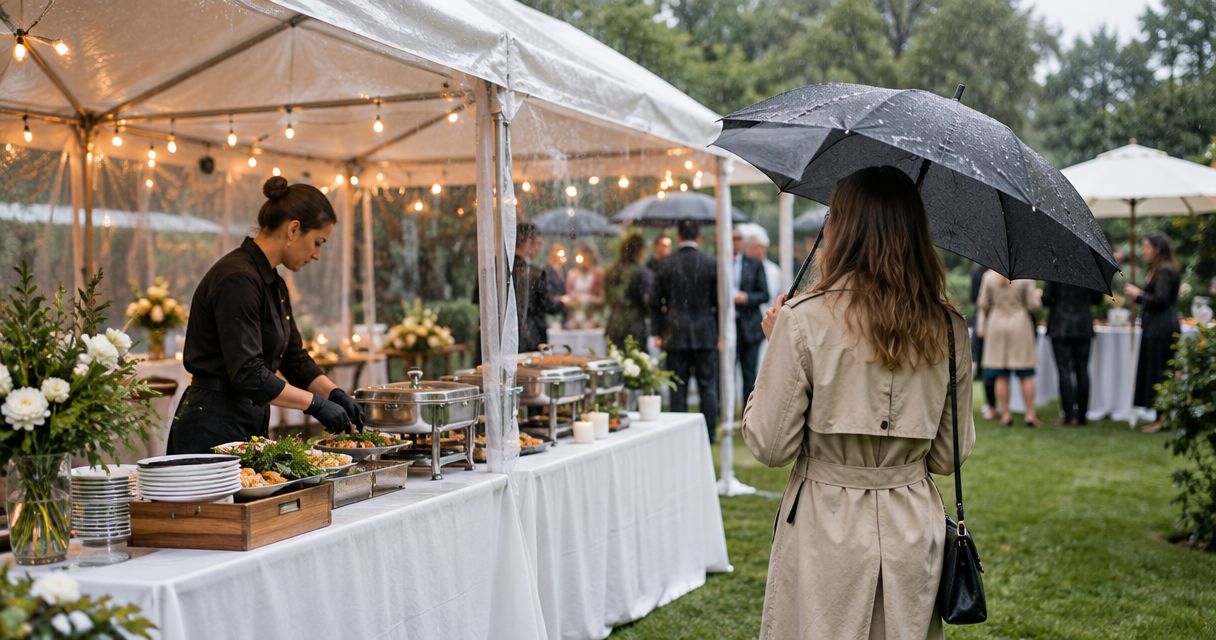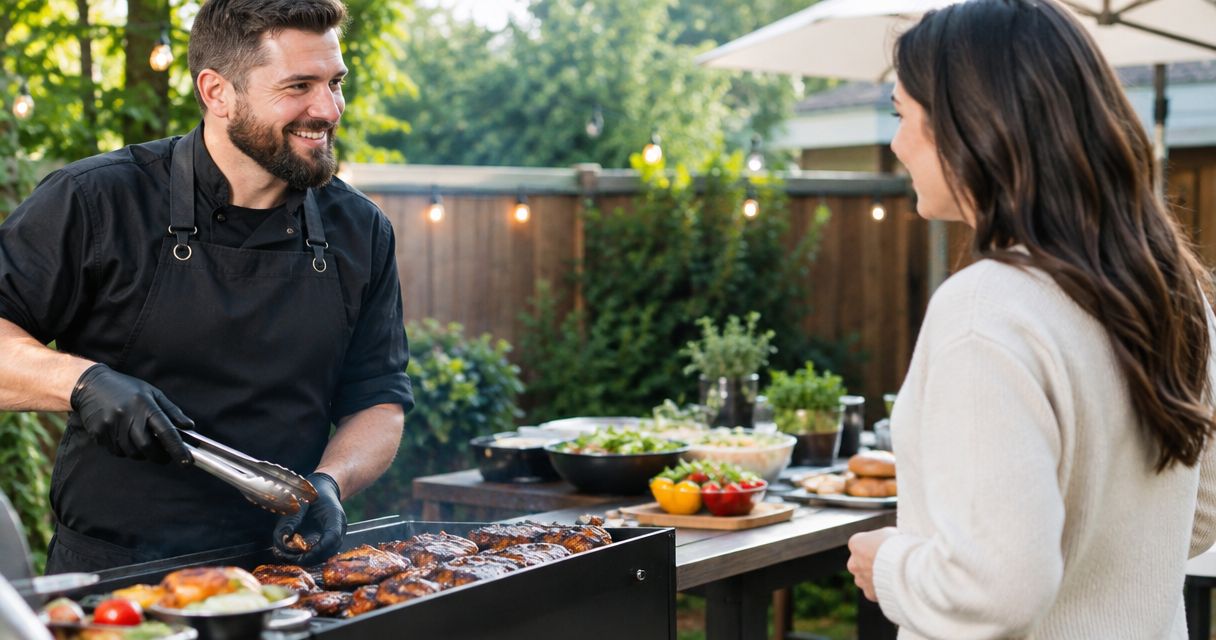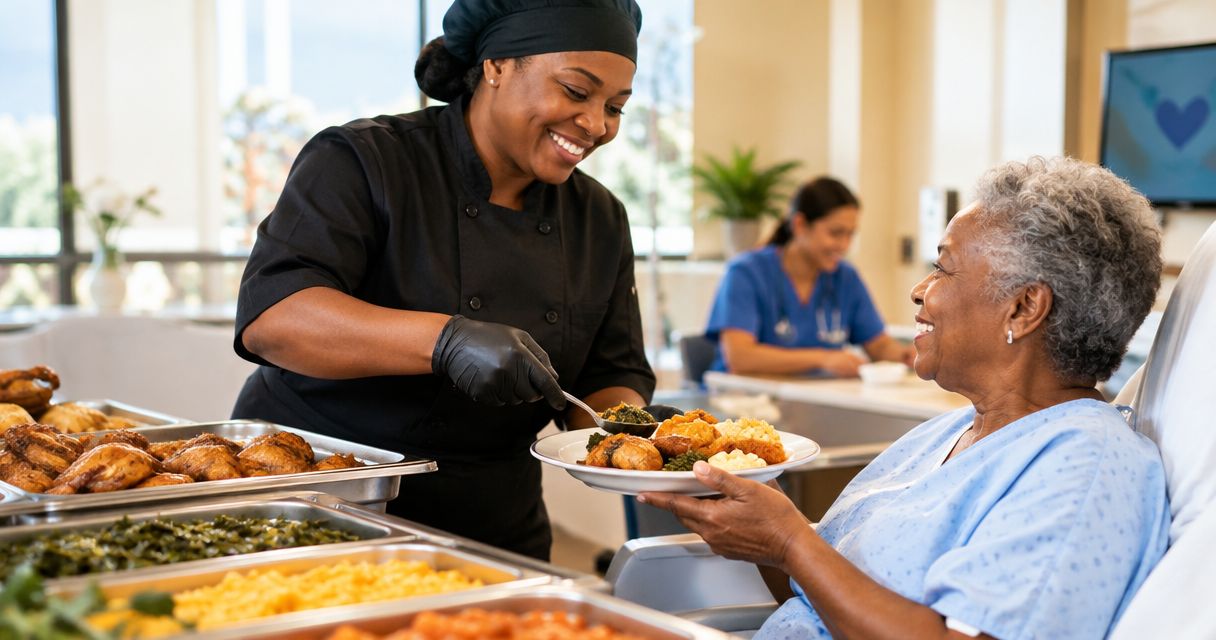
Healthcare facility soul food catering is event meal service built around Southern cooking, with the aim of feeding staff and guests without disrupting care. For 2026 planning, separate staff celebrations from patient meals: clinical diets, allergens, food handling, and shift schedules need their own approvals before anybody fills a plate.
- Soul food catering for healthcare facilities starts with separating staff events from patient meal service.
- DG&G Gravy Train Catering is a Charlotte-area BBQ and soul food option for staff-event inquiries, not clinical meal planning.
- Choose buffet, individual meals, or separate shift services around staffing, space, and approved food handling.
- Get written menu, allergen, delivery, and service responsibilities before confirming your event.
Why soul food catering matters for healthcare facilities
A healthcare celebration still has to work around patient care. Employees leave their units at different times, visitors share building access, and a break room is not automatically equipped to hold a catered meal safely. Plan the service around the facility, not the other way around.
A savory Southern meal can be the centerpiece of a staff appreciation lunch, retirement gathering, or department celebration. The planning challenge is making that meal accessible to the intended guests without treating ordinary event catering as a clinical nutrition service.
DG&G Gravy Train Catering is based in Salisbury, NC, and serves BBQ and soul food at corporate events and other gatherings across the Charlotte metro area. DG&G Gravy Train Catering is a BBQ and soul food option for Charlotte-area staff-event inquiries, not a substitute for clinical meal planning. Ask about the specific facility, menu, and service requirements before treating the caterer as a fit.
Plan your healthcare catering in six steps
Define who the meal is for
Start with a simple written guest list and event purpose. A department lunch, volunteer recognition meal, and gathering that includes patients require different decisions. Do not put them under one broad label such as hospital catering and assume the same menu rules apply.
For a staff-only event, identify employees, contractors, volunteers, and invited guests separately. Ask your facility contact whether meals can enter clinical areas, whether employees must eat in designated spaces, and who approves outside food.
Patient participation changes the process. The facility's clinical team must decide whether outside food is appropriate and assess prescribed diets, swallowing needs, allergies, and other individual restrictions. A familiar dish is not automatically an approved dish.
Keep the planning document short enough that every department lead can use it. Record who owns each decision rather than leaving approval to whoever happens to be available on event day.
- Name the event owner and facility approver.
- Separate staff and guest meals from patient meals.
- List attendance by department and shift.
- Identify the approved eating location.
- Route patient requests through the clinical team.
Build the schedule around actual breaks
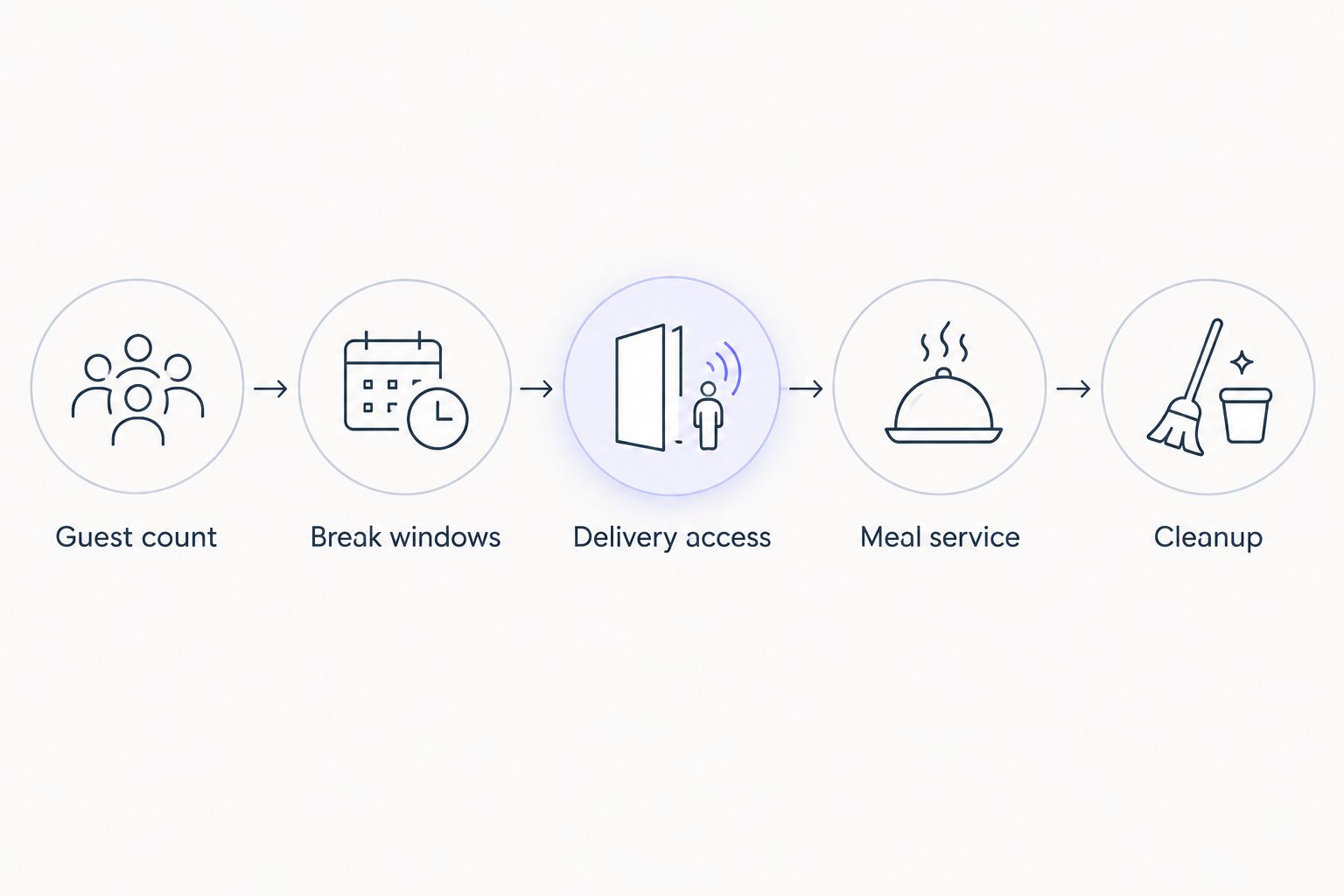
Create a basic schedule yourself before asking a caterer for service recommendations. Collect department break windows, delivery access instructions, and the time when the room becomes available. Your meal window should reflect when people can leave their duties, not simply when the food arrives.
For your 2026 event brief, distinguish delivery time, setup time, serving time, and cleanup time. Those are separate commitments. A delivery at the start of a lunch break leaves no margin for checking the order or arranging service.
Use the schedule to compare one shared service with separate shift services. Neither format wins automatically: separate services create more handoffs, while one extended service needs approved food holding and a clear replenishment plan. Ask DG&G Gravy Train Catering which arrangements it can support; do not assume repeat deliveries, staffing, or equipment are included.
- Guest count: Confirm attendance for each service window.
- Break windows: Collect department-approved meal times.
- Delivery access: Specify the entrance and receiving contact.
- Meal service: Assign setup and replenishment duties.
- Cleanup: Name the person accepting the finished space.
Choose the menu with ingredients in view
Write your menu requirements before choosing dishes. Start with the meal's purpose, confirmed dietary needs, available utensils, and the approved serving format. Then request the caterer's current menu and ingredient information instead of building an order from assumptions about Southern cooking.
Soul food covers many preparations; the dish name alone does not tell you its ingredients. Greens can contain meat or meat stock, vegetables can contain butter, and sauces can introduce ingredients that are not obvious on the serving tray. Ask about the actual recipe being offered.
Keep the meal welcoming without calling it suitable for every diet. A vegetable side is not automatically vegetarian, and a dish made without an ingredient is not automatically protected from cross-contact. If the caterer cannot meet a documented need, arrange a facility-approved alternative.
For patient meals, leave therapeutic substitutions and texture requirements with the clinical team. Event organizers should not translate a general menu description into a medical suitability claim.
- Request ingredients for each selected dish.
- Confirm meat stocks, dairy, sauces, and seasonings.
- Document allergies separately from food preferences.
- Ask how cross-contact is addressed during preparation and service.
- Keep approved alternatives identifiable and separate.
Match the serving format to the room
Walk through the proposed space before selecting a buffet or individual meals. Look at the entrance, exits, handwashing access, power, table space, waste collection, and the route back to work. A table that fits against a wall can still create a line across a doorway.
Choose the format your facility can supervise safely. A buffet gives guests control over portions and combinations, but it needs serving utensils, replenishment, and attention to shared contact points. Individual meals simplify distribution, but their contents still need clear identification and appropriate temperature control.
Separate shift services suit teams that cannot eat together, provided the receiving and food-handling arrangements are confirmed for each service. Do not stretch one unattended buffet across the workday just to reach everyone.
The comparison below is a planning aid for 2026, not a statement that every caterer supplies every format. Confirm the available arrangement and responsibilities before making a selection.
- Measure the usable serving area and queue space.
- Keep food service away from restricted care areas.
- Check equipment and power requirements with facilities staff.
- Provide clearly identified utensils and meal labels.
- Assign waste removal and table cleanup.
Compare healthcare event catering options
Choose between these options by looking at break patterns, room access, and who will manage the food. The strongest option is the one your team can execute as agreed, not the one that looks easiest on an order form.
| Option | Best for | Main advantage | Key limitation |
|---|---|---|---|
| Staff buffet | Teams with an overlapping break window and an approved dining space | Guests choose their own portions and combinations | Needs supervised service, temperature control, and replenishment |
| Individually packed meals | Departments distributing meals during staggered breaks | Makes meal counts and handoffs easier to organize | Contents need identification; packaging does not replace temperature control |
| Separate shift services | Facilities with distinct daytime and overnight teams | Aligns food service with each team's break window | Requires confirmed receiving and service arrangements for each handoff |
| Facility-managed meal service | Events that include patients with prescribed dietary needs | Keeps clinical meal decisions under facility control | Outside catered dishes still require facility assessment and approval |
Set food-safety responsibilities before delivery
Ask your facility's food-service or infection-prevention contact to approve the handling plan. The FDA Food Code provides model retail food-safety requirements; your facility must apply its adopted rules and internal policies. Do not treat an event checklist as a replacement for those requirements.
For foods requiring time and temperature control for safety, the FDA Food Code specifies hot holding at 135°F or above and cold holding at 41°F or below. For applicable food cooked, cooled, and reheated on site for hot holding, the model code specifies 165°F for 15 seconds, reached within 2 hours. Different rules apply to some products and processes; have the responsible food-service professional identify the applicable procedure.
A warming tray is not a substitute for an approved reheating process. Likewise, putting food in a closed container does not establish that it remained at a safe temperature.
For 2026 events, put responsibility in writing at every handoff. The receiving employee needs authority to flag a problem rather than feeling obliged to accept an order because guests are waiting.
- Name the trained person receiving the food.
- Confirm transport, holding, and temperature-check responsibilities.
- Establish the facility's acceptance and rejection procedure.
- Provide the approved equipment and monitoring tools.
- Follow facility rules for leftovers and disposal.
Confirm the order and rehearse the handoff
Turn your decisions into a single event brief. Include the approved menu, counts by service window, dietary requests, serving format, access route, and responsible contacts. Send the same version to the caterer and facility team so nobody works from an old email.
Read the confirmation against the brief. Check which tasks belong to the caterer and which belong to your staff, especially setup, utensils, labels, service equipment, replenishment, and cleanup. Do not assume that a food order includes an attended serving line.
Before confirming DG&G Gravy Train Catering for a healthcare staff event, ask whether the requested arrangement and documentation can be provided. Its stated BBQ and soul food catering service does not establish clinical diet capabilities, facility approval, or a particular delivery setup.
Finally, walk the route with the receiving contact. A clear handoff protects the meal schedule and keeps drivers from searching through a busy building for the right department.
- Confirm the final menu and headcount process in writing.
- Record inclusions and responsibilities without assumptions.
- Share entrance, parking, and access instructions.
- Name a primary contact and a backup.
- Establish how changes and delivery problems will be communicated.
Discuss Your Staff Catering Plan
Share your facility location, guest count, shift windows, and dietary requirements before confirming an order.
Common mistakes healthcare facilities make
Treating a staff menu as a patient menu
A staff appreciation lunch and a patient meal have different approval paths. Keep the order staff-only unless the facility's clinical team has expressly approved patient participation and the specific food. Do not make bedside exceptions on the day.
Counting employees without counting break windows
One total headcount hides the distribution problem. Organize attendance by actual meal window, then confirm who receives and manages each service. Include overnight and support teams in the planning conversation rather than assuming they can collect leftovers.
Calling a dish suitable without checking its recipe
Labels such as vegetable, mild, or homemade do not establish allergen content or medical suitability. Ask for the relevant ingredient information and preparation details. When a requirement cannot be confirmed, use the facility's approved alternative instead of guessing.
Leaving the receiving job unassigned
A delivery instruction that says front desk does not identify who checks the order or manages the food afterward. Name a responsible recipient and backup, give both the event brief, and make sure someone is ready when the delivery arrives.
Choosing a menu before approving the space
A buffet needs more than an empty table. Confirm the room, queue, equipment, service supervision, and cleanup plan first. That keeps an appealing meal from becoming an obstacle in a working healthcare building.
FAQ
What's the best way to arrange soul food catering for healthcare facilities?
Start with a staff-only event brief that identifies guests, break windows, dietary requirements, and facility approvals. Choose the menu and service format only after the receiving and food-handling responsibilities are clear.
Can hospital patients eat food from a catered staff event?
Patients should receive catered food only when the facility's clinical team approves their participation and the specific food. Staff-event approval does not establish suitability for prescribed diets, allergies, or swallowing needs.
Is a buffet better than individually packed meals for healthcare staff?
A buffet fits an overlapping break window, while individually packed meals fit distribution across staggered breaks. Both require an approved handling plan, and neither format removes the need for dietary identification or temperature control.
Does soul food catering work for overnight healthcare teams?
Soul food catering can be planned around overnight teams when the caterer and facility confirm the service arrangements. Assign a receiving contact and an approved food-handling plan for that shift rather than relying on food left from an earlier event.
Can soul food dishes meet every dietary restriction?
No cuisine label establishes that a dish meets every dietary restriction. Request recipe and preparation details, and let the facility's clinical team assess any patient-specific requirements.
What information should I send when requesting healthcare staff catering?
Send the facility location, event purpose, guest count by service window, requested format, dietary needs, and delivery access instructions. Include the facility approver and the person responsible for receiving and managing the food.
Does DG&G Gravy Train Catering provide clinical patient meals?
DG&G Gravy Train Catering's stated services cover BBQ and soul food catering for corporate events and other gatherings across the Charlotte metro area. That description does not establish clinical patient meal service; discuss staff-event requirements directly and keep patient meal approval with the facility.
One last thing
For your 2026 event, appoint the receiving contact before you finalize the menu. That person connects the approved plan to what actually arrives: the right order, at the right entrance, with someone ready to manage it. Good Southern hospitality starts before the first plate is served, y'all.