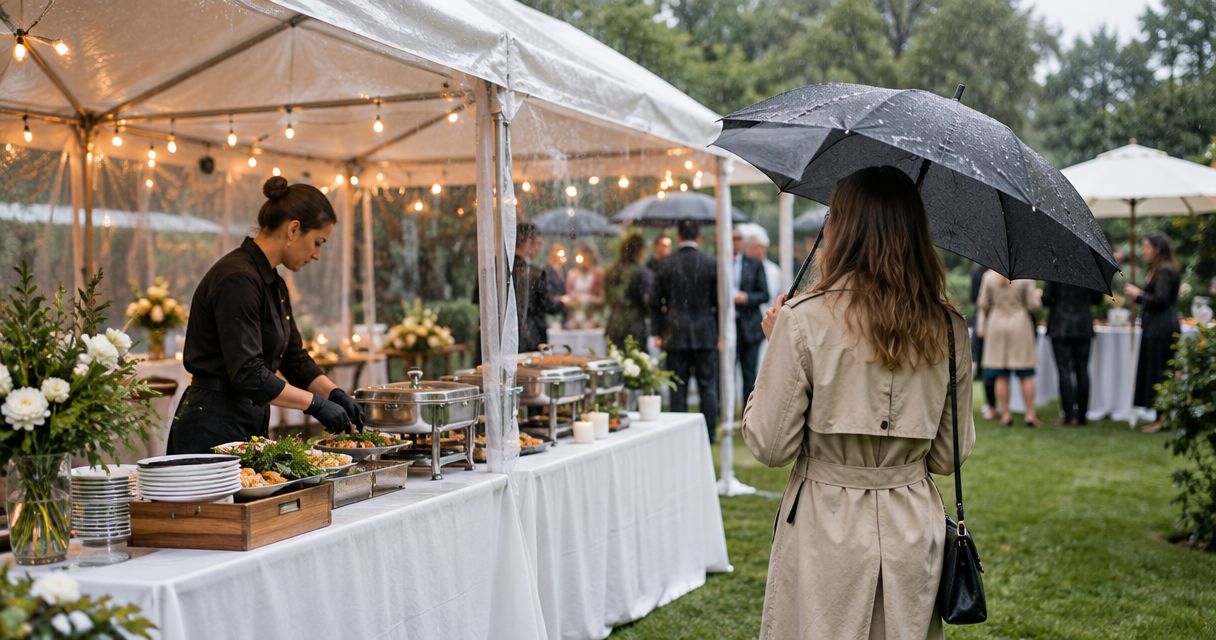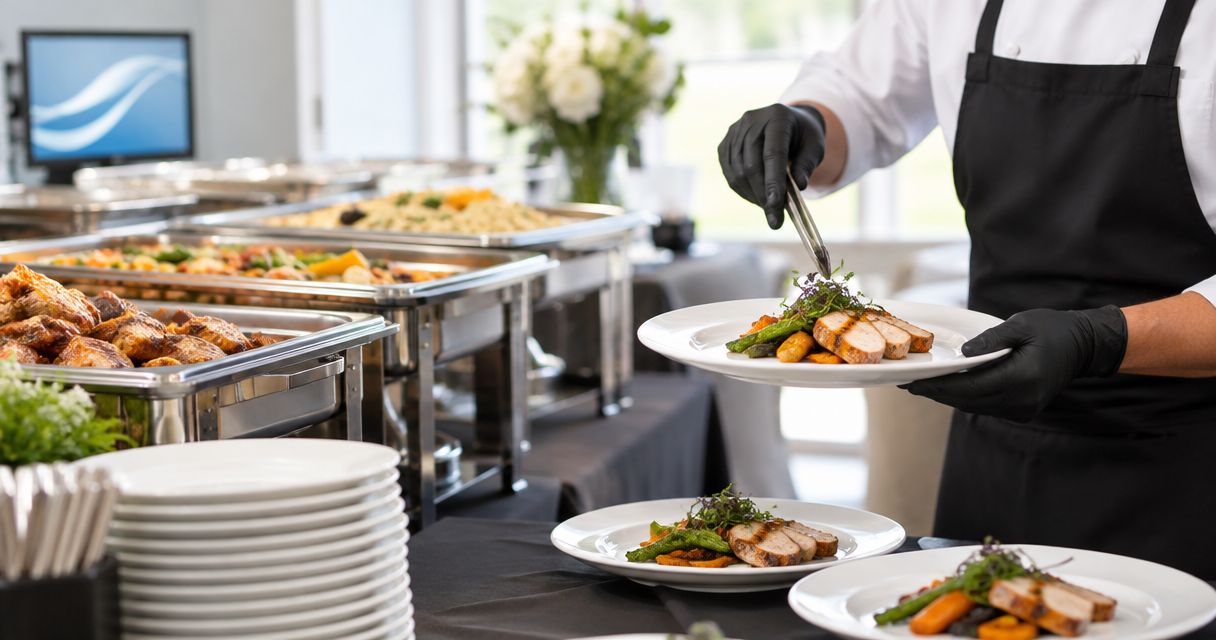
Confirm buffet-style or plated service directly with Gravy Train Catering before booking, and have the agreed format written into your event proposal. Do not assume that ordering BBQ and soul food also includes servers, table service, setup, or cleanup; settle those responsibilities alongside the menu for your 2026 event.
- Does Gravy Train Catering offer buffet style or plated service? Confirm your preferred format directly before booking.
- Buffet service suits guests choosing their portions; plated service suits a seated meal with coordinated table service.
- A BBQ catering menu does not, by itself, establish staffing, equipment, setup, or cleanup responsibilities.
- Get the service format and assigned responsibilities in writing before finalizing your event plans.
Does Gravy Train Catering offer buffet-style or plated service?
Ask for confirmation of your preferred service format rather than treating either option as included. Use the contact page to describe your event, explain how you want guests served, and request a proposal that addresses those details.
Gravy Train Catering provides BBQ and soul food catering for weddings, corporate events, church gatherings, and private parties across the Charlotte metro area, from its base in Salisbury, NC. Those event categories describe who the company serves; they do not establish how food will reach each guest's plate.
The distinction matters. A wedding reception and a church anniversary can both feature a soulful meal while needing different arrangements for seating, serving, and clearing tables.
Use this comparison to describe what you want. These are general service-format differences, not a list of confirmed packages from the caterer.
| Service format | Best for | Main advantage | Main trade-off | What to confirm |
|---|---|---|---|---|
| Buffet-style service | Hosts who want guests to choose portions at a serving station | Guests choose from the dishes presented | Guests must reach the station, and the serving area needs attention | Whether guests serve themselves, staff serve portions, and someone replenishes dishes |
| Plated service | Hosts who want guests served while seated | Food comes to the table in arranged portions | Meal choices and table service need advance coordination | Who plates, serves, identifies special meals, and clears dishes |
Choose the guest experience first, then confirm who will deliver it. Neither format automatically tells you whether staff remain on-site or which equipment comes with the meal.
Why this matters for your 2026 event
Y'all want guests enjoying the food, not wondering where to line up or who is bringing dinner. Service details turn a menu into an event plan: they connect the kitchen, the serving area, the tables, and the people responsible for each task.
A tray of food and a staffed meal are different arrangements. Write down 3 responsibilities: setup, service, and cleanup, then assign each one explicitly rather than leaving it to the venue, caterer, or family to sort out during the gathering.
This is especially useful when several people share planning duties. Your venue coordinator, church committee, office organizer, or wedding planner should work from the same description of the meal service—not separate assumptions about what catering includes.
Buffet-style service: best for guest choice
A buffet puts the meal at a serving station where guests select their food. That format suits a host who wants people to choose among the agreed dishes and decide what goes on their plate.
The benefit is choice. The trade-off is movement: guests need a clear route to the serving area, somewhere to collect what they need, and a way to return to their seats without crossing the line.
For a BBQ or soul food gathering, discuss how the selected dishes will be portioned and served. Do not assume that a serving spoon beside a tray means guests are expected to help themselves; an attended buffet has a different division of responsibilities.
Before choosing buffet-style service for a 2026 event, ask:
- Serving: Will guests serve themselves, or will someone portion the food?
- Replenishment: Who checks dishes and brings out additional food?
- Guest assistance: How will guests who need help receive their meals?
- Equipment: Who provides serving utensils and any required holding equipment?
- Table release: Who tells guests when to approach the serving area?
Recommend a buffet when guest choice is central to your plan—not simply because the meal is BBQ. The food category does not determine the service format, and a buffet still needs an assigned person watching the serving area.
Plated service: best for a coordinated seated meal
Plated service brings an arranged meal to each seated guest. That format suits a host who wants dinner to happen at the tables rather than through a serving line.
The benefit is a defined dining sequence. The trade-off is coordination: someone must connect each meal with the correct guest, arrange the plates, carry them to tables, and handle clearing afterward.
If you want plated service, ask whether that exact arrangement can be included in your proposal. Describe what you mean by table service rather than relying on the word plated to cover every task.
Your questions should include:
- Will meals be plated at the venue or arrive already portioned?
- Who provides the people serving the tables?
- How will meal selections reach the person arranging each plate?
- How will separately prepared meals reach the correct guests?
- Who clears plates, utensils, and other dining items?
Recommend plated service when remaining seated is a priority and the required service arrangements are confirmed. Do not design the reception schedule around table service until the people responsible have agreed to it.
Why the right service format varies
There is no single service style that fits every wedding, office meal, church gathering, and private party. Start with the occasion and the guest experience, then check the practical details with the caterer and venue.
For your 2026 planning conversation, use these factors:
- Event type: A wedding dinner, corporate gathering, church celebration, and private party have different programs. Explain where the meal sits within yours.
- Food selection: Share the BBQ and soul food dishes you want to discuss, then ask how the agreed menu would be served.
- Event location: Provide the actual venue address and dining location. A Charlotte-area event description alone does not explain the room or access arrangements.
- Guest experience: Decide whether choosing portions or receiving a meal while seated matters more to your group.
- Assigned responsibilities: Identify what you expect the caterer, venue, organizer, and any separate service team to handle.
These factors are planning questions, not promises about a particular package. The final proposal should turn each important preference into an assigned task. If a responsibility has no owner, resolve it before approving the arrangements.
How to request a clear service proposal
Give the caterer enough detail to answer your service question specifically. Asking only whether catering is available leaves the meal format unresolved; describe what you want guests to experience from arrival through the end of dinner.
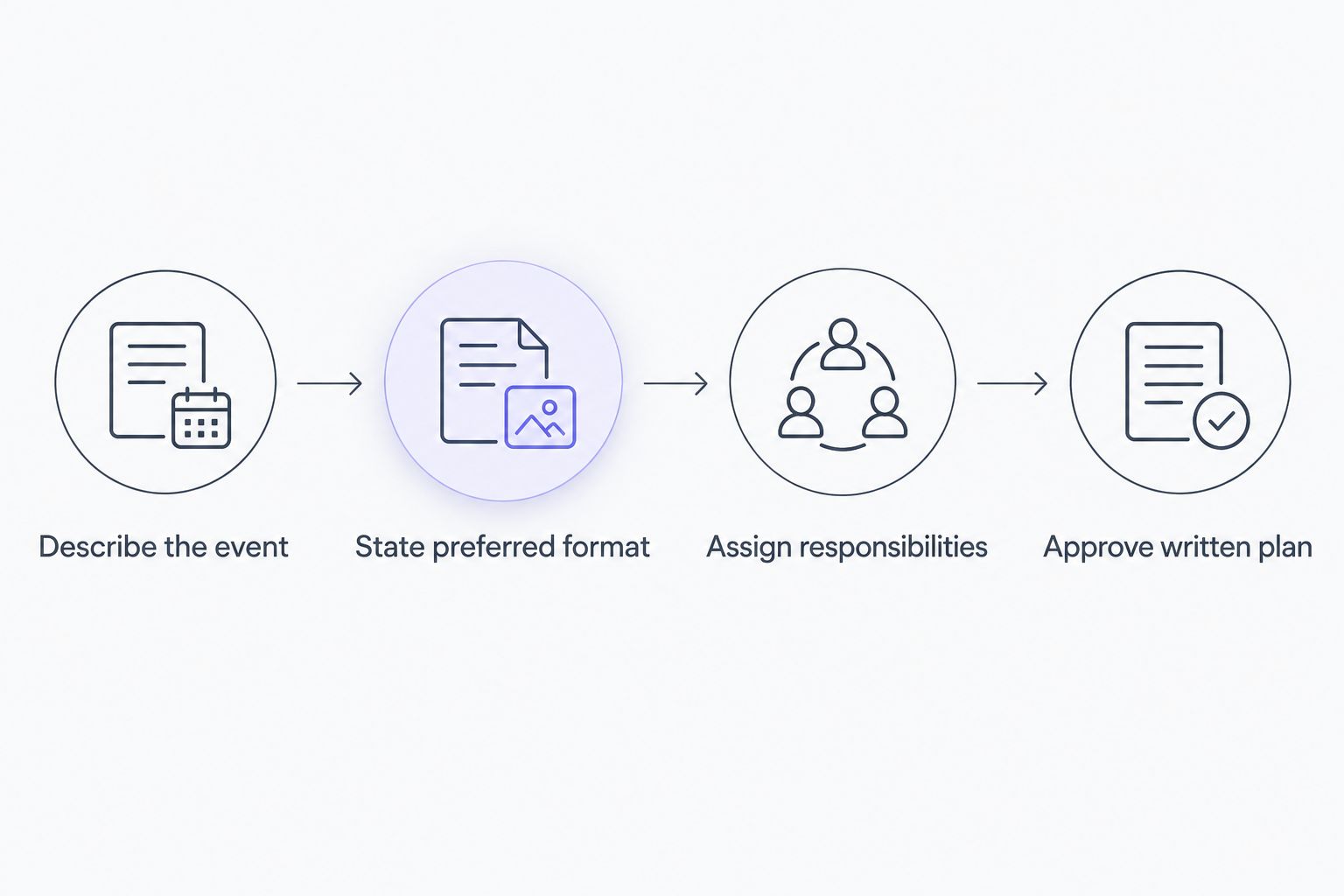
1. Describe the event
State whether you are planning a wedding, corporate event, church gathering, or private party. Include the date, venue, expected attendance, and the part of the program reserved for eating.
If your attendance is still changing, label the figure as an estimate. Ask when the final guest count must be confirmed rather than assuming a deadline.
2. State the preferred format
Say whether you want guests to approach a buffet or receive meals at their tables. Explain the reason: guest choice, a seated program, assistance needs, or another priority specific to your gathering.
If you are undecided, ask the caterer to explain which arrangements can be proposed for your event. Do not request a generic recommendation without sharing how the room and schedule will work.
3. Assign the responsibilities
Separate food preparation from event service. Ask who handles arrival, setup, serving, replenishment, guest assistance, clearing, and the removal of catering equipment.
Write each answer beside the task. This makes it easier to spot a gap than a broad description such as full service, which needs its own explanation.
4. Approve the written plan
Check that the proposal matches the format you discussed. Review the menu, guest count, service arrangements, equipment responsibilities, and event schedule together rather than approving each in isolation.
Send the agreed plan to anyone coordinating the venue or dining area. A written decision only helps when the people carrying it out have the same version.
What should you ask for each kind of gathering?
The company serves 4 event types: weddings, corporate events, church gatherings, and private parties. Use the occasion to focus your questions, not to assume that a particular service arrangement comes with it.
For a wedding, explain how dinner relates to introductions, speeches, and other reception activities. Ask how the proposed service would fit that sequence and who will coordinate the dining room.
For a corporate event, explain whether everyone eats together or the meal fits around a working program. Identify who can make service decisions on-site so the catering team does not have to search for an organizer.
For a church gathering, tell the caterer how the meal connects with the service or celebration. Discuss assistance for guests and confirm which responsibilities, if any, the church intends to handle.
For a private party, describe the dining space and whether guests will be seated together. Keep the plan practical: a family member agreeing to help should know the actual task, not just be told to watch the food.
Is buffet-style service the same as food delivery?
Buffet-style service describes how guests receive food; delivery describes how food reaches the event. Do not use the terms interchangeably when requesting your proposal.
A request for food delivered to a venue does not, by itself, specify a serving station, attendants, table service, or cleanup. Ask for each task you want included and identify who handles anything outside the agreed scope.
Does plated service include cleanup?
Plated service does not, by itself, settle cleanup responsibilities. Ask separately about clearing dining tables, handling used dishes, collecting waste, and removing service equipment.
Be precise about the boundary between catering cleanup and venue cleanup. Cleaning the catering work area and returning an entire event room to its required condition are different tasks.
What should you confirm before booking for 2026?
Confirm the format, the assigned responsibilities, and the written scope before booking. Then check that the venue can accommodate the proposed meal arrangement.
Gravy Train Catering is a fit for Charlotte-area hosts seeking BBQ and soul food for weddings, corporate events, church gatherings, and private parties. Match that food preference with a clearly agreed service plan rather than assuming the menu settles the logistics.
Ask About Your Event Service
Share your event details and ask which serving arrangements can be included in your proposal.
FAQ
Does Gravy Train Catering offer buffet style or plated service?
Confirm your preferred service format directly with Gravy Train Catering before booking. Have buffet-style or plated service, along with the assigned responsibilities, written into your event proposal.
What's better for a BBQ wedding, buffet or plated service?
Buffet service suits guest choice, while plated service suits a coordinated seated meal. Choose the experience you want, then confirm that the caterer and venue can support the arrangement.
Does a buffet mean guests serve themselves?
A buffet does not necessarily mean guests serve themselves. Ask whether the proposed arrangement is self-service or attended and who handles portions and replenishment.
Will catering staff stay to serve the food?
Confirm on-site staffing explicitly in your proposal. A food order or delivery arrangement does not, by itself, establish that staff will remain through the meal.
Can guests who need assistance eat comfortably at a buffet?
Plan assistance rather than assuming every guest can carry a plate through a serving line. Tell the caterer and organizer what help is needed and assign someone to provide it.
Does plated catering include plates and utensils?
Confirm plates and utensils separately in the written scope. Also ask who provides serving equipment, handles used dining items, and removes equipment afterward.
What should I send when asking about service for a 2026 event?
Send the event type, date, location, estimated guest count, preferred serving format, and meal schedule. Explain which tasks you want handled so the proposal addresses more than the food alone.
One last thing
Test the plan with an imaginary guest arriving for dinner. Where does that person get a plate, who serves the food, where do they sit, and what happens to the dishes afterward?
If any answer is unclear, you have found a question to settle before event day. A warm, soulful meal deserves an equally clear plan for getting it to the table.