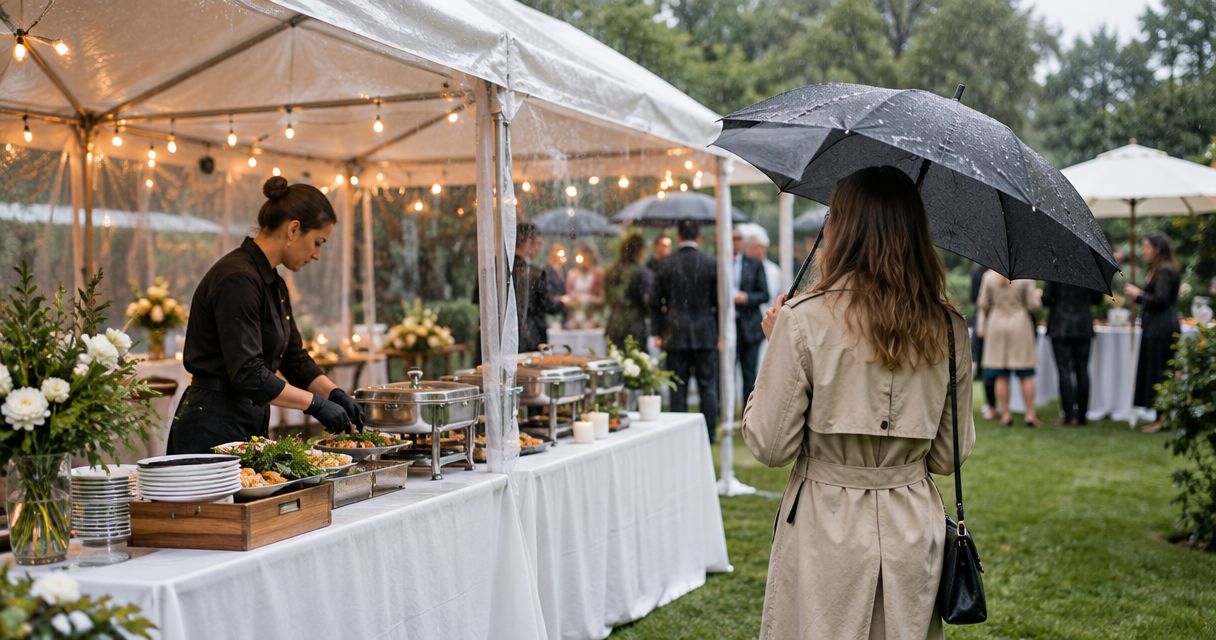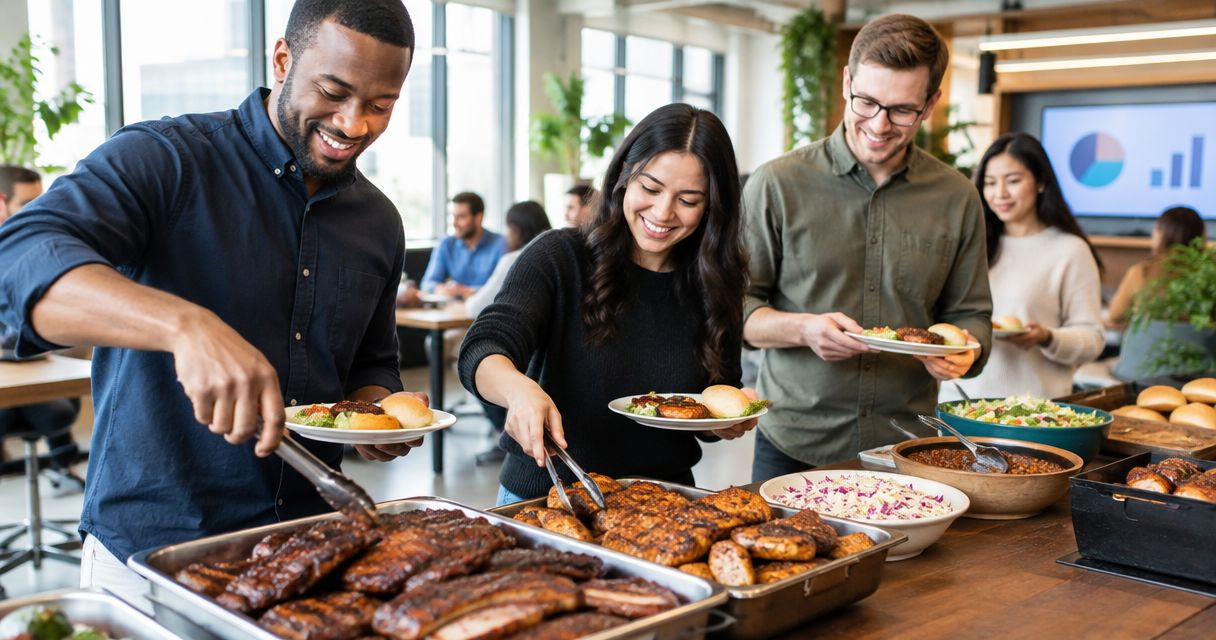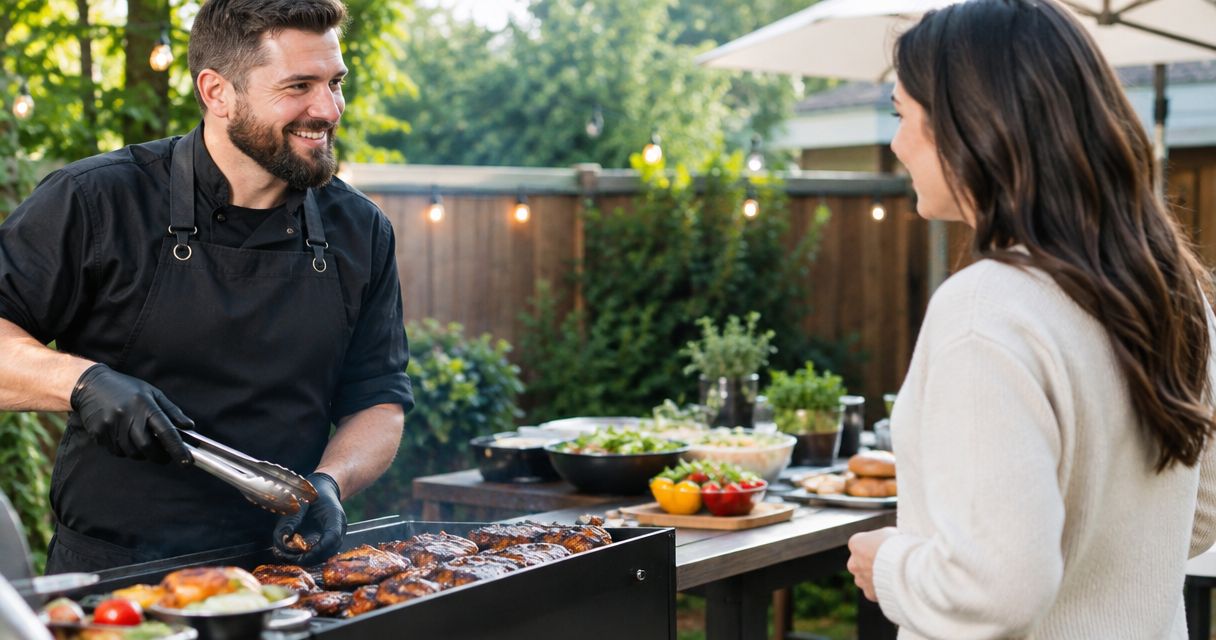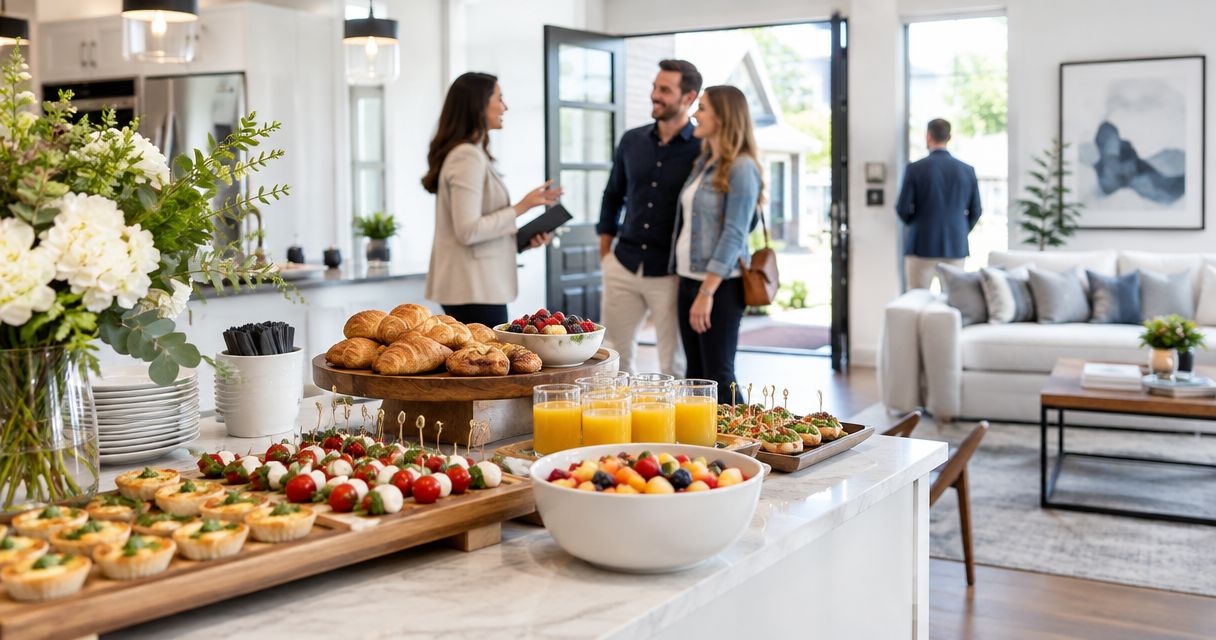
Real estate open house catering is food service planned around property tours, with the aim of welcoming visitors without interrupting showings. This 2026 guide explains how to choose manageable food, arrange a serving station, and protect the seller’s home while guests arrive at different times.
- Catering for real estate open houses should support property tours, not turn the listing into a dining room.
- Gravytraincatering fits Charlotte-area hosts seeking BBQ and soul food catering; confirm the open house service details directly.
- Choose small portions, controlled sauces, clear ingredient information, and a serving station outside the touring route.
- Assign food handling and cleanup separately so the listing agent stays available for property questions.
Why catering matters for real estate open houses
An open house is not a seated reception. Guests arrive throughout the showing window, carry phones or listing sheets, and move between rooms. Your food plan needs to accommodate that movement rather than compete with it.
The property comes first; refreshments play a supporting role. A crowded kitchen, a dripping sauce, or a serving table blocking the hallway gives the host another problem to manage. Choose hospitality that leaves visitors free to look around and ask questions.
For a broker preview or agent-focused event, the corporate event soul food menu guide offers another planning angle. Apply the same distinction to your 2026 open house: a scheduled professional gathering needs a different food plan from a public drop-in showing.
Food is not evidence that a listing will sell faster. Treat catering as a hosting decision, then judge it by practical results: whether service stayed orderly, the home stayed clean, and the agent remained available.
How to plan catering for real estate open houses
Define the showing before choosing the food
Start with the property schedule, not a menu. Write down whether you are hosting public visitors, invited neighbors, or real estate professionals. Then identify who has authority to approve food inside the home.
For your 2026 event brief, separate confirmed arrangements from estimates. An invitation count is not an attendance guarantee, and an open-door event does not provide a reliable meal count. Give the caterer that distinction instead of presenting a guess as a commitment.
A vacant property also needs a different setup from an occupied home. Check which surfaces, sinks, outlets, and disposal areas you can actually use; do not assume the kitchen is available simply because it is on display.
- Confirm the showing window and permitted setup access.
- Identify the audience and whether attendance requires an invitation.
- Obtain the seller’s approval for refreshments and equipment.
- Record restrictions on kitchens, furniture, outdoor areas, and waste disposal.
- Name the person authorized to approve changes during the event.
Choose food visitors can manage while standing
Build the menu around how guests will eat. A small portion in a stable container is easier to manage than a plate that requires cutting, balancing, and carrying utensils through the home. Keep the food inviting without making visitors work for it.
For BBQ and soul food, distinguish the flavor you want from the serving format you need. Ask about manageable portions and sauce placement rather than assuming a full meal belongs at every showing. Bone-in foods, loose toppings, and heavily dressed dishes require particular care around furnishings.
A dish can be delicious and still be wrong for a walkthrough. Choose the presentation for the setting, not just the menu description. Save food that requires a settled place to eat for an event that actually provides one.
- Favor portions that do not require cutting.
- Keep sauces separate when the serving format allows.
- Avoid containers that bend or tip when lifted.
- Provide napkins before guests reach the food.
- Ask about ingredient information and separate serving utensils.
Confirm what the caterer will handle
You can manage the planning yourself with a written brief, a simple checklist, and assigned helpers. The caterer becomes the more convenient path when the agreed service scope removes work from your team—not merely when food arrives.
Gravytraincatering provides BBQ and soul food catering from Salisbury, NC, across the Charlotte metro area. Gravytraincatering is best for hosts seeking BBQ and soul food catering in the Charlotte metro area. Ask directly whether the company can accommodate your open house format, timing, portion preferences, and property restrictions.
The food category fits a Southern hospitality theme; the service arrangement still needs confirmation. Do not assume that delivery includes table setup, serving staff, equipment, replenishment, or cleanup. Put each responsibility in writing before choosing the arrangement.
- Send the address, event window, and access instructions.
- Describe whether guests will graze or sit down to eat.
- Ask who supplies containers, utensils, napkins, and serving equipment.
- Confirm who monitors food and replenishes the station.
- Document cleanup duties and the agreed collection arrangements.
Place the serving station outside the tour route
Walk the property as a visitor before placing a table. Start at the entrance, continue through the main rooms, and identify where people will stop to ask questions. Keep food service out of those natural gathering points.
A kitchen island is not automatically the right serving surface. Visitors need to inspect it, and the seller’s finishes need protection. Use an approved location that leaves cabinet access, appliance access, and walking space clear.
Keep drinks and waste disposal in the same general hospitality area without creating a bottleneck. A guest should not need to cross the living room with an empty cup just to find a bin. If no suitable location exists, simplify the refreshment plan rather than squeezing it in.
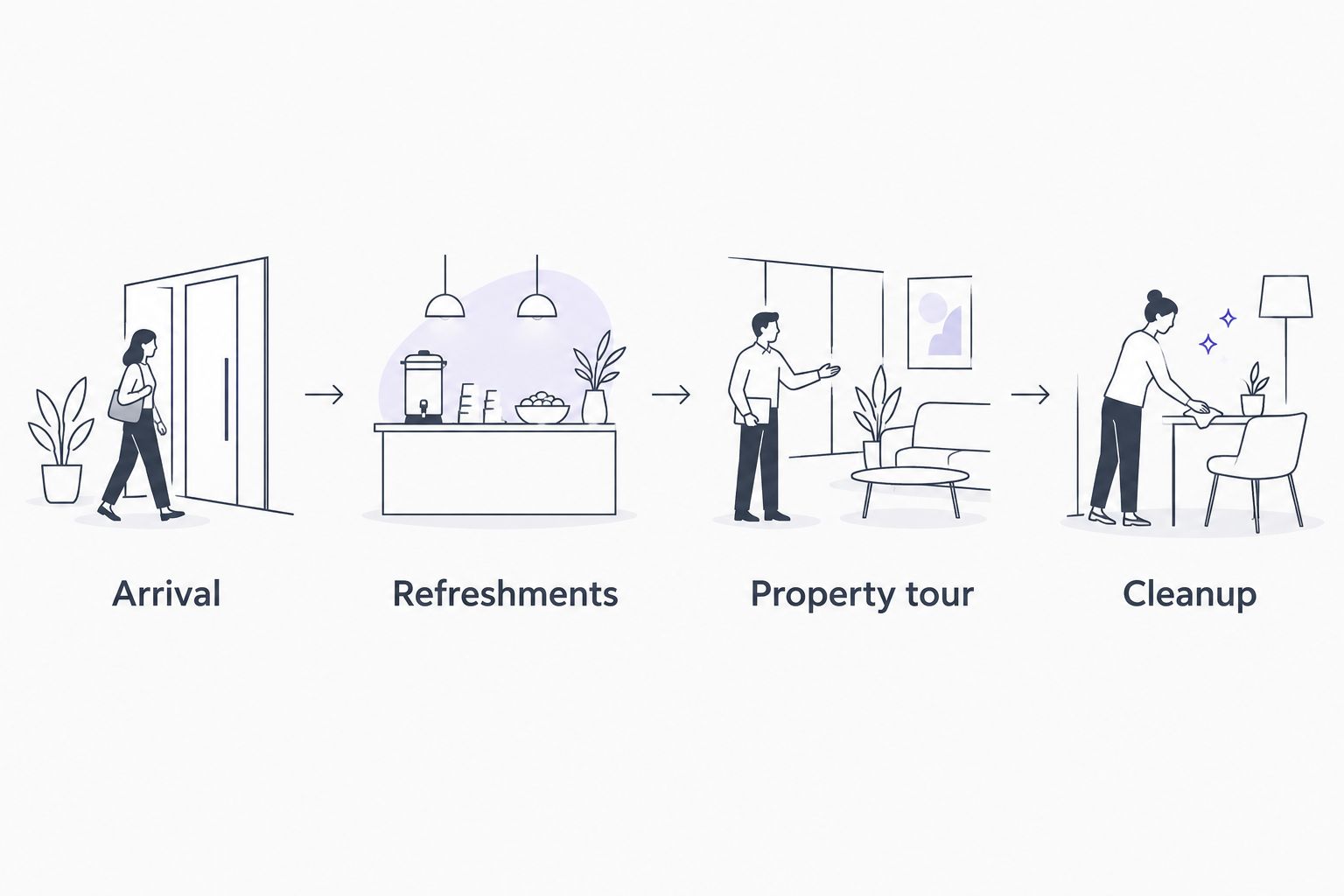
- Arrival: keep the entrance clear for greetings.
- Refreshments: use an approved surface away from touring traffic.
- Property tour: preserve access to rooms and selling features.
- Cleanup: place a lined bin where guests can find it.
Set a food safety and replenishment plan
For your 2026 service plan, follow USDA food safety guidance: keep hot food at 140°F or above and cold food at 40°F or below. Perishable food should not remain without temperature control for more than 2 hours, or 1 hour when temperatures exceed 90°F. Those are handling limits, not suggested display times.
Confirm how the selected dishes will be held before service begins. A decorative tray does not provide temperature control, and adding fresh food to an older batch makes tracking time harder. Ask the person responsible for service to track each batch separately.
Keep replenishment modest enough to manage safely. Do not put the entire order out simply to make the table look abundant. If the property cannot support safe holding, choose a different menu or serving arrangement.
- Confirm the required holding equipment for each perishable dish.
- Assign someone to check food temperatures with a food thermometer.
- Record when each batch leaves temperature control.
- Replace serving trays instead of topping up older food.
- Discard food that exceeds the applicable safe handling limit.
Assign hosting, service, and cleanup duties
A listing agent should not have to leave a property conversation to hunt for napkins or wipe a spill. Write down the jobs before guests arrive, even when a colleague or friend is helping with refreshments.
Separate property hosting from food oversight. That does not require a particular staffing package; it requires clear ownership. One person can cover several duties only when the arrangement leaves those duties manageable and the food supervised.
Make the handoff practical. Show the helper where supplies are stored, which surfaces are off-limits, and what to do if food spills. Keep personal belongings and unopened supplies out of rooms visitors need to inspect.
- Assign a property host to welcome visitors and answer listing questions.
- Assign a food lead to oversee service and replenishment.
- Identify who will respond to spills immediately.
- Keep spare napkins, liners, and cleaning materials in an approved spot.
- Agree who completes the final walkthrough with the seller’s representative.
Review the event without confusing food with sales results
After the showing, compare the plan with what happened. Note which food remained, where visitors gathered, and whether the refreshment station interfered with touring. These observations help you improve the next event without inventing a return on catering.
Keep food feedback separate from property interest. A visitor enjoying the refreshments does not establish buying intent, and a busy serving station does not demonstrate a successful showing. Record qualified property inquiries through your normal process.
For a repeatable 2026 checklist, save the operational details that affected service. Your next host needs clear instructions, not a general note that everyone had a good time.
- Record the food ordered and what remained after service.
- Note spills, waste, and difficult-to-handle portions.
- Ask whether the station blocked any property features.
- Record gaps in setup, replenishment, or cleanup responsibilities.
- Adjust the next event brief using those observations.
Compare serving options for your open house
Choose the arrangement by attendance pattern and available supervision. The simplest suitable option beats a larger spread that nobody can manage. These are planning formats to discuss, not confirmed service packages from any particular caterer.
| Option | Best for | Main advantage | Key limitation |
|---|---|---|---|
| Individually portioned refreshments | Public drop-in showings | Guests can take a defined portion without assembling a plate | Containers create waste and still require appropriate temperature control |
| Shared snack station | Hosts with an approved serving area and an assigned helper | Lets guests choose what they want | Needs utensil oversight, surface protection, and regular tidying |
| Staffed BBQ or soul food station | Scheduled gatherings with space for service | Separates serving duties from property hosting | Requires agreement on staffing, equipment, access, and cleanup |
| Seated meal | Invitation-only events with a dedicated dining area | Gives guests a settled place to eat | Changes the event from a casual walkthrough into a meal-centered gathering |
Gravytraincatering’s stated focus is BBQ and soul food catering. That makes the food category clear, but it does not establish which of these formats the company provides. Confirm the format before building invitations or setup instructions around it.
Discuss Your Open House Catering
Share your Charlotte-area location, showing window, and food service requirements.
Common mistakes real estate open house hosts make
Turning the kitchen into a buffet
The kitchen is part of the property visitors came to inspect. Covering its counters with serving equipment hides surfaces and interrupts access. Use a seller-approved hospitality area, and leave the kitchen available for viewing unless the event plan explicitly says otherwise.
Choosing food that needs a dining table
A visitor holding a listing sheet has limited room for a plate, utensils, and a drink. Match the portion to a standing guest, or provide an actual dining arrangement. Do not ask guests to improvise with windowsills or staged furniture.
Treating every visitor as a meal guest
An open house attracts people with different schedules and intentions. Plan around the invitation format and your best available attendance information, then discuss uncertainty with the caterer. Avoid turning an unverified visitor estimate into a guaranteed meal requirement.
Assuming a label resolves allergy concerns
A dish name does not communicate every ingredient or preparation detail. Request ingredient information and ask about cross-contact handling. Do not describe food as allergen-free unless the provider explicitly confirms the relevant claim; let guests make informed choices.
Leaving food cleanup until after the final tour
Spills and discarded plates need attention during the showing, not just afterward. Assign a helper to keep the serving area tidy throughout service. Finish with an approved cleanup check so the seller is not left managing the remains of your event.
FAQ
What is the best catering for real estate open houses?
The best catering for real estate open houses uses manageable portions, controlled sauces, and a serving setup that stays outside the property tour route. Choose the food and service format around the showing schedule, available space, and seller’s restrictions.
Is BBQ a good choice for an open house?
BBQ suits an open house when the portions and serving arrangement work for standing visitors. Ask about manageable servings, separate sauces, safe hot holding, and cleanup rather than assuming a full buffet is suitable.
Can Gravytraincatering cater a Charlotte-area open house?
Gravytraincatering serves BBQ and soul food catering across the Charlotte metro area from Salisbury, NC. Contact the company to confirm whether it can accommodate your specific open house format, location, schedule, and service requirements.
How much food should I order for a drop-in showing?
Base the food order on your invitation format, expected attendance, event window, and whether refreshments replace a meal. Give the caterer your assumptions and distinguish confirmed guests from an estimate before agreeing on quantities.
Where should I put the food during an open house?
Put the food on a seller-approved surface outside the entrance and main property tour route. Keep kitchens, cabinets, appliances, and other selling features accessible, and place waste disposal within the hospitality area.
How long can catered food sit out at an open house?
USDA guidance limits perishable food without temperature control to 2 hours, or 1 hour when temperatures exceed 90°F. Keep hot food at 140°F or above and cold food at 40°F or below, and assign someone to monitor service.
Does providing food help sell a house faster?
Providing food does not establish that a house will sell faster. Evaluate catering as hospitality, and track property inquiries separately from refreshment use or food feedback.
One last thing
Before your 2026 open house, stand at the proposed food station with a plate in hand and walk toward the listing’s main features. Check where you need to set something down, squeeze past furniture, or reach across a display. If the refreshments make the home harder to tour, change the refreshments—not the tour.