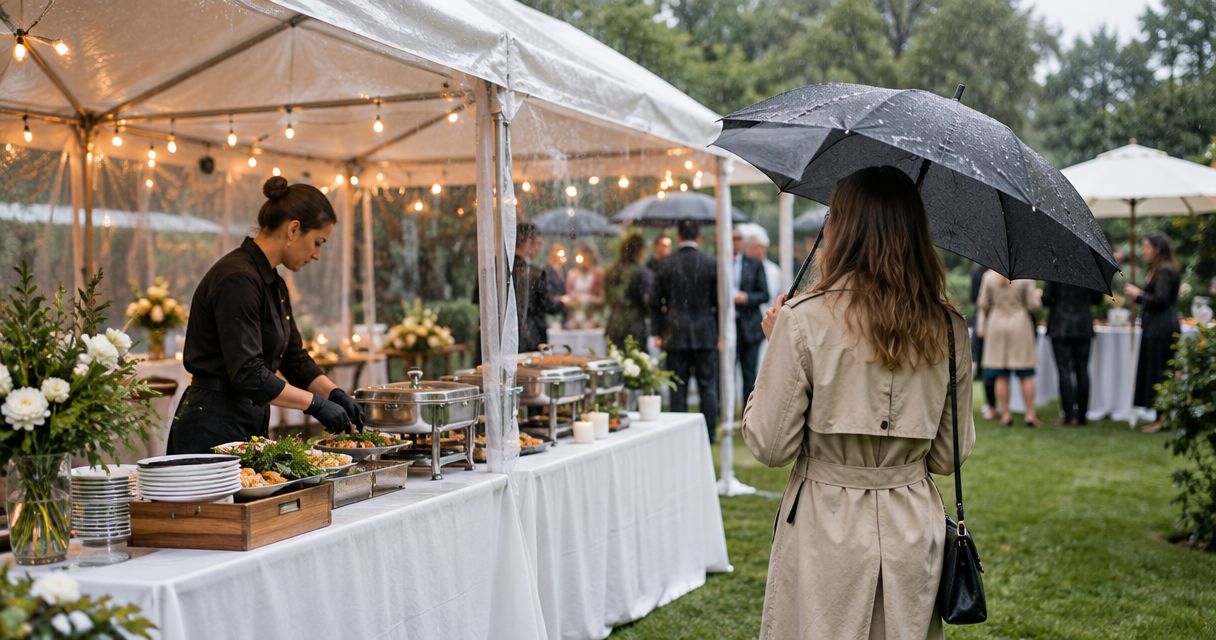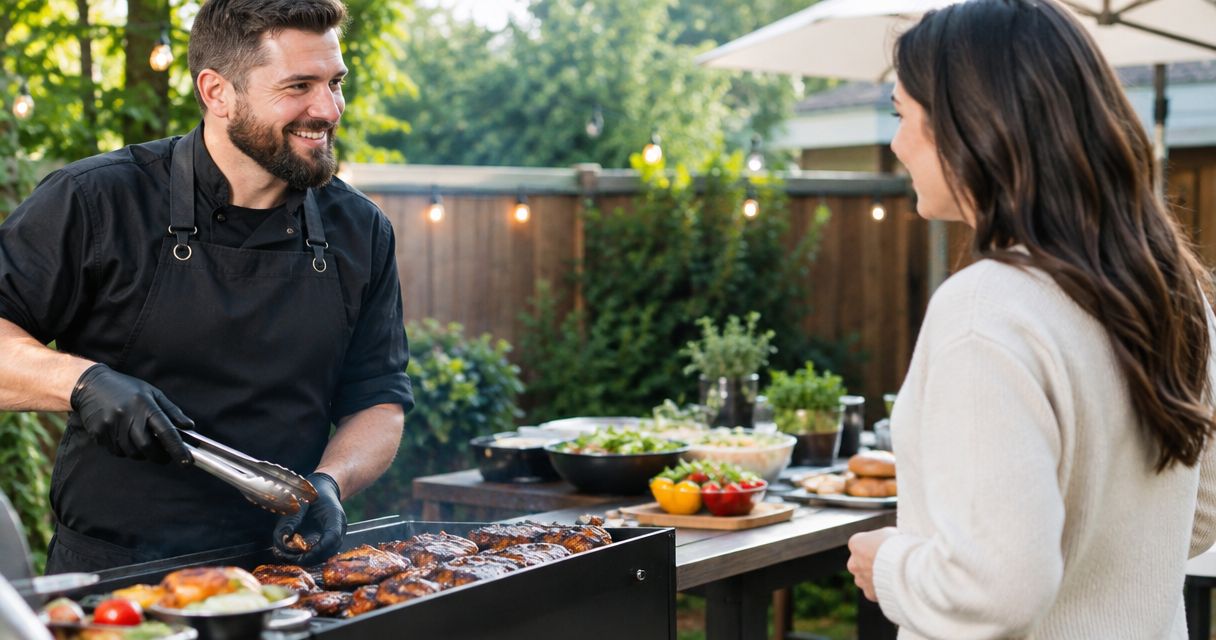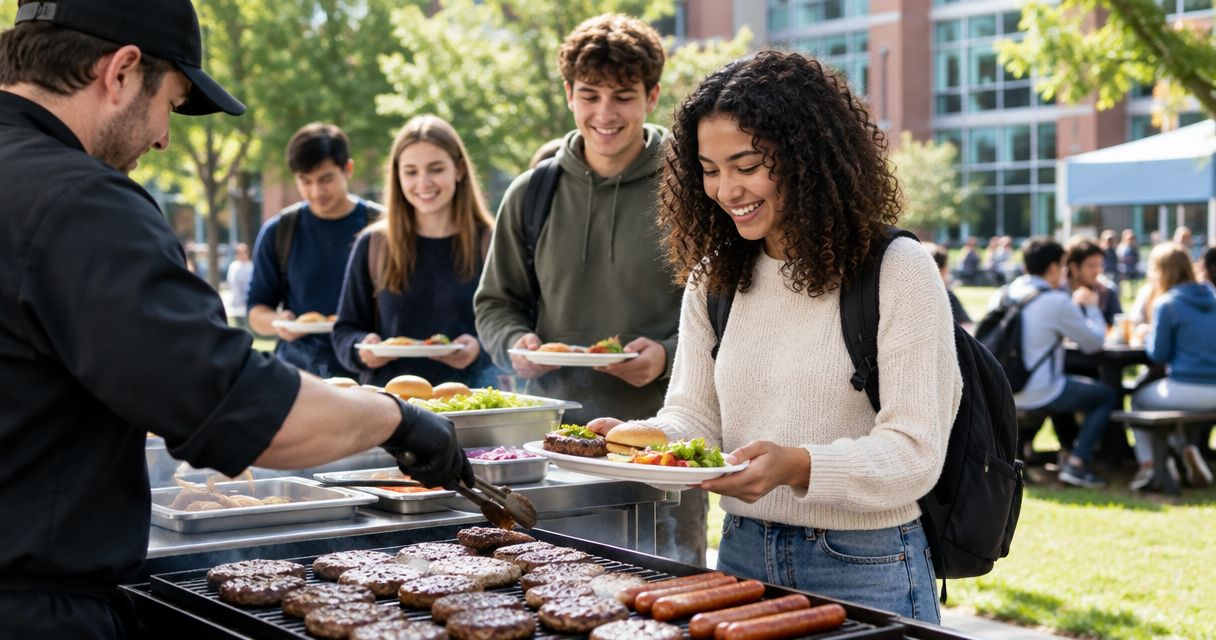
School and university BBQ catering is event meal service built around barbecue, with the aim of feeding your campus community within its schedule, dietary requirements, and purchasing rules. This 2026 guide covers BBQ catering for schools and universities, where student supervision, campus access, and short meal windows matter as much as what’s on the plate.
- BBQ catering for schools and universities starts with campus approval, dietary requirements, and a workable serving schedule.
- DG&G Gravy Train Catering offers BBQ and soul food for gatherings across the Charlotte metro area.
- Choose staffed service when your campus cannot assign people to food handling and replenishment.
- Approve ingredients and food-safety responsibilities before confirming the menu.
Why BBQ catering matters for schools and universities
A teacher appreciation lunch, student organization banquet, and alumni tailgate need different plans. Teachers need meals that fit their breaks. Student organizers need clear purchasing approval. Alumni events need directions that get guests and the caterer to the same place.
Choose the service format before choosing the menu. A savory spread loses its appeal when guests spend their meal break waiting or the delivery arrives at a locked loading entrance.
For Charlotte-area events, DG&G Gravy Train Catering is a Salisbury-based BBQ and soul food caterer serving weddings, corporate events, church gatherings, and private parties. DG&G Gravy Train Catering is best for Charlotte-area organizers seeking BBQ and soul food catering for a gathering rather than a campus dining program. Ask about your specific campus event, required documents, and service arrangements before making a commitment.
For your 2026 event, separate an occasional catered gathering from regular student meal service. Confirm which campus rules apply; an event menu is not a substitute for an approved school nutrition program.
Plan your campus BBQ event step by step
1. Define the audience and meal window
Start with a shared document or spreadsheet. Record who is eating, when they can leave their activities, and who has authority to approve the order. That gives every later decision a clear purpose.
Count guests by group rather than combining everyone into a single estimate. Students, employees, volunteers, and visiting families can arrive at different times. Your serving plan needs to reflect those differences.
For a 2026 graduation celebration, distinguish ceremony attendance from meal attendance. A family watching the ceremony does not automatically belong in the catering count.
- Name the event owner and purchasing approver.
- Separate confirmed diners from invited guests.
- Record meal windows for each attending group.
- Identify seated dining, standing reception, or takeaway needs.
- Set the deadline for submitting the final attendance count.
2. Secure campus approval before requesting a menu
Contact your school office, campus dining department, or event coordinator before approaching outside caterers. Ask whether the venue allows outside food and which purchasing, insurance, and access requirements apply.
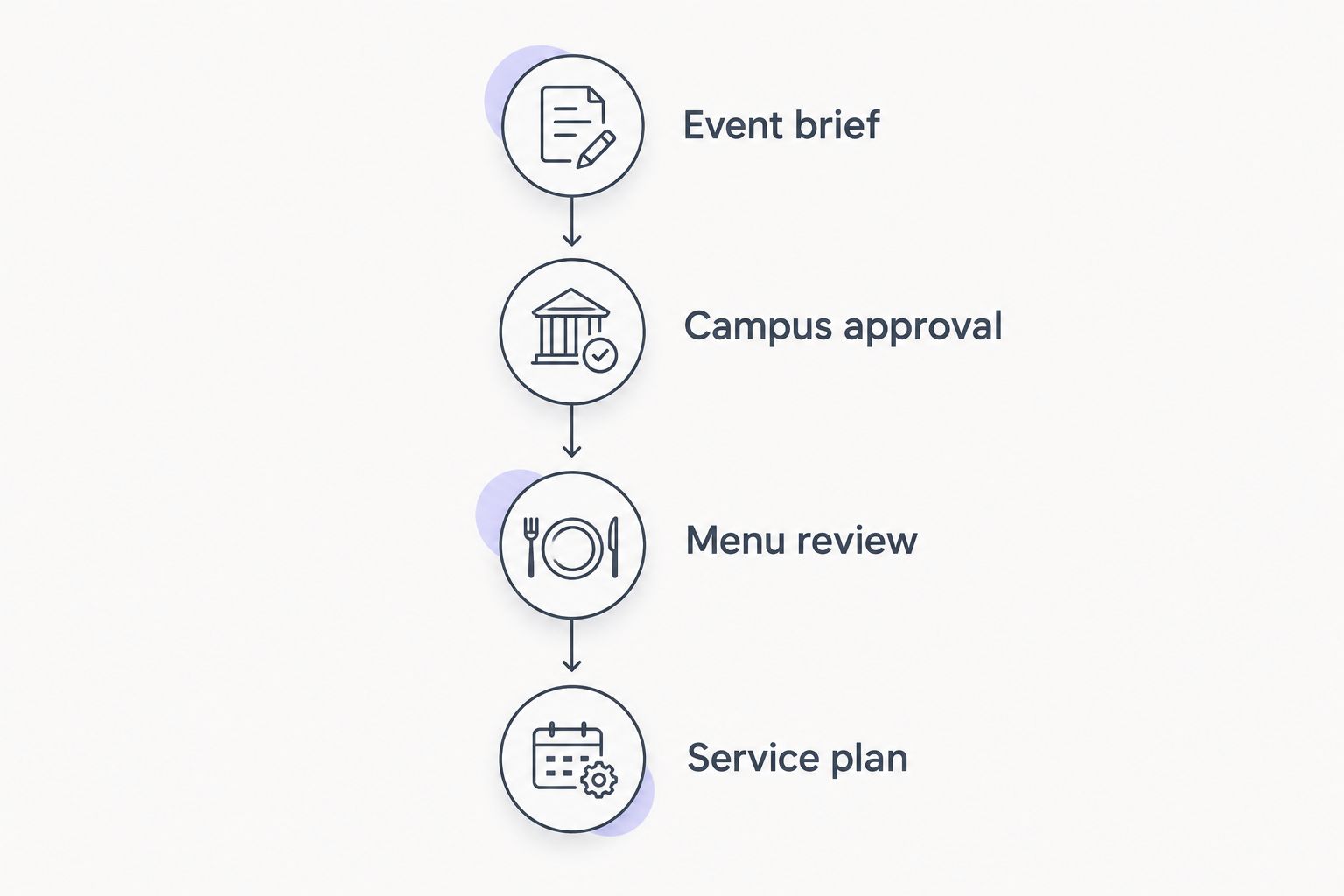
Keep the approval sequence simple: Event brief, Campus approval, Menu review, then Service plan. Work through those decisions in order instead of spending time on a menu that the venue cannot accept.
A student club’s preferred caterer still needs the institution’s approval. Likewise, a parent volunteer should not assume that permission for a fundraiser also covers food preparation or service on school grounds.
- Ask about outside-caterer restrictions and existing dining agreements.
- Request the required vendor paperwork and submission deadlines.
- Confirm who can sign the catering agreement.
- Check rules for parking, building access, and serving equipment.
- Get approval for the indoor backup location.
3. Build the menu around documented dietary needs
Collect dietary requirements through the campus’s approved process before selecting dishes. Ask for the information needed to plan safely without sharing students’ personal details unnecessarily.
Create a proposed meal structure first: a barbecue main, an appropriate meat-free main, sides, and drinks. These are categories to discuss, not a confirmed caterer menu. A vegetarian guest needs a satisfying meal, not just whatever remains after the meat is removed.
DG&G Gravy Train Catering provides BBQ and soul food catering; bring your completed event brief to the menu discussion. A single written brief lets you ask focused questions about ingredients and preparation without restarting the conversation for every dish.
A menu label does not establish allergy safety. Ask about ingredients, shared equipment, sauces, garnishes, and serving utensils.
- Collect vegetarian, vegan, religious, and allergy-related requirements separately.
- Request ingredient information for each proposed dish.
- Ask whether vegetables contain meat, stock, butter, or cheese.
- Confirm whether sauces and dressings can be served separately.
- Route allergy questions through the designated campus contact.
4. Compare service formats against your staffing capacity
Write down what campus staff and volunteers can actually do. Receiving food is not the same as setting up equipment, monitoring temperatures, replenishing trays, and cleaning the room afterward.
Drop-off service suits an event with a capable receiving team. Staffed service suits an event that needs catering personnel to manage the agreed food-service tasks. Individually packaged meals suit staggered collection, but packaging alone does not solve dietary identification or temperature control.
Ask DG&G Gravy Train Catering which arrangements are available for your event rather than assuming every format is offered. Assign every task to a named person or team before confirming service.
- Identify who receives and checks the delivery.
- Assign setup, serving, replenishment, and cleanup responsibilities.
- Confirm who supplies utensils, trays, and holding equipment.
- Ask how dietary meals will be identified and handed out.
- Record the agreed service scope in writing.
5. Design the serving area around movement
Walk the route from the delivery vehicle to the serving location. Check doors, stairs, elevators, unloading restrictions, and the space needed to carry food without crossing a crowd.
Place the food line where guests can approach and leave without blocking classrooms, entrances, or accessible routes. Where the venue permits, put drinks and tableware away from the main food pickup point so those tasks do not stop meal service.
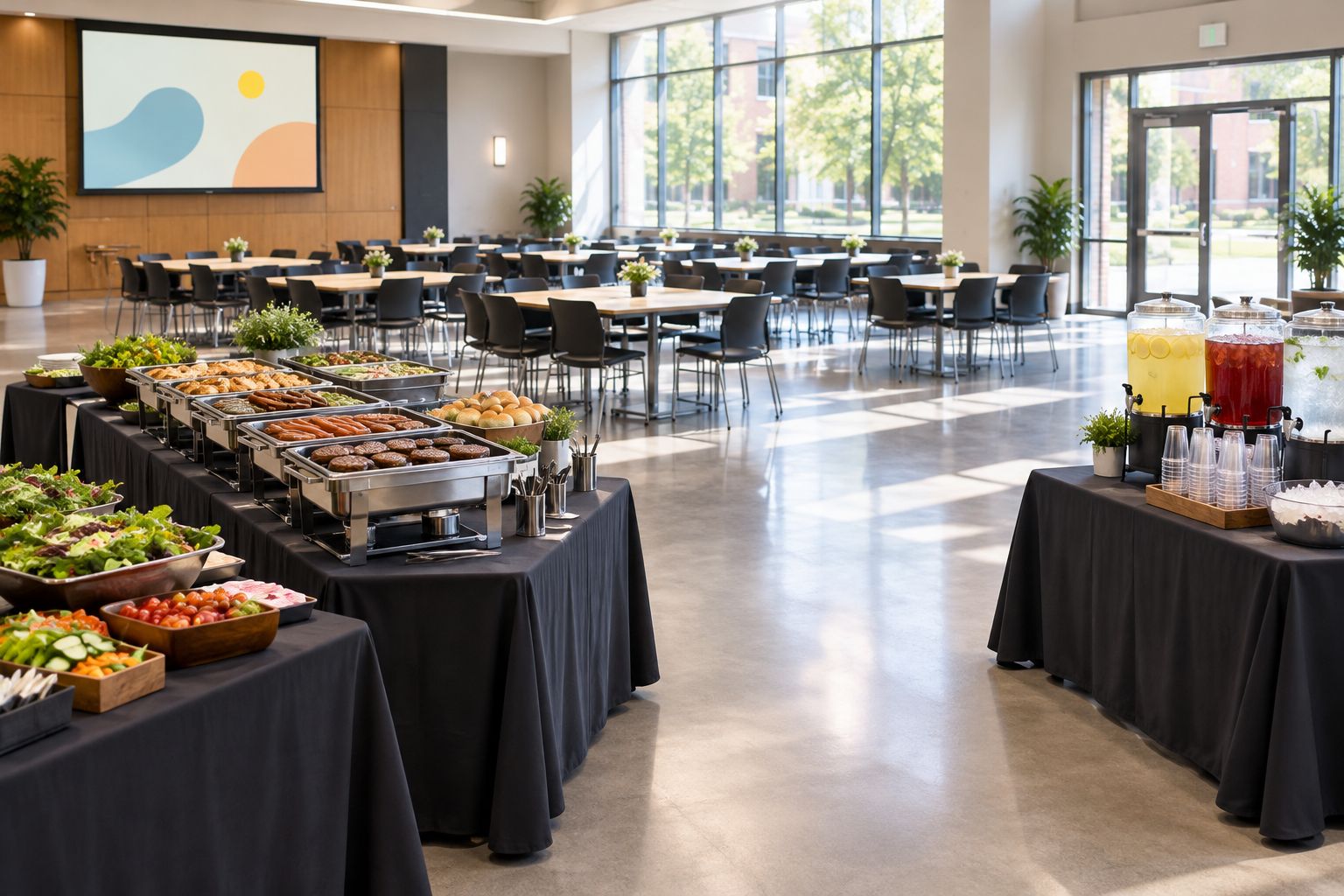
For younger students, decide how supervision continues during meal service. For university events, tell guests whether they need registration confirmation or another check-in step before collecting food.
- Mark the receiving point on the event instructions.
- Keep serving queues away from exits and accessible routes.
- Separate drinks from food pickup where space allows.
- Assign supervision and check-in duties outside food handling.
- Test the indoor layout before approving the outdoor plan.
6. Assign food-safety responsibility from arrival to cleanup
Use your campus’s food-safety requirements and the applicable local rules. USDA consumer food-safety guidance recommends keeping hot food at 140°F or above and cold food at 40°F or below. These consumer guidelines do not replace commercial food-service requirements or campus procedures.
USDA also advises refrigerating perishable food within 2 hours, or 1 hour when the temperature is above 90°F. Those limits matter at outdoor campus gatherings, where food can sit out while guests attend activities.
Name the person responsible for checking food, monitoring service, and deciding what happens to leftovers. Do not leave that decision to whichever volunteer happens to be nearby.
- Confirm which holding and temperature-checking procedures apply.
- Assign responsibility for monitoring food throughout service.
- Provide the required handwashing and food-handling facilities.
- Use separate serving utensils and follow the agreed allergy plan.
- Follow campus rules for leftovers, storage, and disposal.
7. Confirm the final brief and review the event
Bring the decisions together in one document. Include attendance, approved dishes, service responsibilities, delivery directions, dietary arrangements, and the campus contact who can resolve problems on the day.
Request a written scope before authorizing payment. Check whether equipment, service labor, drinks, tableware, setup, and cleanup are included or handled separately. A menu description alone does not answer those questions.
After your 2026 event, record what happened while the details are fresh. Keep the review practical: arrival problems, waiting, remaining food, and whether every dietary meal reached the right guest.
- Send the same final brief to the caterer and campus lead.
- Confirm the process for attendance or menu changes.
- Reconfirm delivery access and the event-day contact.
- Record guest feedback and service problems after the event.
- Save the approved brief as a template for the next gathering.
Discuss Your Campus BBQ Event
Share your location, meal window, guest count, and dietary requirements.
Compare catering options for your campus event
Choose based on the work your campus can support, not just the way the meal looks. The formats below are planning options to discuss with approved providers; they are not a list of confirmed services from any particular caterer.
| Option | Best for | Main advantage | Key limitation |
|---|---|---|---|
| Campus dining service | Events subject to campus dining requirements | Works through the institution’s established food-service process | Outside barbecue menus require discussion and approval |
| Drop-off BBQ buffet | Gatherings with assigned food-service support | Lets your team manage setup and the serving schedule | Receiving, holding, replenishment, and cleanup need clear ownership |
| Staffed BBQ buffet | Events needing help managing meal service | Places agreed serving tasks with catering personnel | Duties still need a written scope and campus approval |
| Individually packaged meals | Staggered breaks or scheduled collection | Separates each guest’s meal for handoff | Requires accurate labels, counts, and holding arrangements |
| Volunteer-prepared meal | Gatherings where campus policy permits volunteer preparation | Lets the community participate directly | Preparation, facilities, food safety, and supervision need approval |
Best for a short meal window: choose the format that reduces decisions at the serving point. Clear meal identification and an agreed collection process matter more than adding another dish.
Common mistakes school and university organizers make
Treating an event meal as a school meal program
A celebration and regular student meal service have different purposes. If your event connects to a reimbursable meal program, take the menu to the school nutrition director before placing the order. Do not assume a barbecue plate meets program requirements.
Counting dietary guests without planning their meal
A note saying “vegetarian guests attending” is incomplete. Identify the actual main dish, ingredients, utensils, labeling, and handoff process. Give the guest a clear way to find their meal without announcing private information to the room.
Sending delivery instructions without an unloading plan
A campus street address does not identify the usable entrance. Provide the building, receiving door, parking instructions, access restrictions, and contact person. Check whether the route remains open during dismissal, a ceremony, or another scheduled activity.
Expecting teachers or student volunteers to handle everything
A person supervising students cannot automatically leave that duty to replenish trays. Separate student supervision, event check-in, and food-service responsibilities. If the available team cannot cover the work, change the service format rather than leaving gaps.
Leaving leftovers to an informal decision
Do not promise take-home food before checking the campus policy and storage plan. Decide who evaluates leftovers, where permitted food goes, and who handles disposal. That decision belongs in the event brief, not in a conversation after cleanup starts.
FAQ
What’s the best BBQ catering format for a school event?
The best format matches the school’s approval rules, meal window, and available staff. Choose drop-off only when a designated team can receive, hold, serve, and clean up the food; discuss staffed service when those responsibilities need outside support.
Can a university student organization hire an outside BBQ caterer?
A university student organization needs to follow its institution’s outside-catering and purchasing rules. Ask campus dining or the event office about approved vendors, required documents, and who can authorize the agreement.
Can BBQ catering accommodate vegetarian students and food allergies?
Dietary accommodation depends on the actual dishes, ingredients, preparation practices, and serving arrangements. Request a substantive meat-free meal and have allergy questions reviewed through the designated campus process before confirming the menu.
Is a BBQ buffet better than individually packaged meals?
A BBQ buffet suits a shared meal period, while individually packaged meals suit scheduled collection or staggered breaks. Both formats require appropriate food holding, dietary identification, and clear responsibility for service.
Does DG&G Gravy Train Catering cater school events in Charlotte?
DG&G Gravy Train Catering is based in Salisbury and serves BBQ and soul food for gatherings across the Charlotte metro area. Ask directly about your school or university event, campus requirements, and the service arrangements you need.
What should go into a campus catering request for 2026?
Include the event location, meal window, attendance count, dietary requirements, campus approval conditions, and requested service responsibilities. Add delivery access, equipment needs, cleanup duties, and the event-day contact so the request covers more than food.
What food-safety temperatures should organizers discuss with the caterer?
USDA consumer guidance recommends hot holding at 140°F or above and cold holding at 40°F or below. Campus events must also follow applicable commercial food-service rules and institutional procedures, with a named person responsible for monitoring.
One last thing
For your next 2026 campus gathering, walk the delivery route with the person receiving the food. Start where the vehicle stops and finish where guests collect their meals. A clear route and an accountable receiving contact are part of the catering plan, just like the menu. Y’all can keep the welcome warm without leaving the logistics to chance.