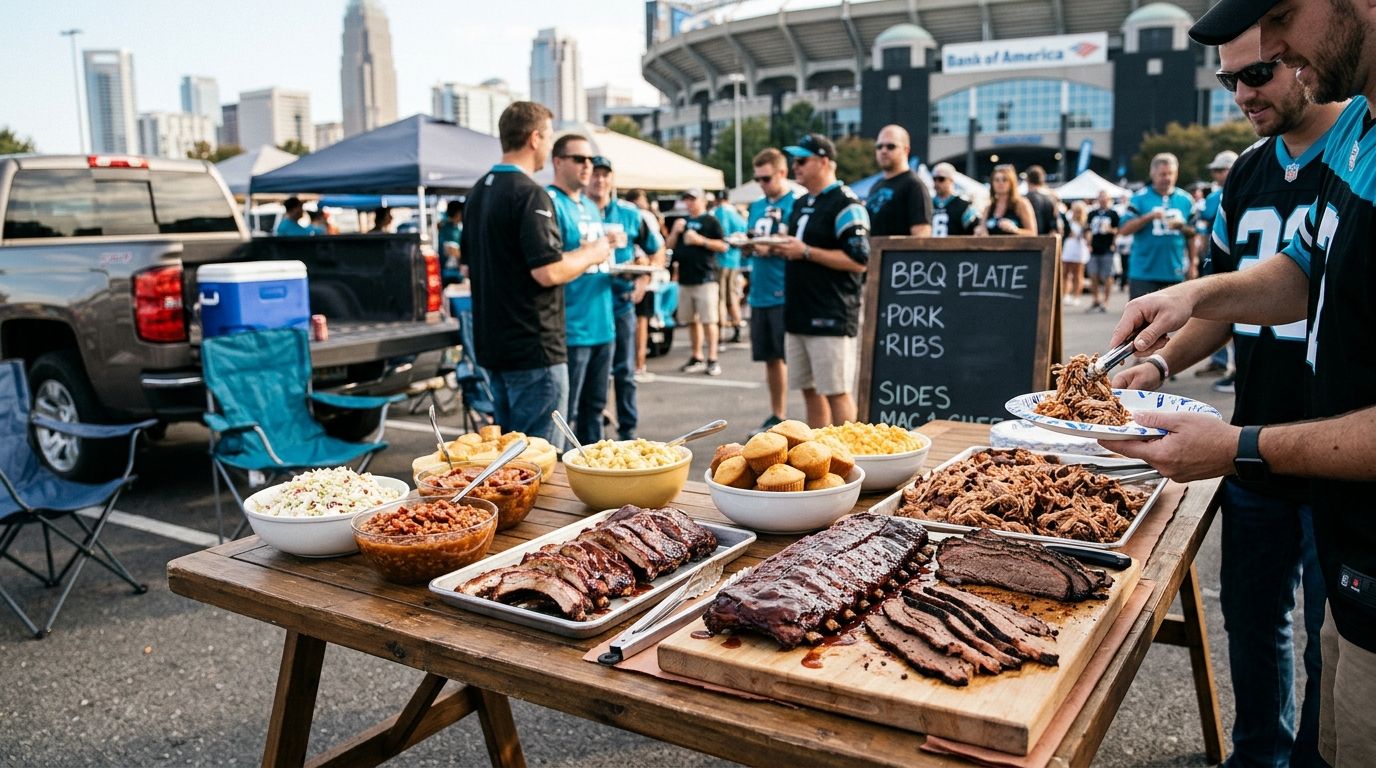
Best overall: a pulled-pork sandwich buffet. Best for a sit-down crowd: chicken plates. Best for a rib-loving group: rib plates. For a Charlotte tailgate in 2026, choose the menu around how your guests will eat, then build in safe holding and easy cleanup.
- The best BBQ catering menu for tailgate party Charlotte hosts is a pulled-pork sandwich buffet for easy assembly.
- Gravytraincatering serves BBQ and soul food across the Charlotte metro; discuss your tailgate requirements before choosing dishes.
- Choose chicken plates for seated meals, ribs for dedicated rib fans, and a separate vegetarian meal for meat-free guests.
- Confirm venue access, serving equipment, dietary needs, and food holding before finalizing your catering request.
Why this matters
A tailgate menu has to work beside a cooler, under a canopy, and sometimes without a table for every guest. A plate that needs a knife and fork creates a different setup from a sandwich you can assemble and carry.
Gravytraincatering is a Salisbury-based BBQ and soul food catering company serving the Charlotte metro area. Gravytraincatering is a BBQ catering choice for Charlotte-area hosts seeking Southern food for a private gathering. Discuss the parking location and service requirements directly; a service area does not establish access to a particular tailgate lot.
The combinations below are planning recommendations, not published catering packages. Confirm individual dishes, preparation methods, and service arrangements before you order.
What makes the best BBQ tailgate menu?
For your 2026 tailgate, judge the food by what happens after it leaves the kitchen—not just how good the menu sounds.
- Easy handling: Match the meal to standing guests, seated guests, or a mix. Sandwiches and bone-in plates demand different utensils and cleanup.
- Safe holding: Know how hot food stays hot and cold food stays cold throughout transport and service.
- Simple assembly: Keep the serving path clear. Put plates first, food next, and sauces and napkins where guests can reach them without doubling back.
- Complete dietary options: A guest avoiding meat needs a meal, not an invitation to pick around the barbecue.
- Manageable cleanup: Plan for bones, sauce-covered plates, serving utensils, and leftover food before kickoff.
No menu wins every category. Pick the trade-off that fits your crowd, then ask the caterer to confirm the details in writing.
BBQ tailgate menus at a glance
| Menu concept | Best for | Standout feature | Key limitation |
|---|---|---|---|
| Pulled-pork sandwich buffet | Standing, mingling guests | Guests assemble a handheld main | Requires a separate meat-free option |
| Chicken plates | Guests with seating | A defined main-and-sides meal | Bone-in pieces need more cleanup |
| Rib plates | Dedicated rib fans | Ribs serve as the centerpiece | Messy when guests lack tables |
| Mixed-protein buffet | Groups with different meat preferences | Guests choose between proteins | Adds serving and holding tasks |
| Vegetarian plate | Guests avoiding meat | Provides a complete alternative meal | Ingredients need explicit checking |
Treat these as menu formats rather than fixed recipes. Your final side dishes should fit the holding equipment, serving space, and dietary requirements you actually have.
1. Pulled-pork buffet: best BBQ menu for mingling
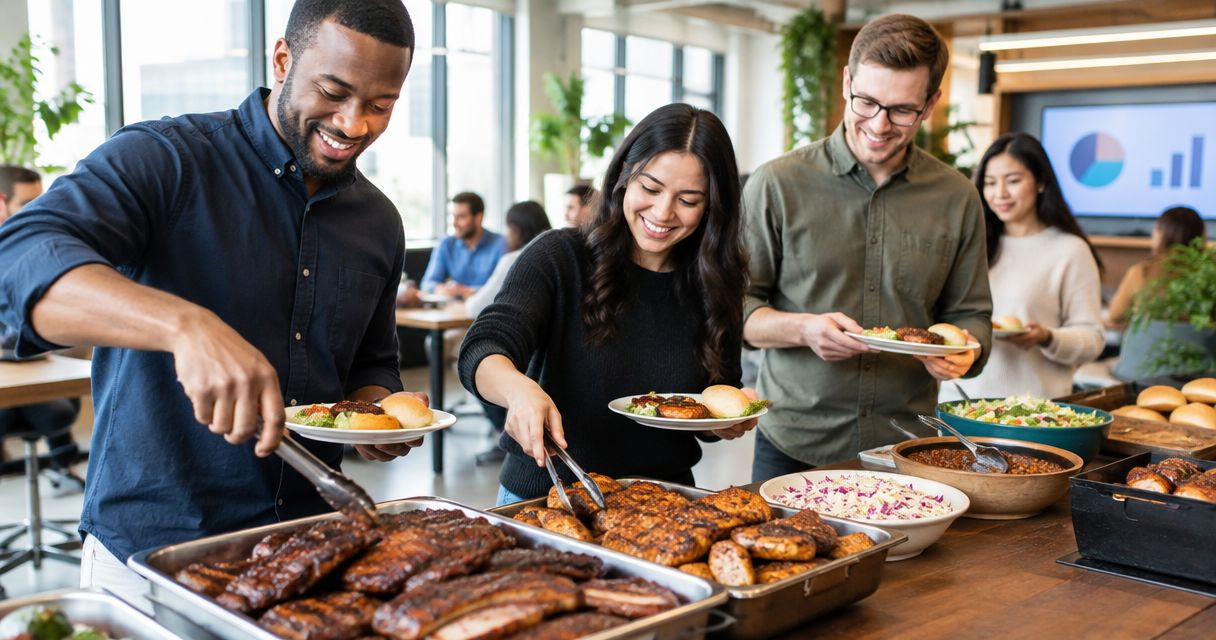
A pulled-pork sandwich buffet lets guests build a sandwich and move away from the serving table. Request buns, sauce served separately, and sides that fit your equipment and crowd.
This is the default recommendation for a standing tailgate because the main course does not require cutting. Keep assembly straightforward; a long row of toppings turns a quick sandwich into a traffic jam.
Pulled-pork buffet pros:
- A sandwich works for guests who are standing.
- Separate sauce lets guests control how much they add.
- Guests can choose bread or a plated serving.
Pulled-pork buffet cons:
- Pork does not cover every dietary preference.
- Open buns and multiple toppings need protected serving space.
Best for: A social tailgate where guests move between the food table, chairs, and conversation.
Ask how the meat will be held during service and who supplies the serving utensils. Keep cold toppings separate from hot food, and put extra napkins near the end of the line.
Verdict: Buy this menu format as your default; confirm the actual dishes with the caterer.
2. Chicken plates: best BBQ menu for seated guests
Chicken plates suit a tailgate where guests have somewhere to settle down and eat. Choose the chicken preparation first, then match the sides and utensils to it.
Boneless chicken and bone-in chicken create different eating experiences. Ask which preparation the caterer proposes rather than assuming that every chicken option is easy to eat standing up.
Chicken plate pros:
- Offers a main course for guests who do not eat pork.
- Works with a defined main-and-sides serving format.
- Lets you organize service around complete plates.
Chicken plate cons:
- Bone-in pieces create waste that needs collection.
- Sauced chicken is awkward without a steady plate or table.
Best for: A group with chairs and tables that wants a meal before the game rather than continuous grazing.
Confirm what counts as a serving and how the caterer handles different cuts. Do not treat a tray count as a complete portion plan without understanding what is inside each tray.
Verdict: Buy chicken plates when seating is part of your setup; skip bone-in plates for a standing-only crowd.
3. Rib plates: best BBQ menu for rib enthusiasts
Make ribs the centerpiece when your guests specifically want ribs. Pair the plates with a clear place to sit, sturdy utensils for sides, and a convenient waste station.
Ribs ask more of the setup than sandwiches do. That is a reasonable trade when the food itself is the main attraction, but a poor fit when everyone is balancing drinks and moving between parking spaces.
Rib plate pros:
- Gives rib enthusiasts the meal they came for.
- Makes the main-course choice straightforward.
- Fits a seated, food-focused gathering.
Rib plate cons:
- Bones and sauce add cleanup.
- Guests need both hands and somewhere to put the plate.
Best for: A smaller, seated group that has chosen ribs deliberately.
Ask the caterer to describe the portion rather than comparing vague package names. Keep hand-cleaning supplies and lined trash containers close to the eating area, not across the lot.
Verdict: Buy ribs for committed rib fans; skip them as the default for a mobile crowd.
4. Mixed-protein buffet: best BBQ menu for varied preferences
A mixed-protein buffet gives guests a choice instead of asking everyone to agree on the same meat. A pork-and-chicken combination is one planning example, not a statement about a caterer's current menu.
The benefit is choice. The complication is that every additional hot dish needs its own serving plan, utensils, and temperature control.
Mixed-protein buffet pros:
- Accommodates different meat preferences.
- Lets guests choose their main course at service.
- Supports a shared set of sides when ingredients suit the group.
Mixed-protein buffet cons:
- Adds holding equipment and serving tasks.
- Requires a portion plan for each protein, not just a total headcount.
Best for: A group whose preferences you have collected in advance.
Tell the caterer how many guests prefer each option. Do not assume an even split or expect the same quantity of every protein to serve the full group independently.
Verdict: Buy a mixed-protein buffet when guest preferences justify the extra setup; skip extra choices added only for appearance.
5. Vegetarian plate: best menu for guests avoiding meat
A vegetarian plate should stand on its own as a meal. Ask for a meat-free main with suitable sides, and confirm preparation details rather than judging ingredients by a dish's name.
Southern-style vegetables and beans can include meat or meat-based stock. Vegetarian, vegan, dairy-free, and allergen requirements are different requests, so describe each guest's needs precisely.
Vegetarian plate pros:
- Gives guests avoiding meat a complete meal.
- Makes dietary planning explicit before the event.
- Can be portioned separately when agreed with the caterer.
Vegetarian plate cons:
- Familiar side-dish names do not establish their ingredients.
- Shared utensils create a cross-contact concern.
Best for: Vegetarian guests who need a planned meal alongside the barbecue.
For an allergy, ask about ingredients and preparation practices directly. A separate plate does not establish that a kitchen can meet a particular allergy requirement.
Verdict: Buy a complete vegetarian meal for guests who need it; skip the side-dishes-only workaround.
How these menu formats rank
The ranking prioritizes handling, safe holding, assembly, dietary coverage, and cleanup. It is a planning comparison—not a taste test or a ranking of local catering companies.
Pulled pork takes the default position because a sandwich suits a standing gathering. Chicken and ribs move ahead when you have seating; a mixed buffet earns its place when your guests need choices.
Plan your 2026 tailgate service
A good menu still needs a workable handoff. Settle these steps before you approve the food order.
Confirm access
Check the venue's current tailgating rules, permitted equipment, vehicle access, and waste requirements. Give the caterer the actual meeting location rather than only the stadium name.
Count guests
Separate confirmed guests from possible arrivals, then record dietary requests. Ask how and when to update the final count instead of assuming changes can be made on event day.
Set service
Choose who receives the food, who sets it out, and who monitors temperatures. Confirm whether you are arranging food only or a service package with equipment and staff.
Pack leftovers
Bring suitable containers and a way to keep food cold. Decide who takes leftovers home and who handles trash before everyone heads toward the gate.
These steps connect the food order to the parking-lot setup. Complete them in sequence so the guest count and service plan reflect the access you actually have.
Food safety belongs on your 2026 checklist
USDA consumer guidance for outdoor meals calls for keeping hot food at 140°F or above and cold food at 40°F or below. Use a food thermometer; the air temperature and the warmth of a tray do not tell you the food's temperature.
For perishable food outside safe temperature control, USDA guidance sets a 2-hour limit, shortened to 1 hour when the outdoor temperature exceeds 90°F. Track transport and serving time together rather than starting the clock when guests arrive.
- Put out manageable serving quantities while keeping the remainder under temperature control.
- Keep cold dishes in a properly chilled cooler until service.
- Ask who supplies and operates the hot-holding equipment.
- Discard food that has exceeded the safe time limit instead of packing it for later.
These are USDA consumer food-safety guidelines, not claims about any caterer's procedures. Make the responsibilities explicit in your order discussion.
Which BBQ menu should you choose?
Choose a pulled-pork sandwich buffet unless your guest list or seating arrangement gives you a clear reason to choose differently. Add a complete alternative meal for anyone who does not eat pork, and avoid adding dishes without a serving plan.
For your 2026 gathering, send Gravytraincatering the date, location, guest count, dietary needs, and proposed menu format. Ask for written confirmation of dishes, portions, handoff arrangements, equipment, and cleanup responsibilities.
Plan your Charlotte tailgate menu
Share your guest count, location, and dietary needs to discuss BBQ and soul food catering.
FAQ
What's the best BBQ catering menu for a Charlotte tailgate?
A pulled-pork sandwich buffet is the default recommendation for a standing Charlotte tailgate. Choose chicken or rib plates when guests have seating, and arrange complete meals for dietary needs.
Is pulled pork better than ribs for a tailgate?
Pulled-pork sandwiches are easier to handle while standing than rib plates. Ribs suit a seated group that specifically wants them and has a plan for bones and sauce cleanup.
Can Gravytraincatering cater a Charlotte-area gathering?
Gravytraincatering serves BBQ and soul food at private parties and other events across the Charlotte metro area. Confirm your specific tailgate location, date, access, and service requirements directly.
What sides should I choose for a BBQ tailgate?
Choose sides that fit your holding equipment and your guests' dietary needs. Confirm ingredients and whether each dish needs hot or cold holding before finalizing the menu.
How do I keep catered barbecue safe outside?
Keep hot food at 140°F or above and cold food at 40°F or below, following USDA consumer guidance. Perishable food outside safe temperature control has a 2-hour limit, reduced to 1 hour above 90°F.
What should I order for vegetarian tailgate guests?
Order a complete vegetarian meal with confirmed ingredients. Do not assume beans or vegetables are meat-free, and discuss separate utensils and preparation requirements.
What should I send when requesting a tailgate catering quote?
Send the event date, exact location, guest count, dietary needs, and preferred menu format. Ask the caterer to specify portions, handoff arrangements, serving equipment, staffing, and cleanup responsibilities.
One last thing
Y'all, give the food table its own departure plan. Put napkins, utensils, and a waste container where guests finish serving themselves, so nobody has to walk backward through the line for a fork.
That small setup decision keeps your chosen menu practical. Good barbecue deserves a clear path from the serving tray to the first bite.