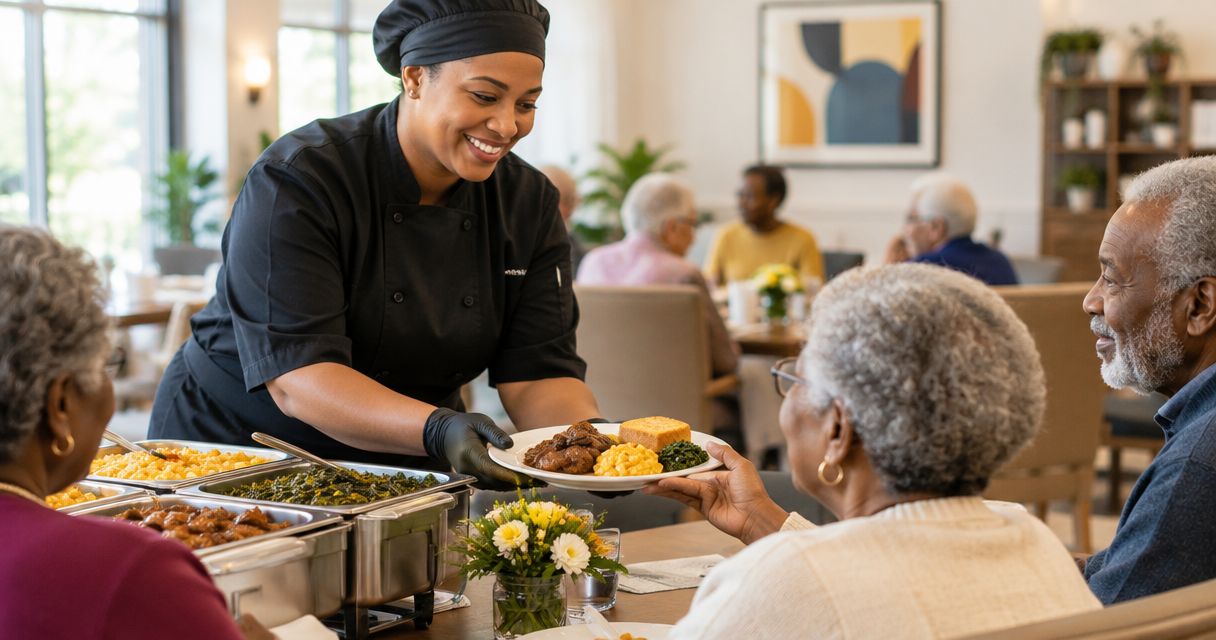
Senior living soul food catering is event meal service built around Southern dishes, with the aim of bringing residents together over food they enjoy. Soul food catering for senior living communities works best when resident preferences, individual diet orders, and dining-room support shape the menu—not the other way around.
- Soul food catering for senior living communities starts with resident preferences and approved dietary requirements.
- Gravytraincatering offers BBQ and soul food catering; confirm resident-specific preparation and service needs before booking.
- Choose buffet, delivery, or staffed service according to resident assistance needs and available community staff.
- Keep food safety responsibilities, ingredient information, and meal identification in the written event plan.
Why soul food catering matters for senior living communities
A catered supper brings different responsibilities in senior living than at a neighborhood cookout. You are planning a social occasion while protecting each resident's ability to eat comfortably and follow an established care plan. Independent living, assisted living, and nursing settings need different arrangements; do not treat them as interchangeable.
Start with the occasion. A resident celebration, family visitation meal, or church gathering needs its own serving plan. For celebration ideas, the soul food menu guide for a retirement party provides a related starting point, but your community's dietary review comes first.
For your 2026 events, judge a proposal by more than the dishes listed. Ask who will verify ingredients, identify individual meals, assist residents, and maintain safe holding conditions. The strongest menu is one your team can serve correctly and residents actually want to eat.
How to plan a resident-centered catered meal
Use these steps before approving a menu or signing an event agreement. Your dining lead should coordinate the plan with the staff responsible for resident care, rather than leaving dietary decisions to the activity calendar alone.
Ask residents what belongs on the table
Begin with a conversation, not a preset tray selection. Ask residents which Southern dishes they enjoy, how they like them prepared, and what makes a celebration meal feel special. Soul food is not one fixed menu, and a familiar dish name does not guarantee a familiar recipe.
Use a paper survey, resident council discussion, or dining-room conversation before requesting proposals. Invite family input when appropriate, but keep residents' own preferences at the center. Ask about dislikes as well as favorites; a popular main dish does not settle the choice of vegetables, seasoning, or dessert.
Record the occasion on your 2026 activities calendar and explain whether the catered meal replaces regular dining or supplements it. Residents who decline the special menu still need an appropriate meal. That alternative belongs in the plan from the start, not in a hurried conversation at serving time.
- Collect favorite dishes, disliked ingredients, and preferred preparations.
- Separate resident feedback from family and staff suggestions.
- Identify an approved alternative for residents declining the event menu.
- Confirm whether families, visitors, and staff will also eat.
Turn dietary requirements into a written brief
Review individual requirements through your community's authorized dietary and clinical process. A resident's age does not tell you whether they need a particular sodium level, carbohydrate plan, allergen exclusion, or texture modification. Never replace an individual order with a general request for senior-friendly food.
Build the brief manually using your approved meal records and a controlled event worksheet. Share only the information the caterer needs to prepare and identify meals. A named staff contact should resolve questions rather than allowing several people to issue conflicting instructions.
Keep food allergies, preferences, and prescribed diets distinct. They require different decisions. Likewise, tender meat is not automatically suitable for someone with swallowing difficulties, and removing visible nuts does not establish that a dish meets an allergy requirement.
Your community's qualified team must approve substitutions and any texture-modified meals. If an outside caterer cannot meet a requirement, arrange the resident's meal through an approved alternative instead of improvising.
- List approved dietary requirements separately from preferences.
- Request ingredient information for every proposed dish and sauce.
- Confirm cross-contact procedures for relevant food allergies.
- Assign one authorized contact for dietary questions.
Match the caterer to the approved brief
Write the event requirements yourself before contacting vendors. Include the location, occasion, serving arrangement, dietary review process, and responsibilities you expect the provider to accept. This gives you a consistent basis for comparing proposals instead of comparing appealing menu descriptions.
Gravytraincatering is best for Charlotte-area planners seeking BBQ and soul food catering, with resident-specific requirements confirmed before booking. The company is based in Salisbury, NC, and serves events across the Charlotte metro area. Review Gravytraincatering as a local catering option, then ask whether the proposed event and its requirements fit the company's services.
A caterer can take preparation work off your community's kitchen when the agreed scope covers it. That convenience does not establish clinical diet capability, staffing coverage, or responsibility for service equipment. Put those questions in your 2026 event brief and obtain written answers before making a decision.
- Send every candidate the same event and dietary brief.
- Confirm service coverage for the actual community address.
- Request written answers about preparation and ingredient questions.
- Identify requirements the community must handle itself.
Build a menu residents can enjoy comfortably
Start with a draft menu and review each component with your dining lead. Consider the main dish, vegetables, starches, sauces, bread, and dessert individually. These are planning categories, not a claim that any caterer offers a particular dish or modification.
Keep flavor in the conversation, y'all. Residents should have a say in the meal, not just receive a menu built around restrictions. Ask how seasoning, sauces, and serving presentation can support enjoyment within approved requirements. Do not assume a dish becomes suitable simply because a sauce is served separately.
Check practical details too: bones, tough skins, crumbly textures, and difficult packaging need attention when they conflict with individual eating needs. For prescribed texture modifications, follow the resident's approved plan rather than relying on visual judgment or the word soft.
A clearly identified alternate plate helps staff avoid sorting out substitutions while other residents wait. Decide where those meals will be held and who will receive them before opening the serving line.
- Review every menu component against approved resident requirements.
- Ask about bones, skins, sauces, and serving textures.
- Identify alternate meals before service begins.
- Keep approved meal identification attached through the handoff.
Choose service around residents' support needs
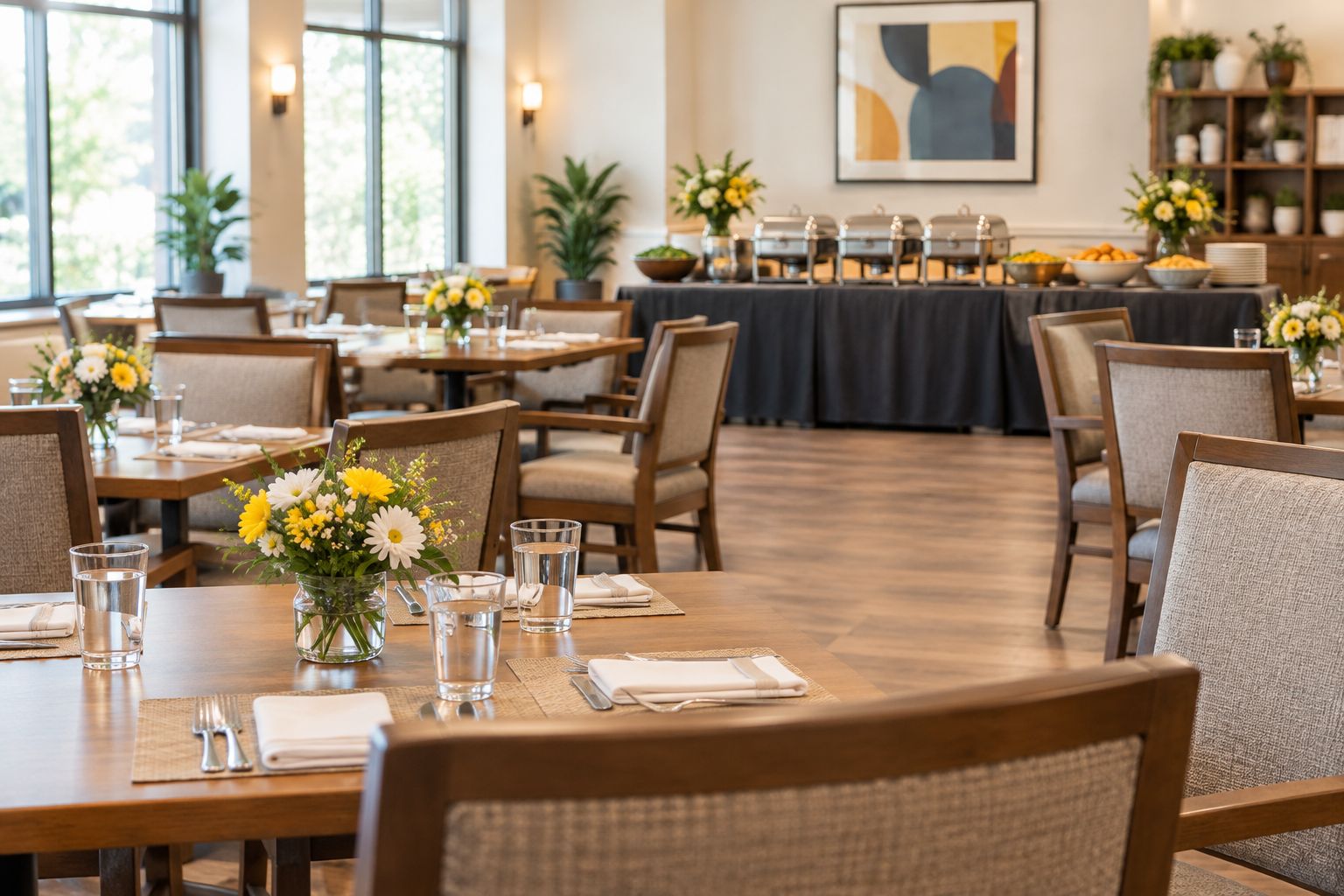
Draw the room layout on paper before deciding between buffet and table service. Mark dining tables, mobility routes, serving stations, and the place where staff will identify individual meals. Walk the route with the people who will actually serve dinner.
A buffet offers choice, but residents must be able to reach it and manage their plates, or receive assistance. Table service removes the need to carry food across the room, but someone must match each plate to the correct diner. Neither format eliminates your responsibility to arrange assistance.
Decide whether visitors will join residents at tables or use a separate serving arrangement. Family-style dishes can support a shared-table atmosphere, but communal serving utensils complicate allergen separation and meal identification. Use that format only when it fits the residents at that table.
Put responsibilities next to names. Outside service staff should not be assumed to provide feeding assistance or clinical support. Those tasks stay with appropriately assigned community personnel unless a separately approved arrangement says otherwise.
- Walk the serving route and keep mobility paths clear.
- Assign staff to meal identification and resident assistance.
- Explain the serving arrangement to residents and visitors.
- Keep shared utensils away from meals requiring separation.
Assign food safety duties before delivery
Food safety needs a named owner at every handoff. Ask who checks arriving food, supplies holding equipment, monitors temperatures, and manages leftovers. A delivery time alone does not answer any of those questions, and a covered pan does not establish safe holding conditions.
For your 2026 operating checklist, use the facility's applicable food code and approved procedures. The FDA Food Code, section 3-501.16, specifies hot holding at 135 °F or above and cold holding at 41 °F or below for foods requiring time and temperature control, subject to its stated exceptions. Your community's food safety lead should determine the procedures that apply to the event.
Include hand hygiene in the service briefing. CDC handwashing guidance calls for scrubbing hands for at least 20 seconds. Gloves and serving utensils do not replace the need to follow proper hygiene procedures.
Do not improvise a leftover distribution plan after dinner. Decide in advance whether food can be retained, who will handle it, and which approved cooling, storage, or disposal procedures apply.
- Assign receiving checks to a named staff member.
- Confirm holding equipment and temperature-monitoring responsibilities.
- Brief food handlers on handwashing and utensil use.
- Follow approved procedures for leftovers and disposal.
Confirm the handoff and review the meal
Bring the agreed details into one event sheet rather than leaving them scattered across messages. Include the approved menu, dietary exceptions, receiving contact, equipment responsibilities, meal identification method, and cleanup arrangements. Send the final version through your community's approval process.
Walk through the event with the caterer and your dining lead. Ask what happens if delivery is delayed, a label is unclear, or a dish does not match the approved order. Your backup needs to be something staff can carry out, not a promise to figure it out on the day.
After the meal, gather comments from residents and the staff who served them. Ask what tasted right, what was awkward to eat, and whether the room arrangement worked. Keep enjoyment and operational problems separate so a well-liked dish does not hide an identification or service failure.
Use those findings for the next event. Repeat the parts residents enjoyed, and correct the documented problems before repeating the menu.
- Distribute one approved event sheet to responsible staff.
- Confirm the escalation contact and backup meal arrangement.
- Record resident feedback alongside service observations.
- Update the next event brief with specific changes.
Compare catering and service options
Choose the format your community can support, not the one that looks simplest on a proposal. These are service arrangements to discuss with providers, not confirmed offerings from any particular caterer. Preparation, setup, assistance, and cleanup must each have an assigned owner.
| Option | Best for | Main advantage | Key limitation |
|---|---|---|---|
| Community-prepared meal | Communities keeping preparation under their own dining team | Direct coordination with existing meal procedures | Adds preparation and event work to the kitchen |
| Catered delivery with community service | Communities with staff and approved holding equipment | Separates outside preparation from resident-facing service | Receiving, holding, plating, and cleanup still need coverage |
| Staffed catered buffet | Gatherings where residents can use a buffet or receive assistance | Supports visible choice at the serving station | Requires clear access, meal identification, and assigned assistance |
| Catered meal with community table service | Gatherings where residents benefit from remaining seated | Avoids carrying plates through the room | Requires coordinated plate delivery and resident identification |
Ask providers to describe their actual scope before choosing. Delivery does not imply setup, and staffed service does not imply resident care. Your team still needs to approve whether the arrangement fits the community.
Common mistakes senior living event teams make
Treating every resident as needing the same diet
A single restricted menu does not replace individual review. It also leaves resident preferences out of the decision. Use approved individual requirements and offer a suitable alternative rather than defining the entire community by age.
Calling food soft without checking the care plan
Tender, chopped, minced, and pureed describe different preparations. A dish that looks easy to chew is not automatically appropriate for a resident with swallowing difficulties. Obtain approval from the qualified team responsible for that resident's plan.
Counting guests without planning assistance
A head count tells you how many people will eat, not how many need help reaching the table, identifying a meal, or managing a plate. Review support needs with community staff and assign those responsibilities separately from catering duties.
Letting substitutions bypass approval
A replacement side or sauce can change ingredients and the suitability of a meal. Require substitutions to pass through the designated dietary contact. If approval is unavailable, use the established backup rather than asking serving staff to decide.
FAQ
What's the best way to arrange soul food catering for senior living communities?
Start with resident preferences and approved dietary requirements, then choose a caterer and service format that meet the written brief. Assign responsibility for receiving food, meal identification, resident assistance, and cleanup before booking.
Can residents with special diets eat a catered soul food meal?
Residents with special diets need an individually approved meal, whether it comes from the caterer or the community kitchen. Obtain ingredient and preparation information, and have the authorized dietary team approve the plan.
Is a buffet better than table service for senior living residents?
A buffet suits residents who can use it safely or receive appropriate assistance; table service suits gatherings where residents benefit from remaining seated. Both formats require reliable meal identification and assigned community support.
Does tender BBQ count as a texture-modified meal?
Tender BBQ does not automatically meet a prescribed texture requirement. The qualified team responsible for the resident's eating or swallowing plan must approve the preparation.
Can Gravytraincatering cater a senior living event near Charlotte?
Gravytraincatering is based in Salisbury, NC, and provides BBQ and soul food catering across the Charlotte metro area. Confirm the event address, resident-specific requirements, and requested service arrangement directly before booking.
Who should handle food safety when catered meals arrive?
The event plan should name the person responsible for receiving checks, safe holding, and temperature monitoring. Follow the community's applicable food code and approved procedures rather than assuming delivery includes those duties.
What should families tell the community before a catered celebration?
Families should share relevant preferences and concerns through the community's designated contact. Changes to prescribed diets or texture requirements must follow the resident's authorized care process, not an informal request to serving staff.
One last thing
Ask residents what they would change, not just whether they enjoyed dinner. That question gives them room to mention a hard-to-manage plate, an unwanted sauce, or a favorite dish they missed. A pleasant celebration can still reveal something useful about the next meal.
For your next 2026 gathering, bring that feedback to Gravytraincatering alongside the approved event brief. Keep the hospitality warm and the instructions specific: residents deserve both a meal worth gathering for and a service plan that respects their individual needs.