Homeowners association BBQ catering is meal planning and food service for neighborhood events, with the aim of bringing residents together without turning board members into the cooking crew. For your 2026 gathering, plan around household RSVPs, shared-space rules, dietary needs, and a clear division between caterer duties and volunteer work.
- BBQ catering for homeowners associations starts with confirmed guests, venue rules, and a written service scope.
- DG&G Gravy Train Catering fits Charlotte-area organizers seeking BBQ and soul food; confirm event-specific arrangements before booking.
- Choose volunteer-led, drop-off, or staffed service according to who will handle serving, food safety, and cleanup.
- Keep your neighborhood cookout welcoming with ingredient information, accessible seating, and a workable rain location.
Why BBQ catering matters for homeowners associations
An HOA cookout has a different job from a private dinner: it must welcome neighbors while respecting a shared budget and shared property. You need a meal residents can understand, an attendance process the board can track, and a serving plan that leaves room for conversation.
DG&G Gravy Train Catering is best for Charlotte-area organizers seeking BBQ and soul food. Based in Salisbury, NC, the company serves events across the Charlotte metro area. Start with DG&G Gravy Train Catering when discussing the food, then confirm whether your venue, date, and requested service arrangement fit.
For a 2026 HOA event, the important question is not simply what tastes good. It is who handles each part of the meal, from unloading food to clearing the last serving table. A written plan keeps those responsibilities visible before residents arrive.
How to plan your HOA BBQ
1. Define the event and secure board approval
Start with a shared planning document, not a menu request. Write down whether the gathering is a resident appreciation meal, a new-neighbor welcome, or a social event attached to an association meeting. That decision shapes the invitation, serving window, and room arrangement.
Record the approved spending limit internally, along with who can authorize changes. Follow your association's governing documents and approval process rather than assuming a social committee member can commit association funds.
For your 2026 event brief, separate decisions already approved from requests still under discussion. A caterer needs a usable brief; the board needs a record of what it authorized.
- Name one board-approved event contact and one backup.
- Confirm whether guests beyond resident households can attend.
- Record the venue, event purpose, and intended meal window.
- Identify who approves the agreement and later changes.
2. Collect household RSVPs and dietary requests
Use a shared spreadsheet or a simple signup form before buying planning software. Ask each household for the people actually attending, rather than treating every occupied home as a confirmed meal order. Separate confirmed responses from unanswered invitations.
Ask about dietary requirements early enough to discuss them with the caterer. A request for vegetarian food, for example, is not answered by assuming every vegetable side contains no meat. Ingredients and preparation methods need confirmation.
Keep allergy information private and share it only with the people responsible for planning and serving food. An RSVP field collects a request; it does not establish that the meal can safely meet it.
- Collect adult and child attendance separately.
- Ask residents to identify dietary requirements and food allergies.
- Set an RSVP deadline that fits the caterer's final-count deadline.
- Record late additions through the same organizer, not separate messages.
3. Build the menu around confirmed requirements
Draft a plain-language menu outline yourself, then ask a caterer to turn it into a workable meal. Think in categories: a BBQ centerpiece, complementary sides, and an appropriate option for residents who cannot eat the main dish. These are planning categories, not promises about any company's current menu.
DG&G Gravy Train Catering offers BBQ and soul food. That makes it a relevant starting point for a neighborhood meal built around those cuisines, while specific dishes, ingredients, portions, and service arrangements still need direct confirmation.
Choose a menu residents can evaluate before they RSVP. Warm, familiar food helps set the mood, but clear descriptions do the practical work. Y'all should not have to guess whether a side contains pork or whether a sauce includes an ingredient you need to avoid.
- Request the current menu rather than relying on an old event flyer.
- Ask which dishes meet the dietary requirements you collected.
- Confirm how ingredients and allergen questions will be handled.
- Put the agreed menu and any substitutions in writing.
4. Assign every food-service responsibility
Make a task list before choosing a service format. Someone must receive the food, check the order, arrange serving equipment, replenish dishes, manage utensils, and handle cleanup. Catering does not automatically mean every task is included.
A volunteer-led meal keeps responsibilities within the neighborhood, but it also asks residents to work during the event. A catered arrangement shifts only the duties written into the agreement. Confirm the scope rather than treating delivery, setup, staffed service, and cleanup as interchangeable.
Give each task an owner and a backup. If the plan lists a committee instead of a person, the responsibility is still unresolved. Match volunteer assignments to what people have actually agreed to do, not what the board hopes they will handle.
- Identify who receives and checks the food order.
- Confirm who supplies tables, serving utensils, and holding equipment.
- Assign replenishment and food-temperature monitoring.
- State who removes food, equipment, trash, and spills.
5. Map the venue before sending the final invitation
Walk the site yourself and sketch the layout. Check the route from the unloading point to the serving area, then follow the route a resident using a mobility aid would take from arrival to seating. Ask the venue manager about restrictions instead of assuming community ownership means unrestricted use.
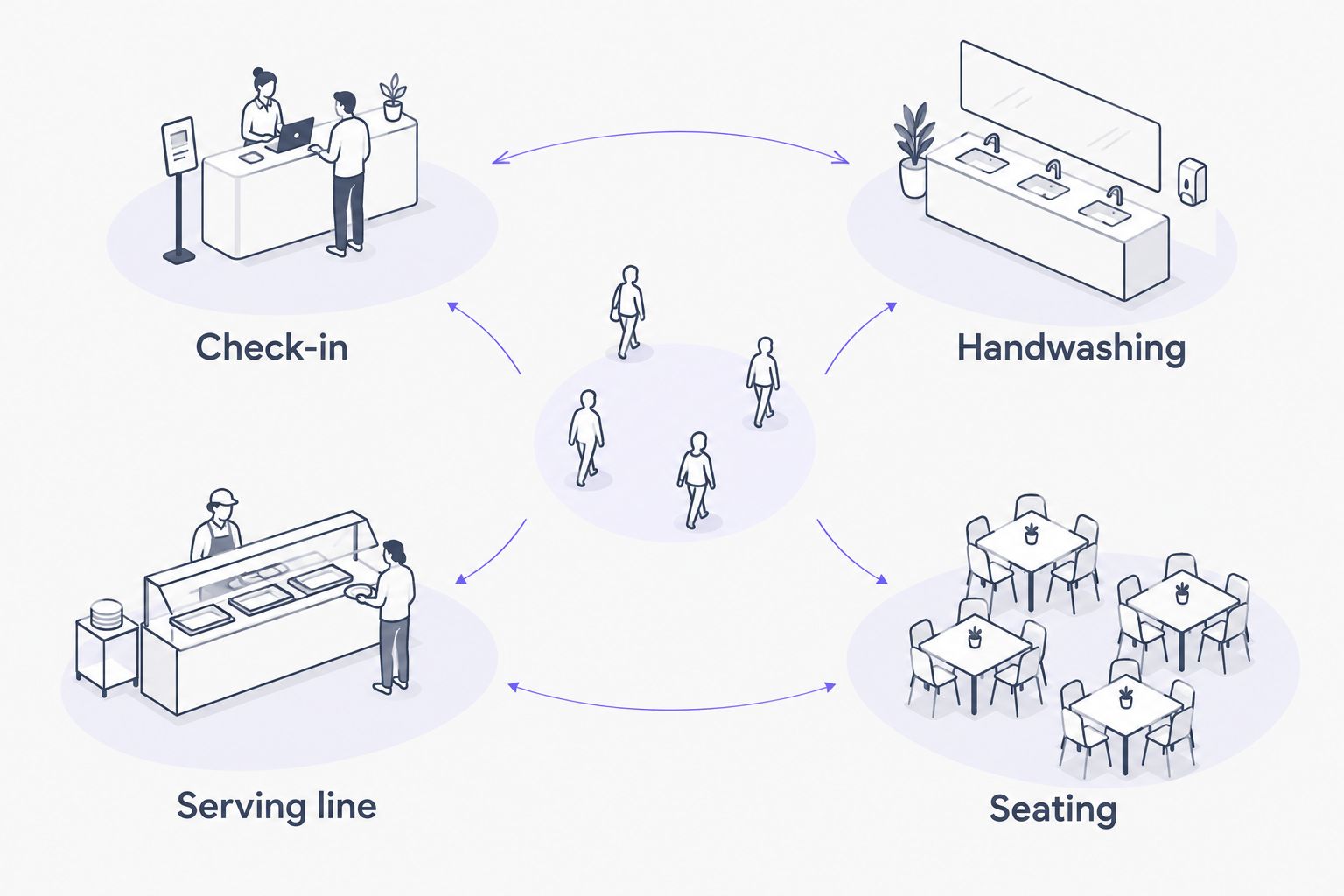
Keep Check-in, Handwashing, Serving line, and Seating distinct on the sketch. The aim is a meal people can move through comfortably, not a crowded table where every activity competes for the same space.
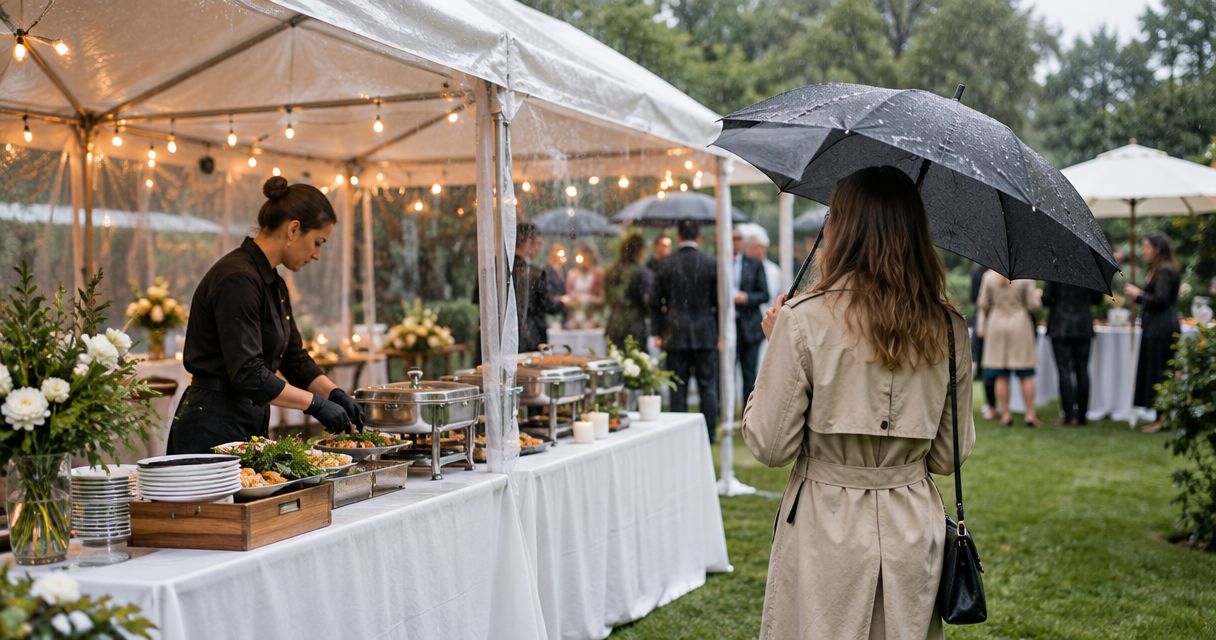
For an outdoor meal, name the rain location and the person authorized to switch plans. Confirm whether that location can accommodate both residents and the proposed food-service setup. A covered spot is not a complete backup if the food cannot be served there safely.
- Mark Check-in without blocking the entrance.
- Confirm a usable Handwashing location.
- Keep the Serving line clear of unloading and trash routes.
- Arrange Seating with accessible routes through the space.
- Check venue rules for power, cooking equipment, and waste removal.
6. Establish a food-safety and leftover plan
Assign a food-safety lead and use a food thermometer; appearance is not a temperature check. USDA consumer guidance for party food calls for keeping hot food at 140°F or above and cold food at 40°F or below. Discuss appropriate holding equipment and monitoring responsibilities with whoever handles the food.
The same USDA guidance sets a 2-hour limit for perishable food left without temperature control, reduced to 1 hour when the temperature is above 90°F. These are food-safety limits, not recommended serving durations. Follow applicable local requirements and the food provider's handling instructions as well.
Do not turn leftovers into an improvised resident giveaway. Decide beforehand who can authorize distribution, how food will stay safely held, and what must be discarded. A generous intention does not replace safe handling.
- Confirm who brings and uses the food thermometer.
- Identify appropriate hot and cold holding equipment.
- Assign someone to track food removed from temperature control.
- Agree on safe storage, distribution, and disposal of leftovers.
7. Confirm the handoff and review the event
Before the event, send one final written summary to the caterer, venue contact, and volunteer leads. Include the agreed attendance count, menu, arrival arrangements, meal window, and responsibility list. Ask recipients to flag discrepancies before event day.
Send residents a shorter message. They need the location, meal time, weather instructions, and a contact for attendance changes—not the entire planning file. Keep the invitation welcoming and the instructions plain.
After your 2026 gathering, record what actually happened: attendance, food remaining, service bottlenecks, and volunteer gaps. Use that record when planning the next event rather than treating this year's guesses as established facts.
- Confirm the final order against the approved agreement.
- Give volunteers their assignments before residents arrive.
- Keep one contact responsible for changes during service.
- Record actual attendance and useful planning lessons afterward.
Compare HOA meal-service options
Choose the service format by responsibility, not by the label alone. The table below compares arrangements you can request; it does not establish that a particular caterer offers each one. Confirm the available scope directly.
| Option | Best for | Practical advantage | Key limitation |
|---|---|---|---|
| Volunteer-led cookout | Associations with committed cooking and service volunteers | The neighborhood controls preparation and serving tasks | Volunteers carry the cooking, food-safety, and cleanup workload |
| Prepared food with organizer-managed service | Boards that can assign reliable on-site helpers | Outside preparation removes cooking from the volunteer list | Receiving, holding, replenishing, and cleanup still need owners |
| Staffed catering arrangement | Organizers seeking help with agreed service tasks | A written staffing scope can reduce volunteer duties | Staffing does not automatically include every setup or cleanup task |
| Resident potluck | Informal gatherings where households want to contribute | Residents participate directly in the meal | Ingredients, quantities, and food handling vary across contributors |
For DG&G Gravy Train Catering, the confirmed fit is the BBQ and soul food focus and Charlotte-area service. The decision still depends on the event details and responsibilities agreed for your gathering.
Plan Your Neighborhood BBQ
Discuss BBQ and soul food catering for your Charlotte-area neighborhood gathering.
Common mistakes homeowners associations make
Treating the resident directory as an attendance list
A household on the association roster is not a meal reservation. Use confirmed RSVPs, communicate the final-count deadline, and keep a separate record of unresolved responses. This gives the organizer a defensible ordering basis without pretending attendance is certain.
Assuming the clubhouse includes everything
Venue access does not establish access to refrigeration, serving equipment, cleaning supplies, or an unrestricted kitchen. Ask what you can use and who must restore the room afterward. Put any missing equipment on the responsibility list before booking service.
Calling a meal inclusive without checking ingredients
A broad menu description cannot answer an allergy or dietary question. Confirm ingredients and preparation arrangements directly. If a requirement cannot be met, tell the affected resident clearly rather than promising that something will work on the day.
Leaving volunteers out of the meal plan
The neighbors handling check-in and food service are attending, too. Arrange relief so they can sit down and eat. Otherwise, the people making the gathering happen spend the social event working while everyone else visits.
FAQ
What's the best way to arrange BBQ catering for homeowners associations?
Start with confirmed household RSVPs, venue rules, and a written list of service responsibilities. Then request a menu and service arrangement that match those requirements, rather than choosing food before defining the event.
Does DG&G Gravy Train Catering serve the Charlotte area?
DG&G Gravy Train Catering is based in Salisbury, NC and serves events across the Charlotte metro area. Confirm your HOA's address, event date, and requested arrangements directly before booking.
Is staffed catering better than having HOA volunteers serve?
Staffed catering is the better fit when the association wants help with specifically agreed service tasks. Volunteer service fits an association with committed helpers, but receiving food, temperature control, replenishment, and cleanup still need named owners.
How do we handle vegetarian meals and food allergies at an HOA BBQ?
Collect dietary requirements during RSVPs and confirm suitable dishes directly with the caterer. Ask about ingredients and preparation, and do not describe a dish as suitable for an allergy without confirmation.
What should our HOA do if rain is forecast?
Use a previously agreed rain location or event-change plan. Confirm that the alternative space supports the food-service setup, and tell residents who will announce any change.
How long can BBQ food sit out at a neighborhood event?
USDA consumer guidance limits perishable food without temperature control to 2 hours, or 1 hour when temperatures exceed 90°F. Keep hot food at 140°F or above and cold food at 40°F or below, and follow applicable local requirements.
What belongs in an HOA catering request?
Include the venue address, event date, expected attendance, meal window, dietary requirements, and requested service tasks. Ask for written confirmation of what is included and what remains the association's responsibility.
One last thing
Put the volunteers' meal break on the event schedule. It is a small planning decision that makes the neighborhood gathering welcoming to the people doing the work, too. Before you close your 2026 planning file, check that every assignment has coverage long enough for its owner to eat and visit.